Description
Chestnuts from Our Wisconsin Food Forest
Discover the gently sweet flavor and comforting texture of chestnuts at Nuts About Dee’s Berries near Brodhead, Wisconsin. Whether you’re continuing a holiday tradition or trying them for the first time, chestnuts offer possibilities far beyond roasting.
This listing is for edible chestnuts harvested through U-pick, not chestnut trees or planting stock. Learn more about the crop on our Chestnuts page.
What Do Chestnuts Taste Like?
Chestnuts are different from crunchy nuts such as almonds, walnuts, and hazelnuts. When cooked, their starchy flesh becomes tender, with a texture sometimes compared to a baked potato or a firm, crumbly sweet potato.
Their mild sweetness works with both savory and sweet ingredients. Pair them with mushrooms, squash, apples, pears, chocolate, vanilla, or warming spices.
New to Chestnuts? Start with Roasting
Warm roasted chestnuts are a simple introduction. Score the shells before cooking, follow a reliable roasting recipe, and peel away both the hard outer shell and thin inner skin while the nuts are still warm enough to handle safely.
Enjoy the cooked kernels on their own, season them lightly, or chop them into another dish. Unlike many familiar snack nuts, chestnuts are generally enjoyed cooked.
Ways to Use Chestnuts
- Roasting: Serve warm chestnuts as a seasonal snack or alongside a meal.
- Stuffing: Add cooked, chopped chestnuts to bread stuffing with herbs, onions, and other vegetables.
- Soups and purées: Blend cooked chestnuts into soups or a smooth purée.
- Savory dishes: Fold pieces into rice, grain dishes, mushroom preparations, or roasted vegetables.
- Baking: Use prepared chestnuts in recipes developed for breads, cakes, and pastries.
- Desserts: Explore sweetened chestnut purée, puddings, chocolate pairings, or candied chestnuts.
Chestnut flour behaves differently from wheat flour, so use recipes designed for it rather than assuming a direct substitution.
Browse our fruit and nut recipe collection for more inspiration from the food forest.
U-Pick Chestnuts at the Farm
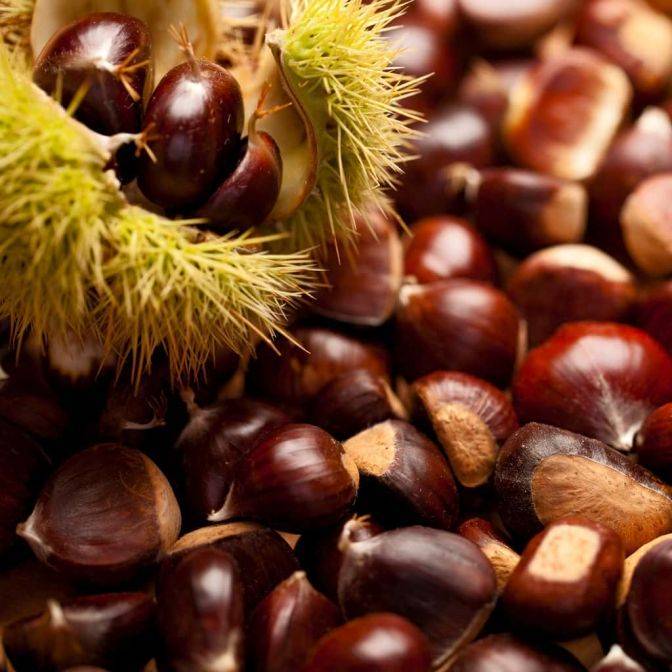
Chestnuts are gathered from the ground after they fall from their protective burrs. Follow farm staff instructions about designated gathering areas and which nuts to collect.
Chestnut burrs have sharp spines. Wear suitable footwear and use the handling methods or gathering equipment recommended by staff. Avoid handling burrs with bare hands.
Our Chestnuts guide explains more about the crop and gathering experience.
Preparing Your Chestnuts
Inspect the nuts before use and discard any showing mold, spoilage, or an unpleasant odor.
Before roasting or cooking whole chestnuts in their shells, carefully score each shell to allow steam to escape. Use a stable cutting surface and take care—the shells can be slippery and difficult to cut.
Follow your chosen recipe’s cooking instructions. Remove the hard shell and thin inner skin before eating. If preparing chestnut purée or another smooth dish, check carefully for shell fragments.
Storage
Fresh chestnuts contain more moisture than most culinary nuts and should be treated as perishable produce rather than stored indefinitely in a warm pantry.
Refrigerate promptly, keep them from drying out, and check regularly for spoilage. For longer storage, follow a reliable chestnut-freezing method suited to whether the nuts are raw, cooked, peeled, or in-shell.
Prepare only sound nuts, and follow recipe-specific storage instructions for cooked chestnuts and finished dishes.
Plan Your Food Forest Visit
Explore our Harvest Calendar to learn about the farm’s seasonal crops. Sign up for U-Pick Updates for harvest announcements and farm news.
Please confirm current picking arrangements before traveling to the farm.
nut