
Black Currants
Short season. Big flavor. Grown with intention.
Bold, aromatic, and deeply flavorful, black currants are one of the most distinctive berries you’ll ever taste. Although they’re well-loved in Europe, they remain a hidden gem here in the Midwest. That’s exactly why we grow them.
At Nuts About Dee’s Berries, our black currants thrive in Southern Wisconsin’s climate, producing berries known for their intense color, complex flavor, and impressive nutritional profile. Whether you’re discovering them for the first time or rediscovering a favorite from childhood, black currants offer an experience that goes far beyond ordinary berries.
Common Ways to Use Black Currants
Because black currants are uncommon in most U.S. grocery stores, many people aren’t quite sure how to use them at first. However, once you taste them, the possibilities become obvious.
With their bold flavor, deep color, and natural acidity, black currants shine in both sweet and savory applications. They’re especially valued in recipes where richness, aroma, and balance matter.
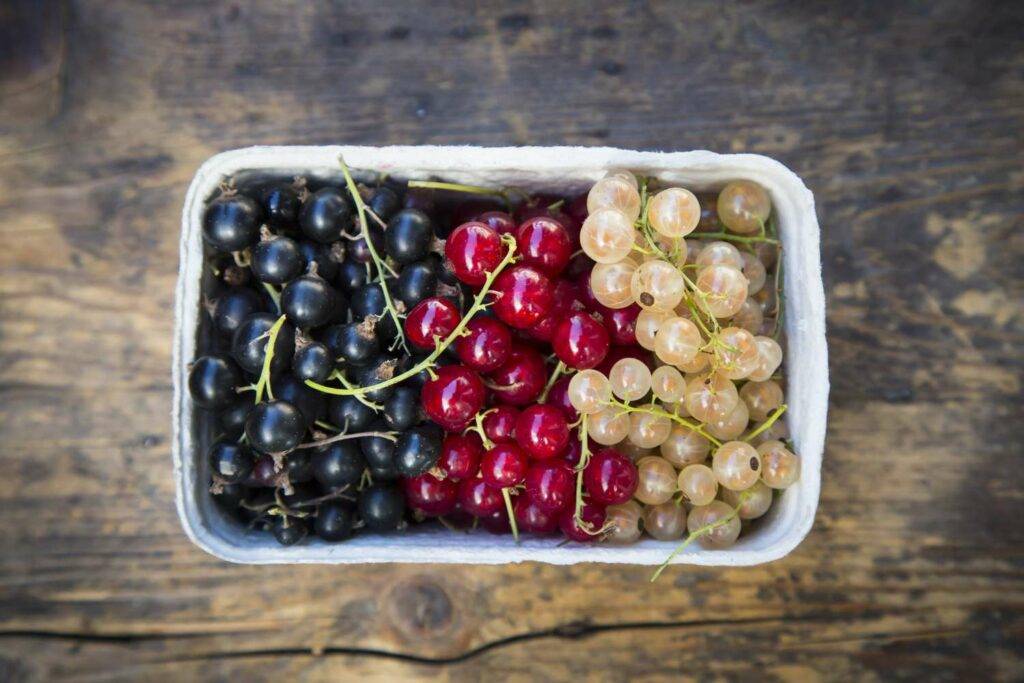
🫐 Fresh Eating (For the Curious Palate)
Black currants aren’t mild berries—and that’s the point. When eaten fresh, they’re tart, aromatic, and intensely flavorful. While some people enjoy them straight off the bush, others prefer them lightly sweetened or paired with dairy to soften their edge.
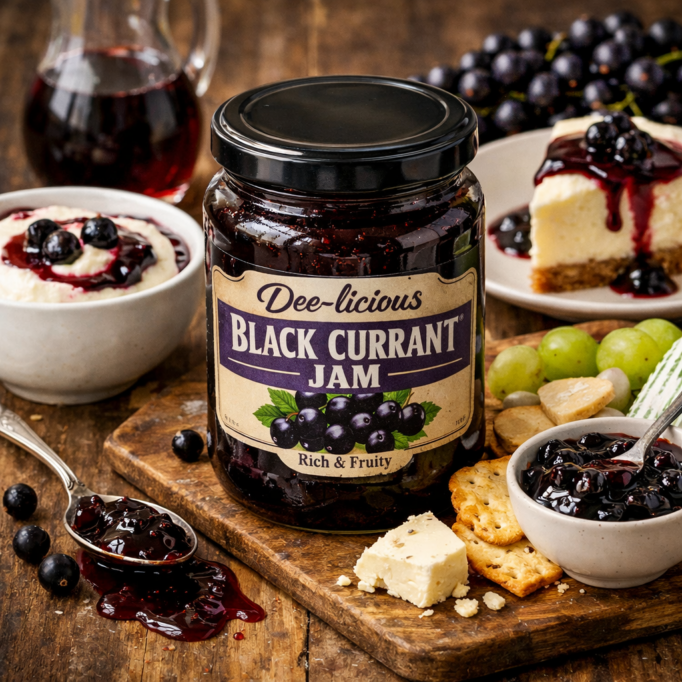
🥄 Jams, Syrups & Preserves
This is where black currants truly excel. Their natural pectin, deep color, and bold flavor create rich jams, glossy syrups, and preserves that hold up beautifully in baking and cooking.
Best for: toast, yogurt, cheeseboards, desserts, and pantry staples.
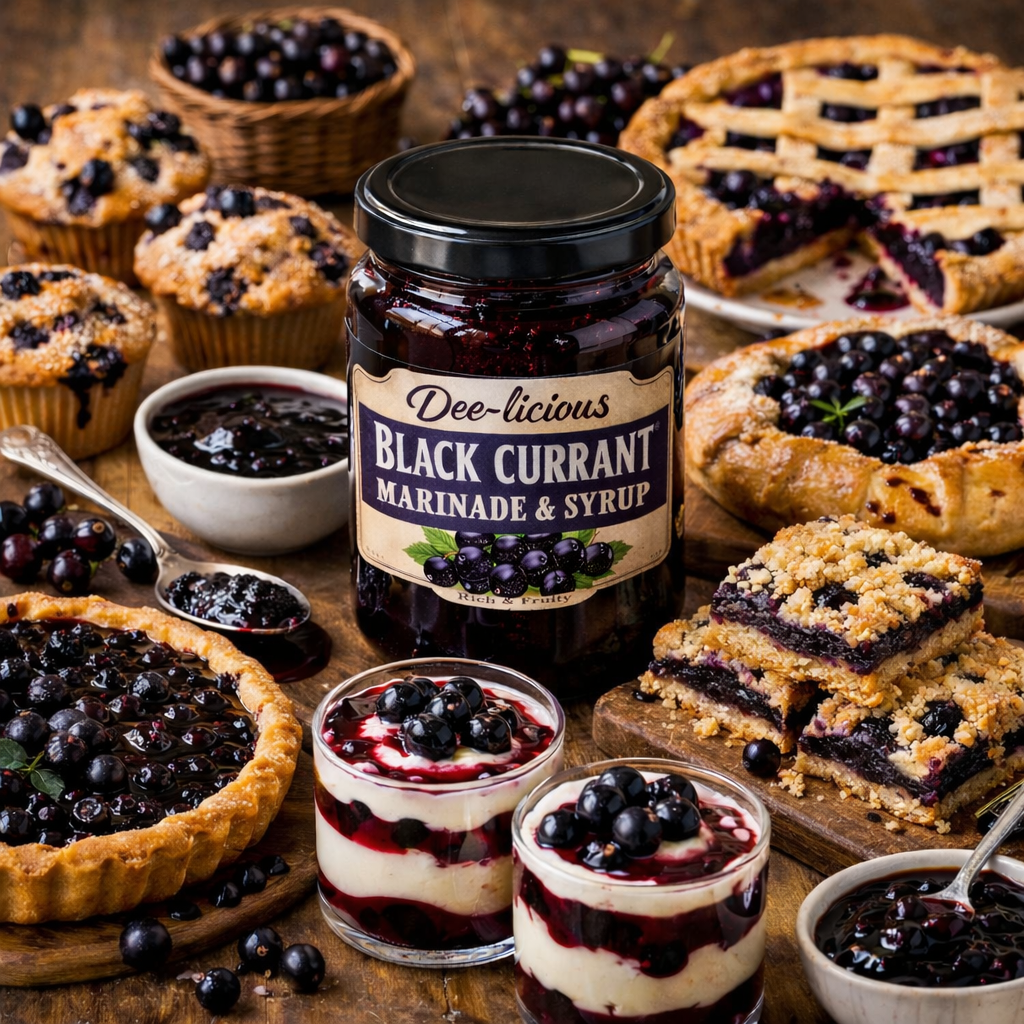
🧁 Baking & Desserts
Because black currants keep their flavor when heated, they perform exceptionally well in baked goods. From tarts and galettes to sauces and fillings, they add depth rather than disappearing into sugar.
Best for: pies, bars, muffins, sauces, and layered desserts.
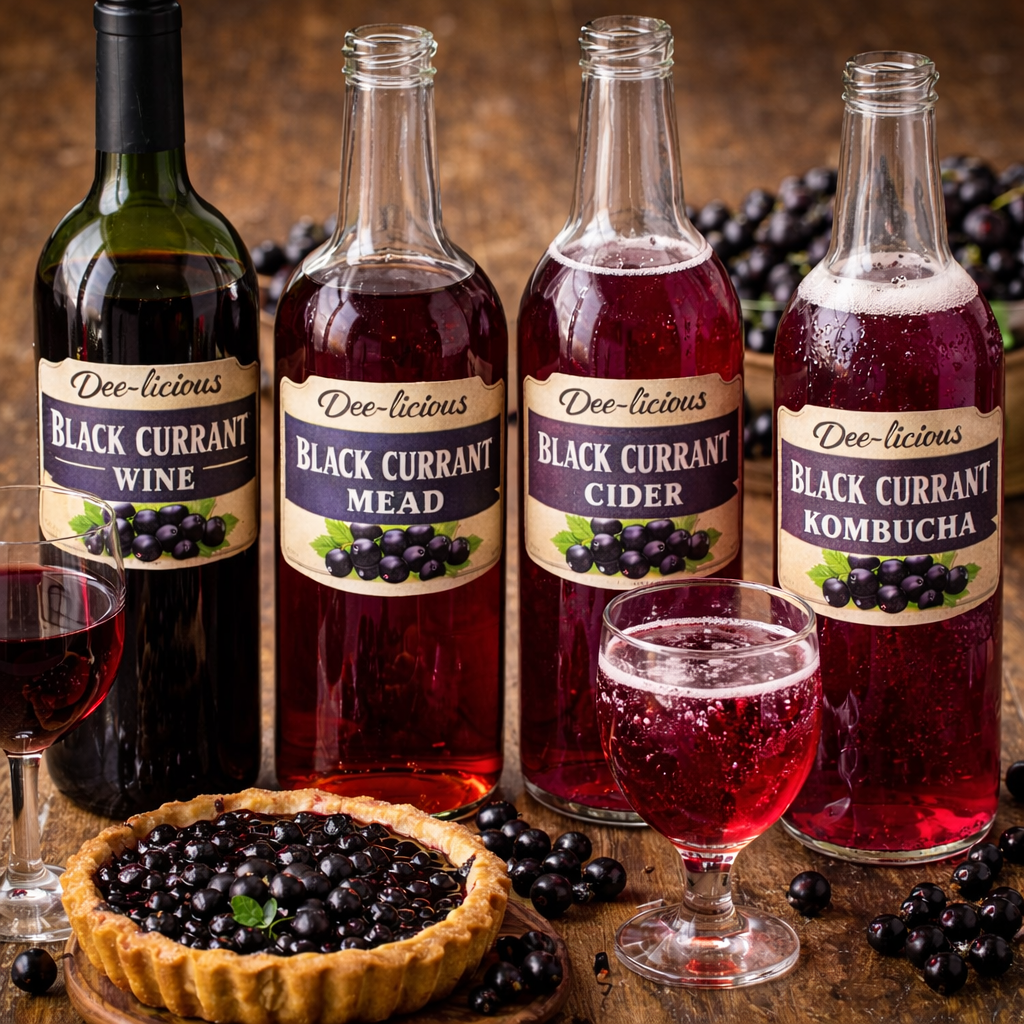
🍷 Beverages & Fermentation
Thanks to their acidity and aroma, black currants are widely used in juices, syrups, cordials, wines, and shrubs. In Europe especially, they’re prized for beverages that need structure and intensity.
Best for: juice blends, syrups, wine, mead, cider, and non-alcoholic drinks.
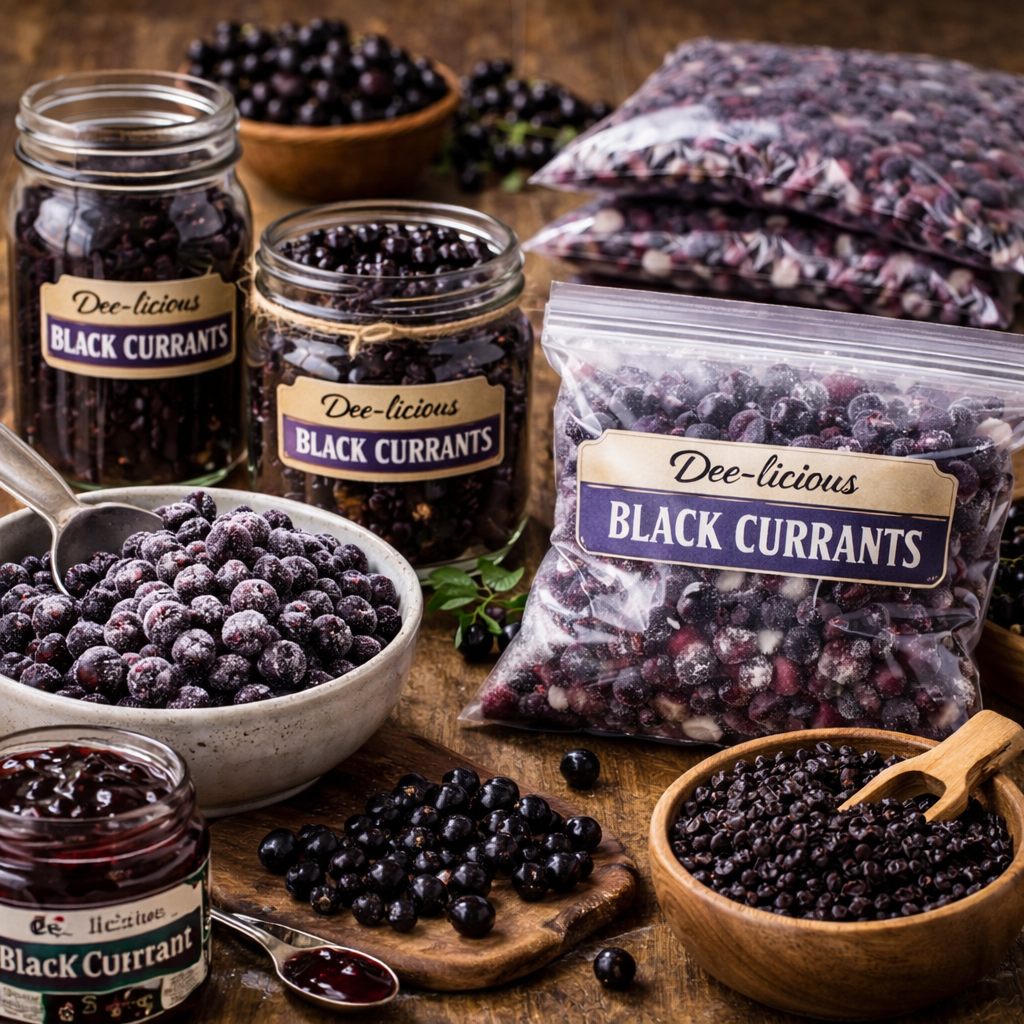
❄️ Freezing & Processing
Black currants freeze exceptionally well, making them easy to enjoy year-round. Freezing also helps preserve their color and aroma, which is why many cooks and makers process them shortly after harvest.
Best for: long-term storage, later processing.
From the field to the kitchen, black currants offer more range than most berries.
From fresh eating to preserves and beverages, the way you use black currants often depends on timing, harvest, and preparation.
Why Black Currants Are Valued Beyond the Kitchen
While black currants are often discovered through food, their value extends far beyond recipes and preserves. For centuries, they’ve been appreciated for their deep pigmentation, complex aromatic compounds, and naturally concentrated profile.
What sets black currants apart is their intensity. Their dark skins signal a high concentration of naturally occurring plant compounds, while their bold aroma and acidity make them especially distinctive among berries.
Today, black currants continue to be sought out not just for flavor, but for their role in traditional food systems, specialty beverages, and nutrient-dense preparations. Their appeal lies in both what they offer and how deliberately they’re grown and used.
Naturally deep pigmentation
Traditionally valued in European food cultures
Distinctive aroma and flavor compounds
Widely used in specialty beverages and preserves
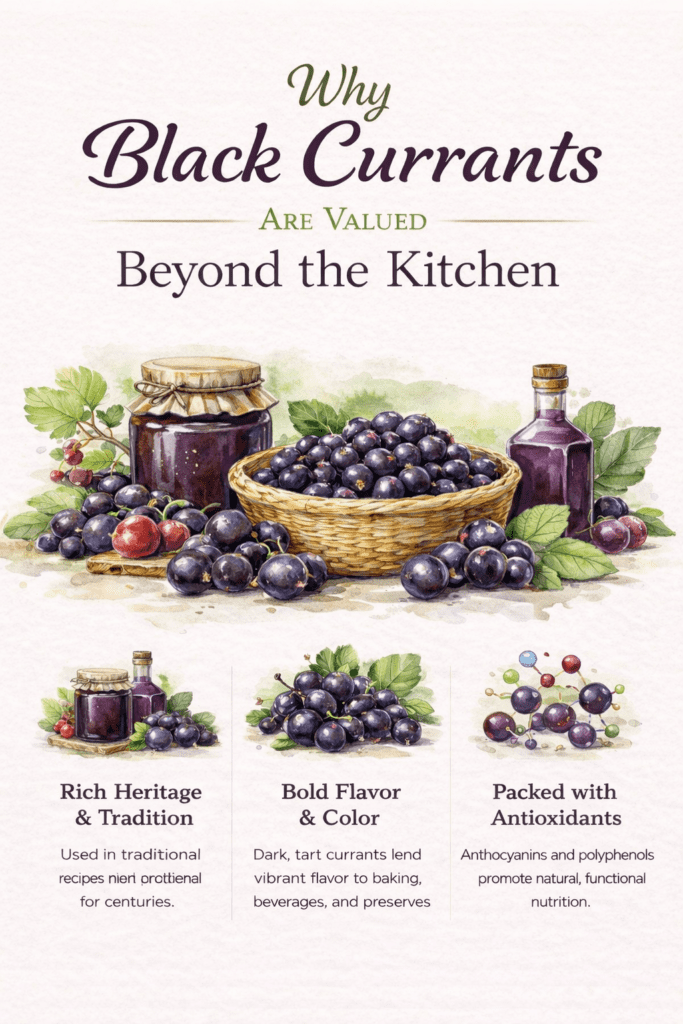
Black Currant Nutrition & Phytonutrients
Black currants are known for their bold flavor, but their deep color also signals a uniquely concentrated nutritional profile. Compared to many common berries, black currants stand out for their naturally high levels of vitamin C and dark-pigmented plant compounds.
Key Nutritional Components
Anthocyanins
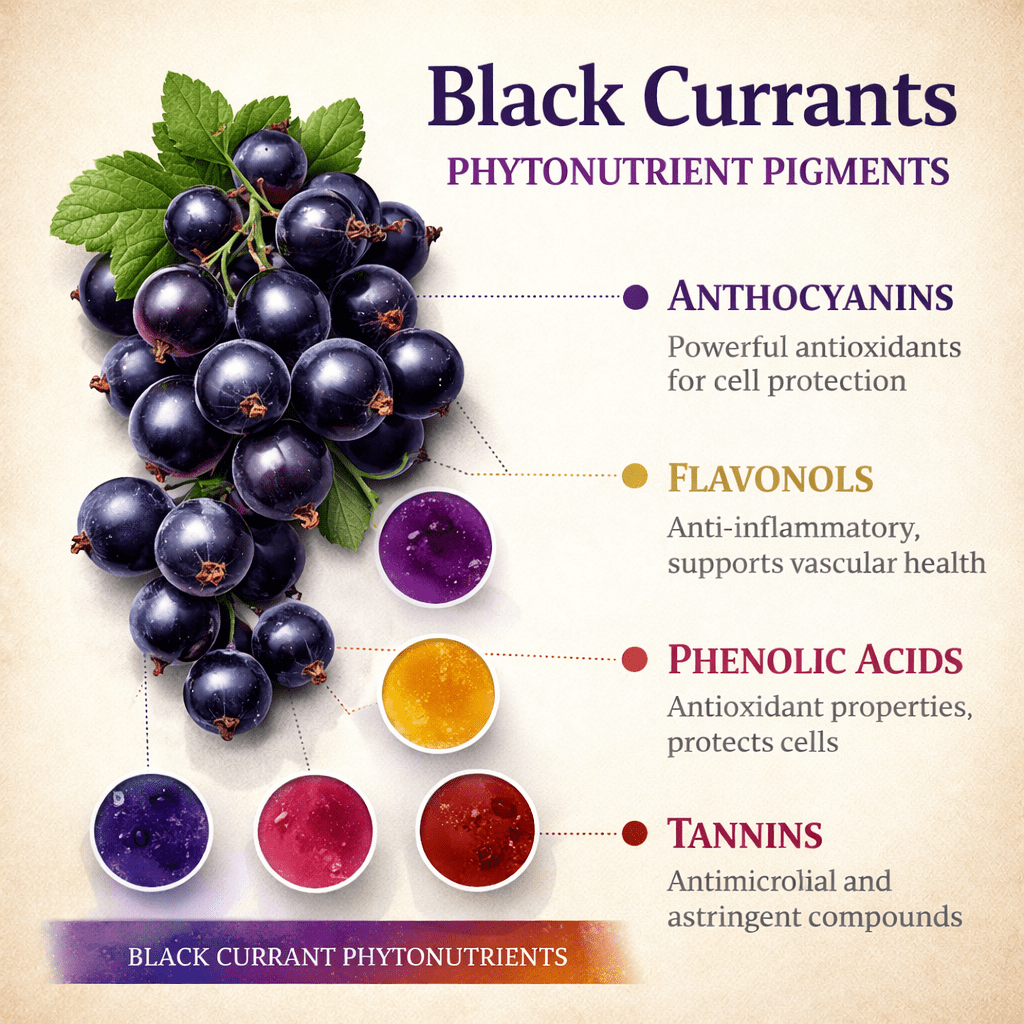
Black currants are especially rich in anthocyanins — the pigments responsible for their deep purple-black color. These compounds are part of a broader group of flavonoids that contribute to antioxidant activity and color stability in foods and beverages.
Vitamin C
Black currants contain notably higher vitamin C levels than many familiar fruits. This natural concentration has historically made them valuable in traditional food systems, particularly in cooler climates where fresh produce diversity was limited.
Polyphenols
Beyond anthocyanins, black currants contain a wide range of polyphenols. These naturally occurring plant compounds contribute to the berry’s astringency, aroma, and structural complexity, especially in juices, syrups, and fermented preparations.
Why Black Currants Are Nutritionally Distinct
What sets black currants apart is not a single nutrient, but the combination of intensity, concentration, and balance. Their dark skins, high acidity, and dense phytonutrient profile make them fundamentally different from sweeter, lighter-colored berries.
How Black Currants Are Harvested
Black currants are harvested during a short summer window, when berries have fully developed their deep color, flavor, and aroma. Because timing plays such a critical role in quality, harvest methods at our farm are chosen carefully based on ripeness, intended use, and seasonal conditions. Whether berries are picked by visitors or gathered for small-batch use, the focus remains on preserving flavor, structure, and overall fruit integrity.
Key Harvest Principles
Harvested at peak ripeness, when color and flavor are fully developed
Handled gently to preserve berry structure, juice quality, and culinary versatility
Harvest approach adapts to use, from U-pick enjoyment to small-batch needs
Availability varies by season, weather, and harvest conditions
Because black currants ripen over a short window, harvest timing directly shapes when and how they’re available at the farm.
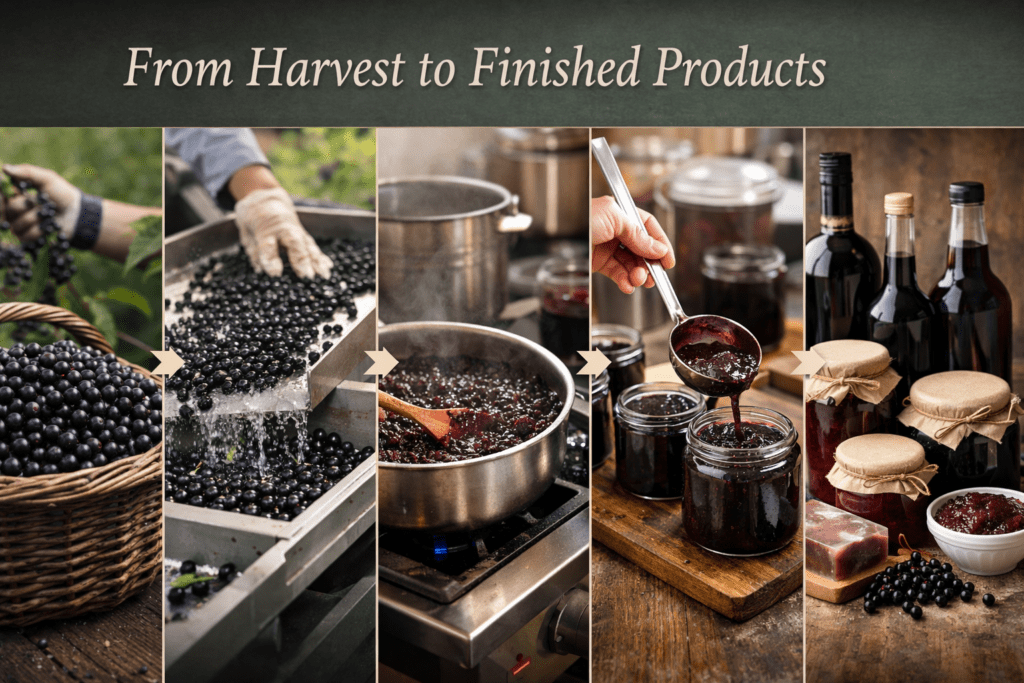
From Harvest to Finished Product
Black currants are highly versatile, but their season is short. Once harvested, many visitors choose to enjoy part of their crop fresh and preserve the rest, allowing the fruit’s bold flavor and deep color to be enjoyed long after summer has passed. With simple handling and storage, black currants transition easily from the field to everyday use.
Post-Harvest Handling
After harvest, black currants can be handled in several straightforward ways depending on how they’ll be used:
Fresh use: Black currants are best enjoyed soon after picking and stored briefly under refrigeration.
Freezing: One of the most popular options, freezing preserves color, flavor, and versatility for later use.
Juicing & syrups: Often prepared shortly after harvest to capture peak aroma and richness.
Preserving: Suitable for drying or long-term storage, depending on intended use.
In Southern Wisconsin, black currants typically ripen from late June through early July, with exact harvest timing influenced by spring weather and growing conditions. Because this window can shift slightly each year, we share real-time harvest updates on our Facebook page as the season approaches.
Black Currant Season at Our Farm
Black currants are a distinctly seasonal crop, and timing matters. At our farm in Southern Wisconsin, ripeness is driven by spring temperatures, rainfall, and overall growing conditions, which means the harvest window is both short and variable from year to year. Understanding when black currants come into season helps visitors plan their visit and harvest fruit at its peak.
Season Details
Typical Ripening Window
In Southern Wisconsin (Zone 5b), black currants typically ripen from late June through early July. Cooler springs may push harvest slightly later, while warm springs can move ripening earlier.
What Peak Ripeness Looks Like
Black currants are ready to harvest when berries are fully black, glossy, and evenly colored across the cluster. At peak ripeness, fruit releases easily and develops its characteristic bold aroma and flavor.
Planning Your Visit
Because ripening can shift by several days each season, we share real-time harvest updates as fruit approaches readiness. Following along ensures visitors arrive during the optimal picking window.
Because seasonal timing can shift from year to year, we share real-time updates as black currants approach ripeness. Harvest announcements, U-pick availability, and short field updates are posted on our Facebook page so visitors can follow along as the season develops.
Experience Black Currant Season at Our Farm
Discover Our Wide Variety of Nuts and Berries
At Nuts about Dee’s Berries, we pride ourselves on offering a diverse selection of delicious and nutritious crops. In addition to our featured crop, we also grow a variety of other fruits and nuts that are perfect for U-pick adventures. Explore our other offerings and discover your new favorite treat. We are sure that you will find something that you like, and that fits your needs.