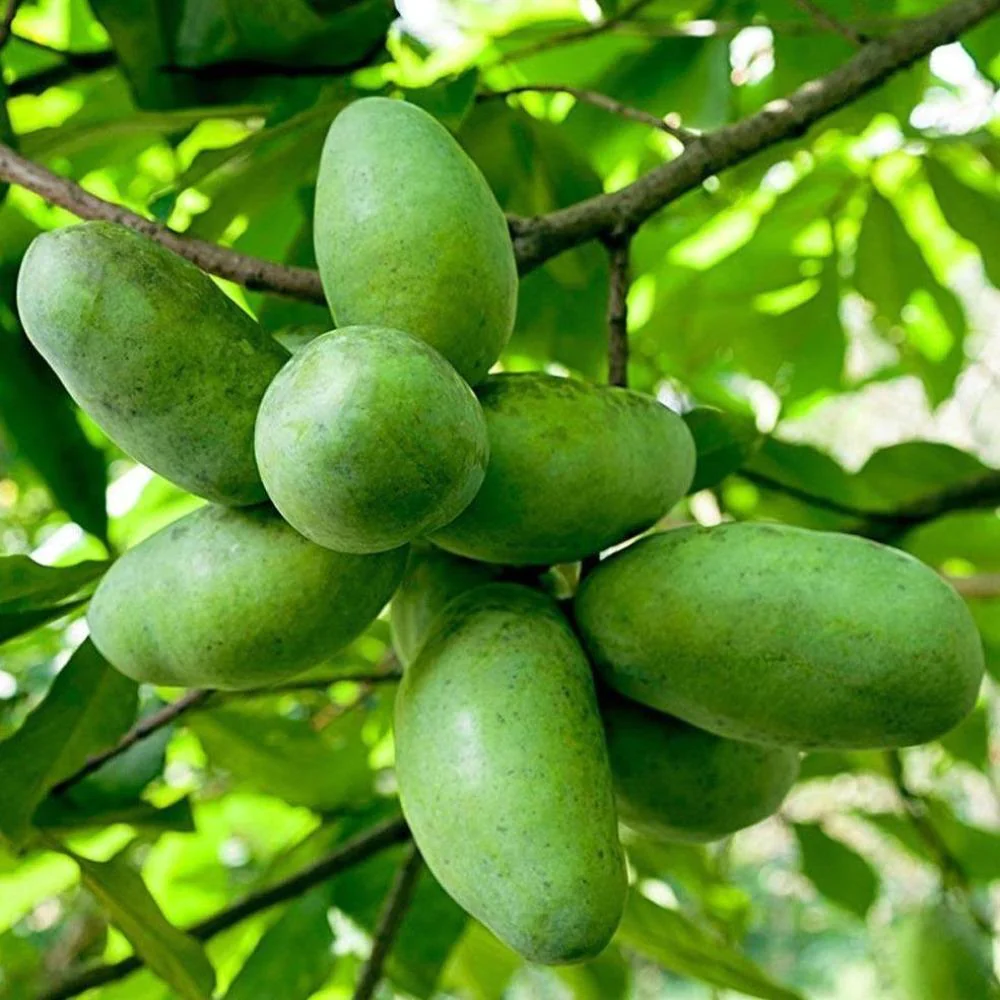
Description
Discover American Pawpaws
American pawpaws offer a surprising flavor experience from a fruit native to North America. Beneath their green-to-yellow skin is soft, fragrant flesh with a creamy texture unlike familiar orchard fruits.
At Nuts About Dee’s Berries near Brodhead, Wisconsin, pawpaws are part of our developing food forest. This listing is for U-pick fruit—not live trees, seeds, or prepared pulp.
Visit our Pawpaw guide to learn more about this distinctive crop.
What Do Pawpaws Taste Like?
Ripe pawpaw flesh is often compared to banana or mango custard. Some fruits have more pronounced tropical notes, while others are milder. Sweetness, aroma, color, and texture vary between varieties and individual fruits.
The edible flesh surrounds several large seeds. Its soft consistency makes it easy to scoop, although separating the pulp from the seeds takes some preparation.
American pawpaw (Asimina triloba) is different from papaya, which is also called “pawpaw” in some parts of the world. The fruits are not interchangeable in every recipe.
Trying Pawpaw for the First Time
Start with a small serving of ripe pulp to discover its flavor and see how it agrees with you.
Cut the fruit open carefully, scoop out the flesh, and remove every seed. Enjoy the prepared pulp on its own, lightly chilled, or follow a recipe developed specifically for American pawpaw.
Pawpaw’s richness and texture can be quite different from a crisp apple or juicy berry, so a little is a useful introduction.
Culinary Possibilities
- Fresh pulp: Enjoy ripe, seed-free flesh with a spoon.
- Chilled desserts: Explore suitable pawpaw recipes for creamy desserts and frozen treats.
- Breakfast dishes: Try prepared pulp in a recipe designed for pawpaw.
- Baking: Follow pawpaw-specific recipes rather than substituting it directly for another fruit.
- Fruit pairings: Explore combinations with citrus or other complementary ingredients.
For inspiration, browse our fruit and nut recipe collection. Follow each recipe’s preparation and serving guidance.
Selecting and Handling Pawpaws
Ripe pawpaws generally soften and develop a noticeable aroma. Skin color alone is not a dependable ripeness guide.
Handle gently: ripe fruit bruises easily. Follow farm staff guidance when selecting and harvesting, and avoid stacking soft fruit under a heavy load.
Preparation
Wash the outside before cutting. Separate the edible pulp from the skin and seeds.
Do not eat the skin or seeds, and do not grind or blend the seeds. Check the pulp carefully before adding it to a blender, mixer, or recipe.
Discard spoiled fruit. Some people experience digestive upset from pawpaw, so begin with a small amount, particularly if it is unfamiliar to you.
Storage
Pawpaws are delicate and have a short fresh-fruit life. Refrigerate ripe fruit promptly and use soon.
For longer storage, separate the pulp from all skin and seeds before freezing in suitable containers. Follow reliable pawpaw-specific handling guidance.
Do not assume that another fruit’s drying or canning method is suitable for pawpaw. Use established guidance appropriate to the preparation.
U-Pick Pawpaws in Our Wisconsin Food Forest
Follow farm staff instructions about designated picking areas and harvesting methods. Do not shake trees or pull branches unless specifically instructed.
Explore our Harvest Calendar for seasonal crop information.
Sign up for U-Pick Updates for farm news and harvest announcements, and confirm picking arrangements before traveling.