




Bright, tangy, and jewel-like, red currants are a short-season summer fruit best enjoyed fresh from the bush. Their bold flavor, beautiful clusters, and quick harvest make them a favorite for U-pick visitors looking for something a little different — and wonderfully memorable.
Red currants are bright, tart, and surprisingly refreshing — the kind of fruit that wakes up your taste buds instead of tasting “just sweet.” Each cluster hangs like little ruby beads, and because they’re delicate and highly perishable, most people never see them fresh at grocery stores.
At Nuts About Dee’s Berries, red currants are grown for U-pick so you can taste them at their best: crisp, juicy, and full of that zingy summer flavor. If you love trying new fruits, this is one of those “wait… why haven’t I been eating these?” moments.
If you’re curious to compare flavors, some visitors prefer a sweeter, milder currant option, while others gravitate toward a deeper, bolder currant flavor depending on how they plan to use the fruit.
Red currants are one of the easiest and most satisfying fruits to pick. The berries grow in long, visible clusters, making them quick to spot and simple to harvest — even for first-time visitors. Many people are surprised by how fast their containers fill once they get started.
At Nuts About Dee’s Berries, red currants are grown specifically for U-pick, so the rows are laid out with visitors in mind. The bushes are approachable, the fruit is easy to reach, and the harvest moves at a relaxed, enjoyable pace that works well for families, couples, and solo pickers alike.
Because red currants ripen over a short window, U-pick season tends to be lively but manageable. If you enjoy discovering fruits that feel a little out of the ordinary — without needing special skills or tools — this is a great place to start.
If you’re curious about currants but have never tried them fresh, red currants are an easy place to start.
Red currants are a true early-summer fruit, ripening over a relatively short window once warm weather settles in. In Southern Wisconsin, this typically means late June through early July, though exact timing can shift slightly from year to year depending on spring temperatures and rainfall.
When red currants are ready, the clusters turn a clear, vibrant red and feel plump and juicy to the touch. This is when their flavor is at its best — bright, tangy, and refreshing without being harsh. Outside of this window, the berries simply aren’t available for picking, which is why timing matters.
Because weather plays such an important role, we share harvest updates as the season approaches so visitors know when red currants are coming into peak condition and when it’s the best time to plan a visit. If red currants are on your must-pick list, following us on Facebook for harvest updates or joining our newsletter for seasonal harvest reminders is the easiest way to make sure you don’t miss the season.
Red currants are easy to harvest once you know what to look for. Instead of picking individual berries, most people harvest the entire cluster at once by gently snapping or snipping it from the stem. This keeps the berries intact and makes the process quick and efficient.
When picking, look for clusters that are evenly red and feel plump to the touch. A few slightly lighter berries on a cluster are fine, but fully ripe clusters will have the best flavor and juice. Because the bushes are productive and the clusters are easy to see, most visitors find red currants surprisingly fast to pick.
Red currants are also a great choice for visitors who enjoy a relaxed pace. The fruit is sturdy enough to handle gentle picking, and there’s no need for special tools or experience. If you’re new to harvesting berries, this is a comfortable place to start — especially for those planning to visit during U-pick season.
Red currants are simple to pick, easy to enjoy, and rewarding for first-time currant harvesters.
Fresh red currants are incredibly versatile, which is one reason so many visitors are excited to bring them home. Their bright, tangy flavor works beautifully in both sweet and savory dishes, and even small amounts can add a pop of acidity that lifts a recipe.
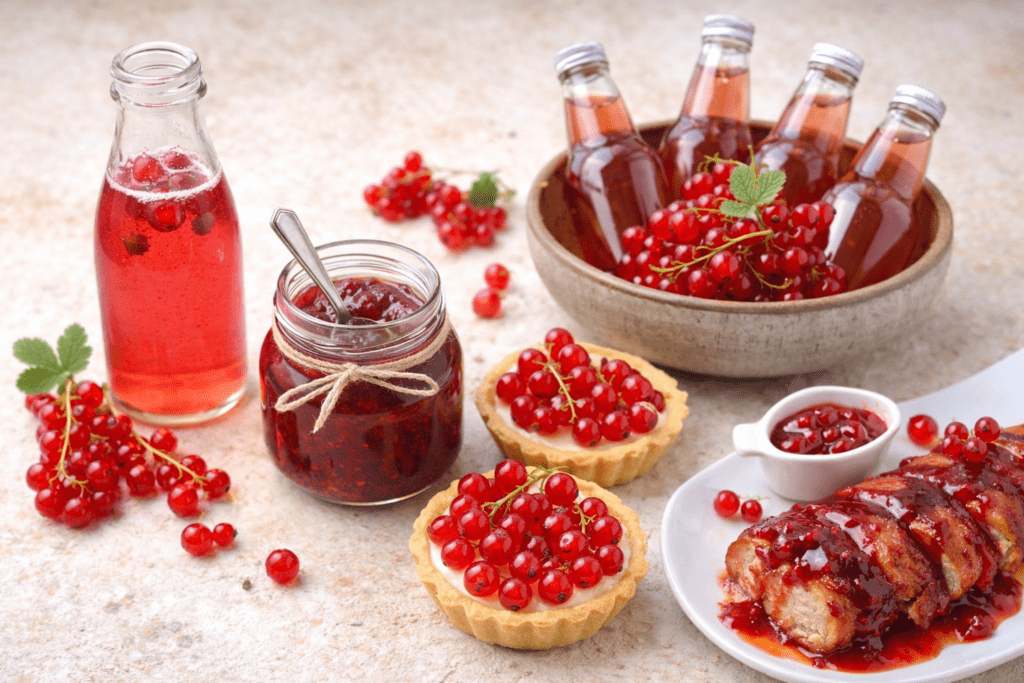
Many people enjoy red currants right away — sprinkled over yogurt, folded into desserts, or used to add contrast to rich foods. They’re also well suited for preserving, since their natural acidity and pectin make them ideal for jams, jellies, and syrups.
If you’re planning to enjoy your berries over time, red currants freeze well and hold their flavor beautifully. We’ll be sharing tips and inspiration for freezing and preserving red currants, along with seasonal ideas in our Recipes Hub as the farm grows.
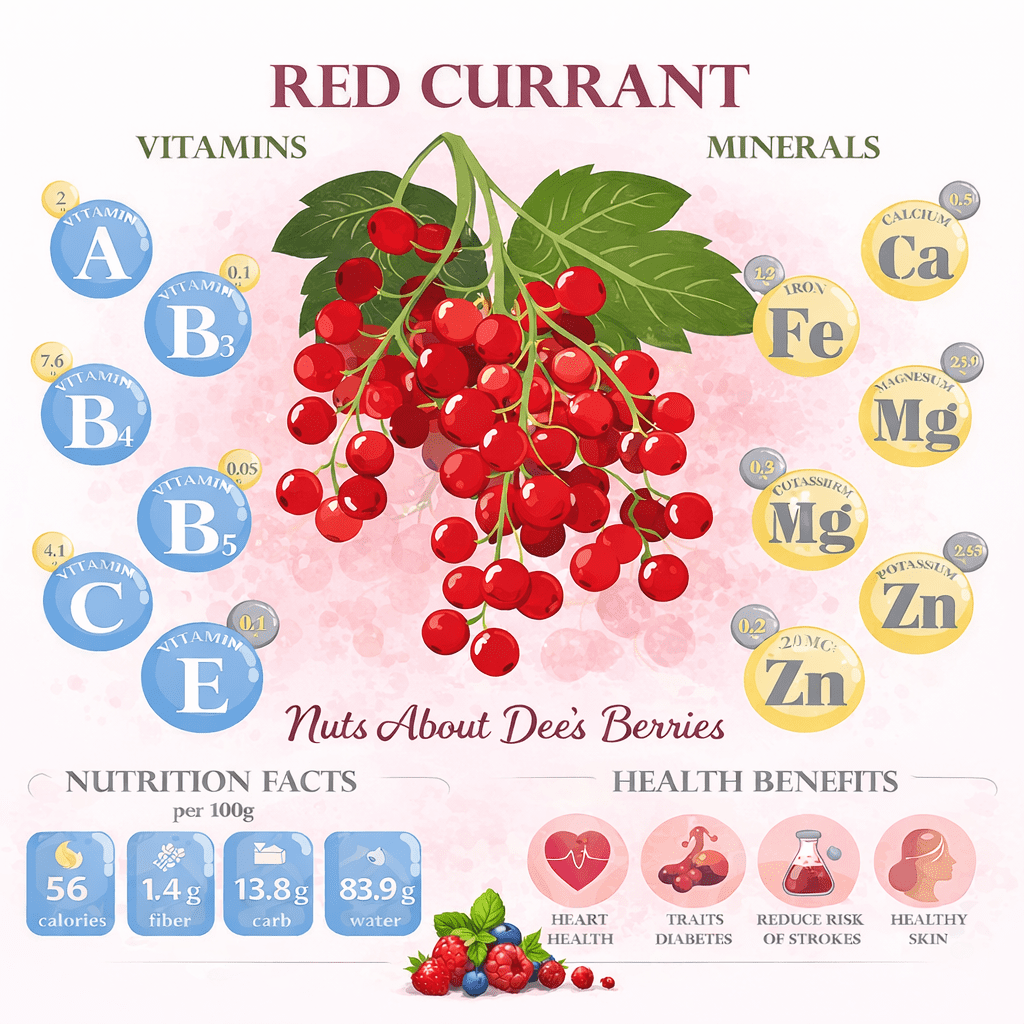
For those curious about the nutritional side, red currants are known for their vibrant color and naturally occurring antioxidants. We’ll be expanding more on this in future nutrition and health content as well.
Red currants stand out immediately for their vivid, jewel-like color — and that color isn’t just for show. Traditionally, deeply colored fruits like red currants have been valued across cultures for their role in seasonal eating and preservation, long before nutrition labels existed.
Naturally tart and bright, red currants are often associated with vitamin-rich diets and antioxidant-dense foods. Their acidity, color, and structure made them especially useful in traditional kitchens for sauces, preserves, and cordials — foods meant to last beyond the short harvest window.
Rather than diving deep here, we like to think of red currants as a curiosity fruit:
one that sparks questions about flavor, history, and nourishment the moment you taste it.
We’ll be sharing more about what gives red currants their nutritional reputation — including how they’ve been used historically and how they fit into modern cooking — in a dedicated article.
(Without the Deep Dive)
While U-pick remains our priority, red currants are also a compelling ingredient for certain food and beverage producers who value bright acidity, natural color, and seasonal fruit.
Red currants are especially well suited for:
Jam, jelly, and preserve makers looking for high-pectin fruit with vibrant color
Craft beverage producers such as wineries, cideries, breweries, and kombucha makers seeking tart blending fruit or seasonal infusions
Artisan syrup, shrub, and cordial producers who rely on acidity for balance and shelf stability
Bakeries and pastry kitchens using red currants in tarts, fillings, glazes, and decorative finishes
Farm-to-table restaurants and chefs interested in limited-season fruit for sauces, desserts, and savory applications
As our orchard matures, some red currants may be available beyond U-pick for small-batch processors and regional buyers when harvest volume allows. Availability will always be seasonal, weather-dependent, and secondary to the U-pick experience.
For businesses interested in future sourcing, we recommend following our seasonal timing through the Harvest Calendar and watching for announcements as harvest approaches. You’re also welcome to reach out via our Contact to share your interest and intended use.
Red currants are one of early summer’s hidden gems — tangy, jewel-like berries that shine when picked fresh from the bush. At Nuts About Dee’s Berries, our red currants are grown specifically for U-pick, making them easy to harvest and unforgettable to taste.
Because the season is brief, timing matters. Plan your visit, follow along for harvest updates, and enjoy red currants at their peak — right where they’re meant to be picked.
At Nuts about Dee’s Berries, we pride ourselves on offering a diverse selection of delicious and nutritious crops. In addition to our featured crop, we also grow a variety of other fruits and nuts that are perfect for U-pick adventures. Explore our other offerings and discover your new favorite treat. We are sure that you will find something that you like, and that fits your needs.
We grow organic fruits and nuts while fighting climate change by capturing carbon. Join us for family UPick experiences and special events. We’re committed to community and eco-friendly initiatives like supporting ocean pastures. Let’s make a greener, healthier world together!
N3591 Highway 104, Brodhead, WI 53520
🗓️ Visits by reservation only
🌱 Limited openings during our early seasons
🚜 Opening phases begin 2027
10 AM - 6 PM Open daily