Pollinator Habitat Project at Nuts About Dee’s Berries
Healthy ecosystems depend on pollinators. Bees, butterflies, and other beneficial insects play a critical role in pollinating crops and supporting natural landscapes. However, pollinator populations have been declining across North America as natural habitat disappears.
Because of this challenge, farms and landowners have an opportunity to help restore pollinator habitat. At Nuts About Dee’s Berries, supporting biodiversity and ecological health is already part of how the farm is designed. Therefore, we are excited to share that our farm has been accepted into the Seed A Legacy pollinator habitat program from the Bee & Butterfly Fund.
Through this partnership, we will be establishing 3.67 acres of pollinator habitat within our farm windbreak system.
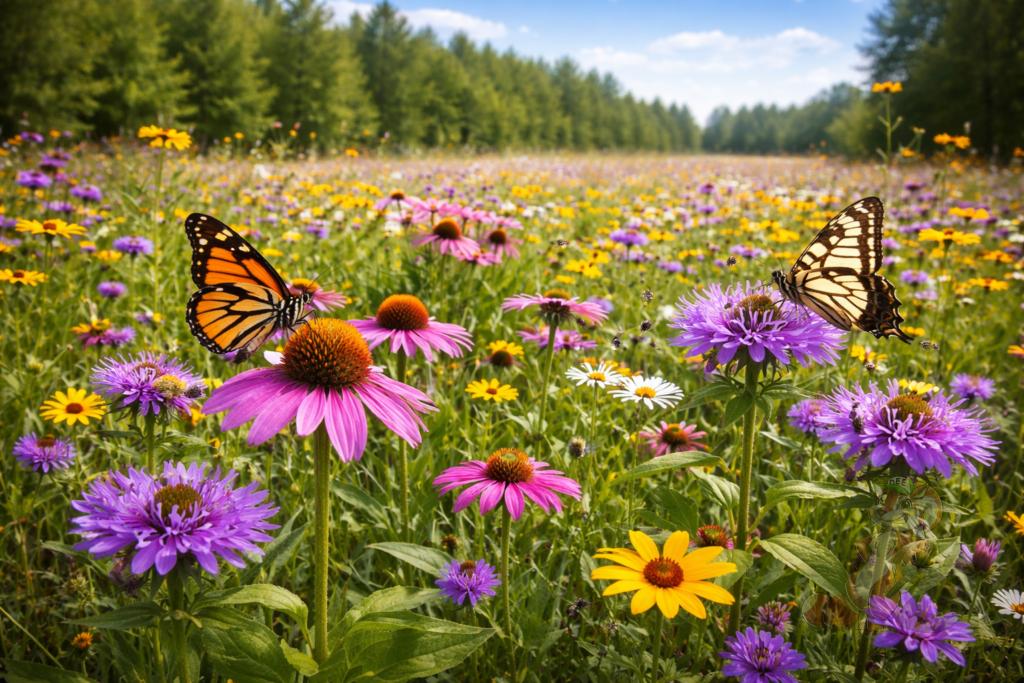
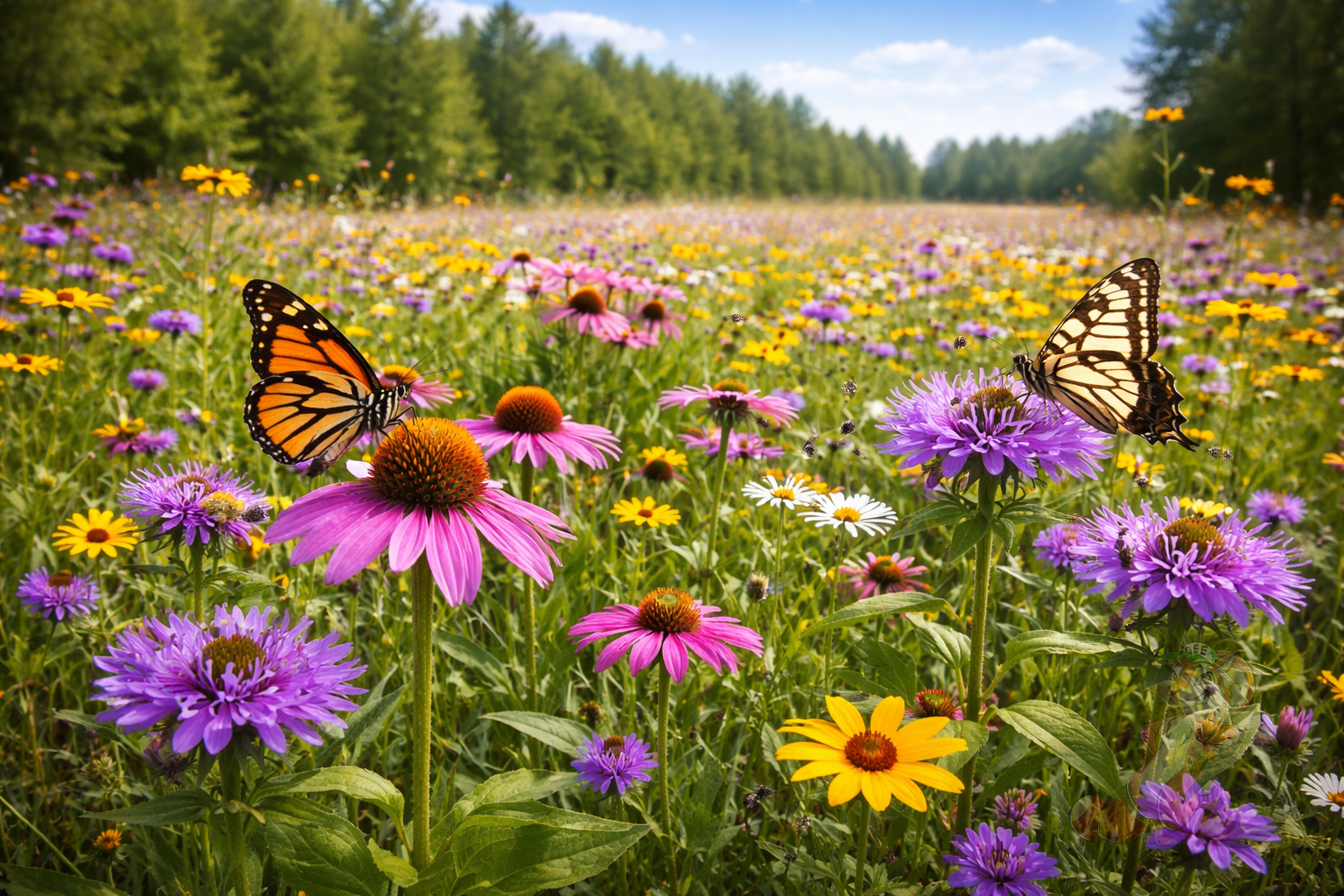
Wildflower pollinator habitat supporting bees and butterflies. Nuts About Dee’s Berries is installing 3.67 acres of habitat through the Bee & Butterfly Fund Seed A Legacy program.
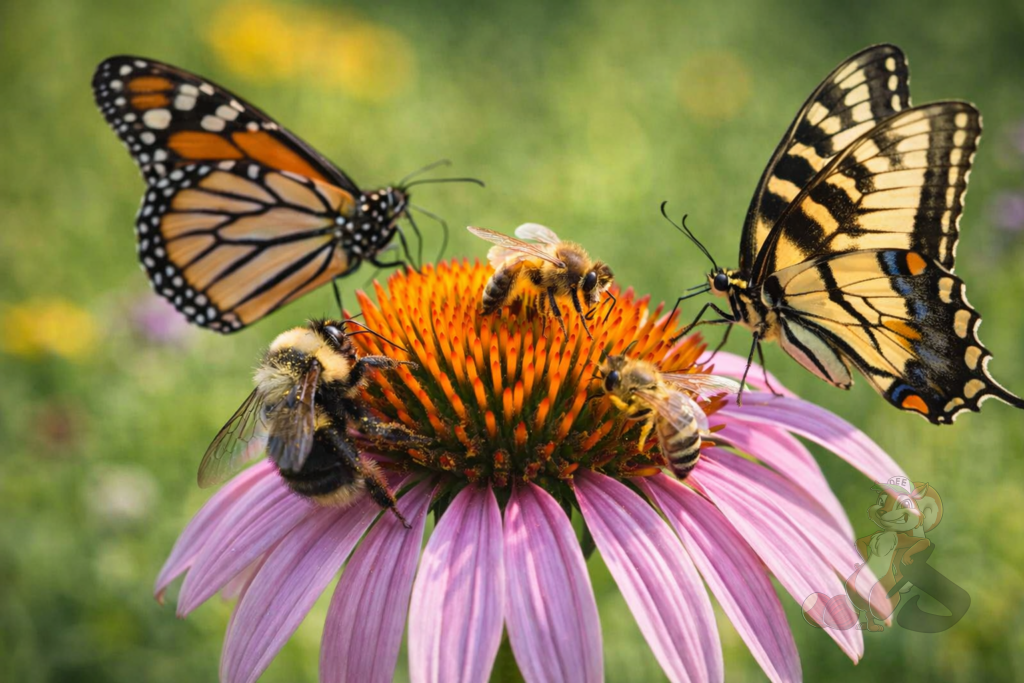
Native wildflowers such as coneflower provide nectar and pollen for bees, butterflies, and other beneficial insects in pollinator habitat plantings.
🌱 What the Seed A Legacy Program Provides
The Seed A Legacy program works with landowners to restore high-quality pollinator habitat across the United States. Rather than providing financial grants, the program focuses on supplying carefully designed seed mixes and technical support to help landowners establish long-term habitat.
As part of this program:
The Bee & Butterfly Fund provides the pollinator seed mix
The seed mix contains 40+ wildflower species designed for diverse seasonal blooms
Habitat design is guided by their Pollinator Habitat Scoring System
Participants receive guidance from professional habitat biologists
However, the program is a partnership. That means the landowner takes responsibility for establishing and maintaining the habitat.
For our project at Nuts About Dee’s Berries, this means:
We will prepare the site for planting
We will install the pollinator habitat
We will maintain the habitat for a minimum of five years
This model ensures that the habitat is not only planted, but also successfully established and maintained over time.
🌱 Why Pollinator Habitat Matters
Pollinators are essential for both agriculture and healthy ecosystems. In fact, many fruit and nut crops rely on pollinators to produce consistent harvests.
Pollinator habitat helps support:
Native bees
Butterflies
Honey bees
Beneficial insects that control pests
Biodiversity across agricultural landscapes
When pollinator habitat disappears, these species lose access to food and nesting areas. Consequently, pollinator populations decline.
By restoring diverse wildflower habitat, farms can help reverse that trend while improving the health of surrounding crops and ecosystems.
🌱 Pollinator Habitat and Agroforestry
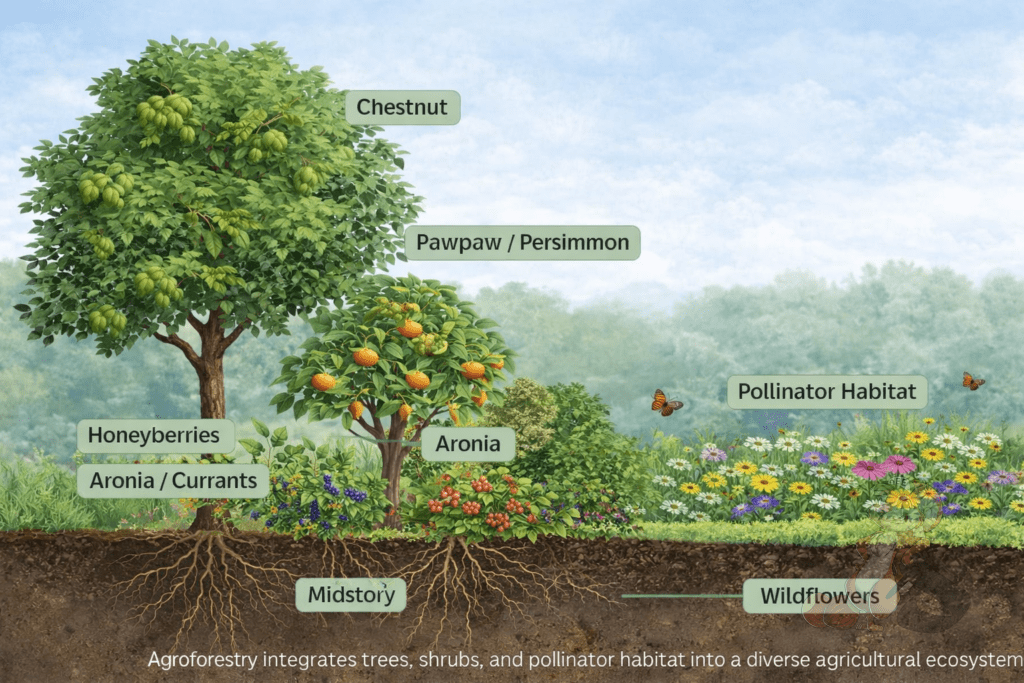
Nuts About Dee’s Berries is designed as a perennial agroforestry farm. This means trees, shrubs, and habitat are integrated together to create a long-term productive ecosystem.
In addition to producing fruit and nuts, the farm also focuses on:
soil health
biodiversity
carbon capture
ecological resilience
The pollinator habitat plays an important role within this system. By creating nectar corridors across the farm, pollinators can move easily between crops and natural areas.
Furthermore, diverse plantings attract beneficial insects that help maintain ecological balance within the farm landscape.
A Landscape Designed for Biodiversity
Once fully planted, Nuts About Dee’s Berries will include:
🌳 Over 3,500 trees
🌿 More than 11,000 shrubs
🍒 Multiple perennial fruit and nut crops
🌬 Windbreak systems
🐝 Dedicated pollinator habitat
Together, these systems create a diverse agricultural landscape that supports both food production and wildlife habitat.
The addition of 3.67 acres of pollinator habitat strengthens that mission by providing essential food and shelter for pollinators throughout the growing season.
📌 Looking Ahead
Establishing pollinator habitat is an investment in the long-term health of the land. While planting is only the first step, proper establishment and management are essential for long-term success.
Over the next several years, we will be working to ensure this habitat becomes well established and continues to support pollinators across the farm.
As the habitat matures, it will also become a visible part of the farm experience for future visitors.
Our goal is simple:
Grow food. Restore ecosystems. Support pollinators.
And demonstrate that agriculture and conservation can work together to create healthier landscapes.
Grateful for the Nuts About Dee’s Berries Supporters helping grow our perennial orchard.
Learn More
If you would like to learn more about the Seed A Legacy program and the work of the Bee & Butterfly Fund, you can visit:
https://nutsaboutdeesberries.com N3591 Highway 104, Brodhead, Wisconsin Follow us on Facebook & Instagram for real-time orchard progress!
Facebook
Twitter
LinkedIn
About Us
We grow organic fruits and nuts while fighting climate change by capturing carbon. Join us for family UPick experiences and special events. We’re committed to community and eco-friendly initiatives like supporting ocean pastures. Let’s make a greener, healthier world together!