Our Farm & Mission
Our Farm Our Mission is rooted in the belief that food should be grown in ways that strengthen the land, not exhaust it. At Nuts about Dee’s Berries, we’re building a perennial food forest designed to improve with time—layered with chestnuts, pawpaws, and productive shrubs working together as a living system.
Rather than chasing short-term yields, we focus on long-lived crops, resilient ecosystems, and uncommon fruits and nuts that reconnect people to where food comes from. This farm is about stewardship, curiosity, and growing something worth passing on.
Why This Farm Exists
Our Farm Our Mission started with a simple frustration: too much food is grown in ways that borrow from the future. We wanted a farm that gives back—building soil, supporting habitat, and producing real food year after year instead of starting over every season.
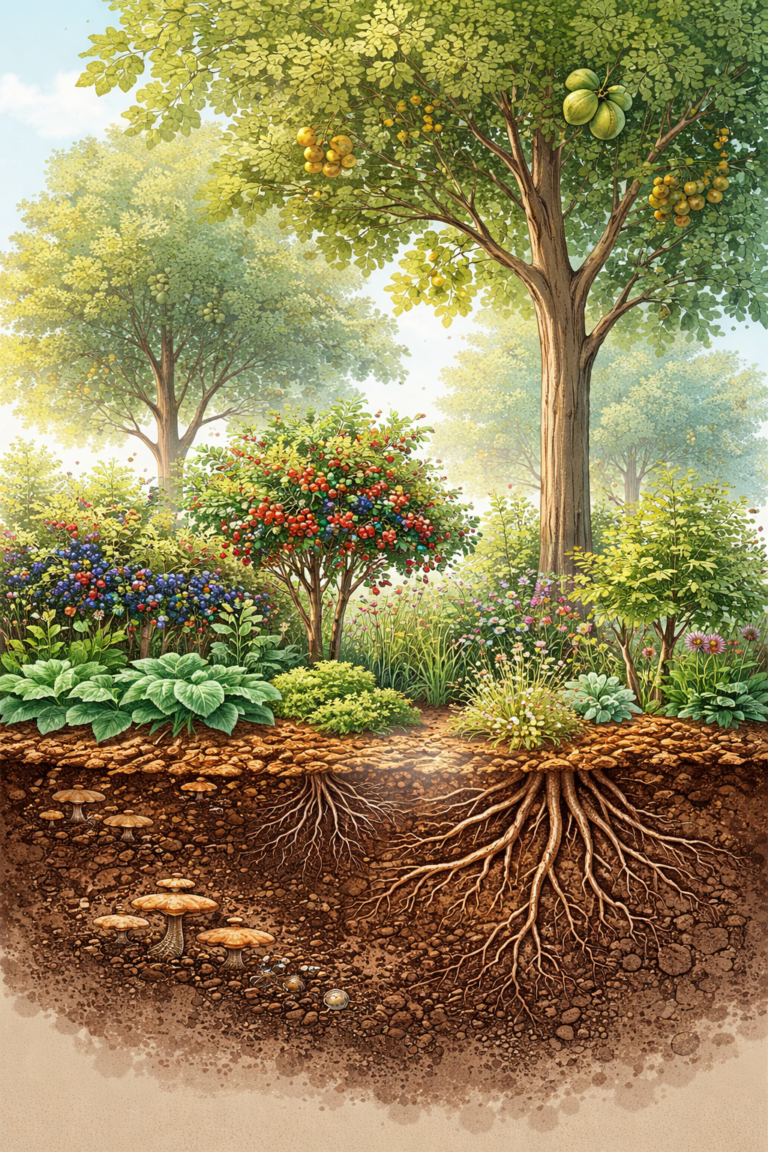
So we chose a different path: a perennial, layered system where chestnuts form the canopy, pawpaws fill the understory, and shrubs like currants carry the early harvest. That structure isn’t just pretty—it’s practical. It helps the land hold water, buffer weather swings, and stay productive as it matures.
If you’re curious about the “blueprint” behind the vision, explore Orchard Design / Agroforestry Vision. If you want the nuts-and-bolts of our approach, see How We Farm: Agroforestry & Regenerative Practices.
Perennial. Purpose-driven. Built for the long term.
Our Mission in Plain English
Our Farm Our Mission is to grow food in ways that make sense for the land, the climate, and the people who depend on it—now and decades from now.
That means choosing perennial crops that return year after year, designing systems that work together instead of competing, and prioritizing soil health, resilience, and flavor over speed or volume. We grow uncommon fruits and nuts not because they’re trendy, but because they’re well-suited to long-term, regenerative farming.
At its core, our mission is about stewardship. We’re building a farm that improves with age, invites curiosity, and reconnects people to food grown with intention.
This mission guides every decision we make—from what we plant to how we care for the land.
What Makes Our Farm Different
Most farms are designed for speed—quick establishment, quick harvests, quick returns. Our farm is designed for longevity.
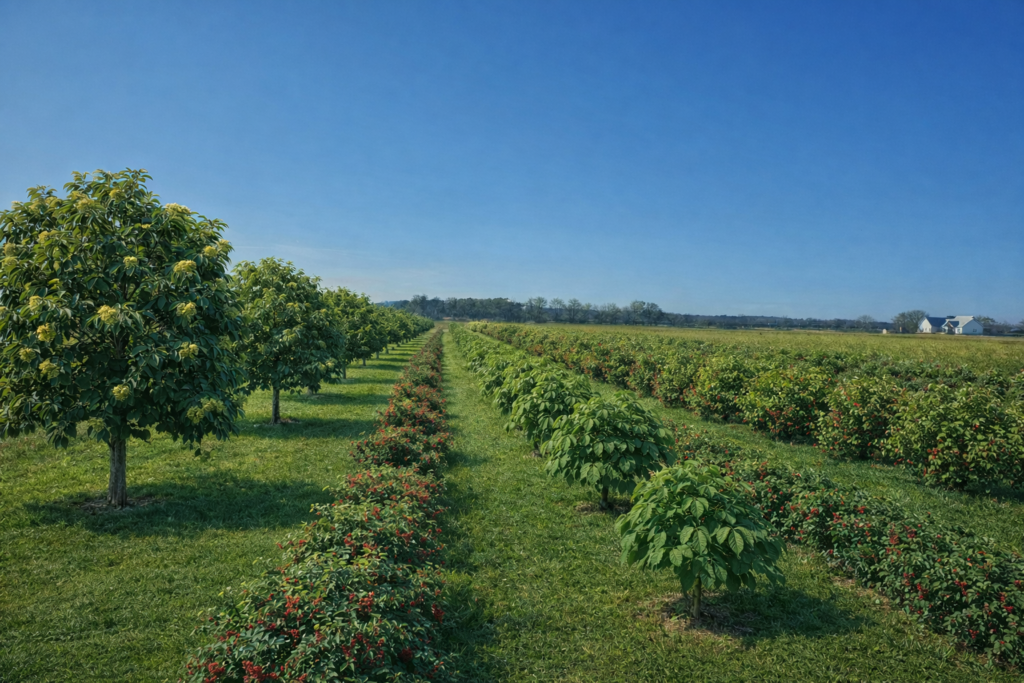
Instead of focusing on a single crop or season, we build layered systems where trees, shrubs, and ground cover support one another over time. Chestnuts form the canopy, pawpaws fill the understory, and productive shrubs create early yields while the larger system matures. Each layer plays a role, above and below the soil.
We also grow crops you won’t find everywhere. Uncommon fruits and nuts aren’t a novelty here—they’re a deliberate choice. Many of these plants are well-adapted to perennial systems, resilient to changing conditions, and packed with flavor and nutrition that gets lost in commodity farming.
Most importantly, this farm isn’t static. It’s designed to evolve. As plants mature, soils deepen, and ecosystems stabilize, the farm becomes more productive and more resilient—not more depleted.
Built for the Long Term
This farm is designed with time in mind. Instead of asking what produces fastest, we ask what will still be thriving years from now—through variable weather, changing seasons, and shifting conditions.
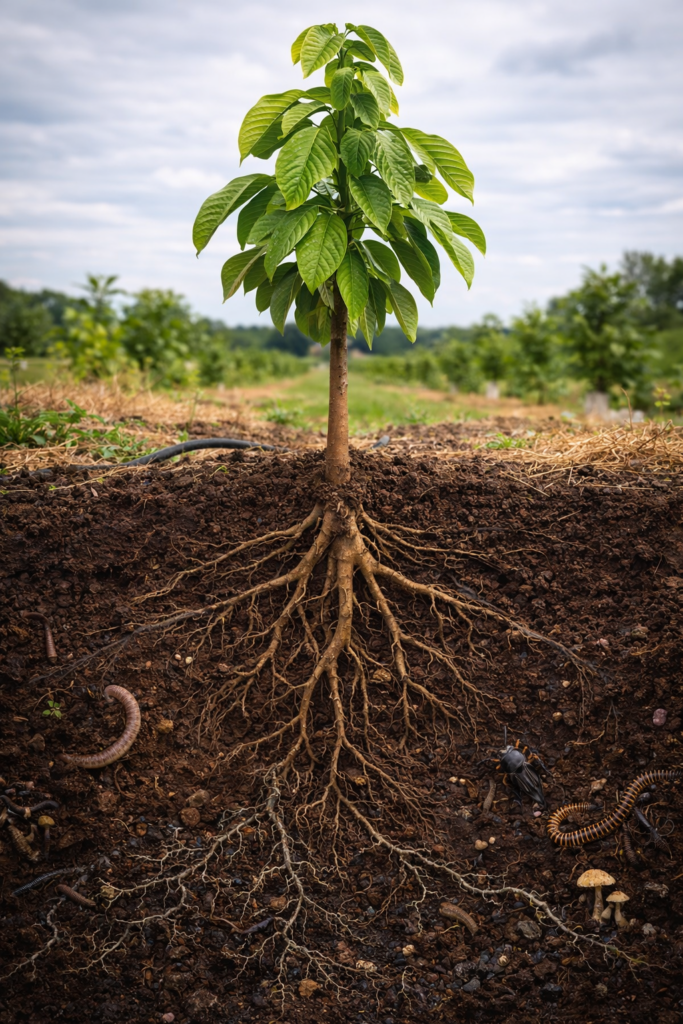
Perennial systems allow roots to grow deeper, soils to become more stable, and relationships between plants, microbes, and wildlife to strengthen over time. As trees mature and shrubs fill in, the farm becomes more resilient and more productive without relying on constant disturbance or heavy inputs.
That long-term approach also shapes how we plan and plant. Each decision is made with future growth in mind, allowing the farm to evolve naturally rather than forcing it to reset each season. The result is a living system that improves with age—one that can support food production, habitat, and learning for decades to come.
A Farm Meant to Be Experienced
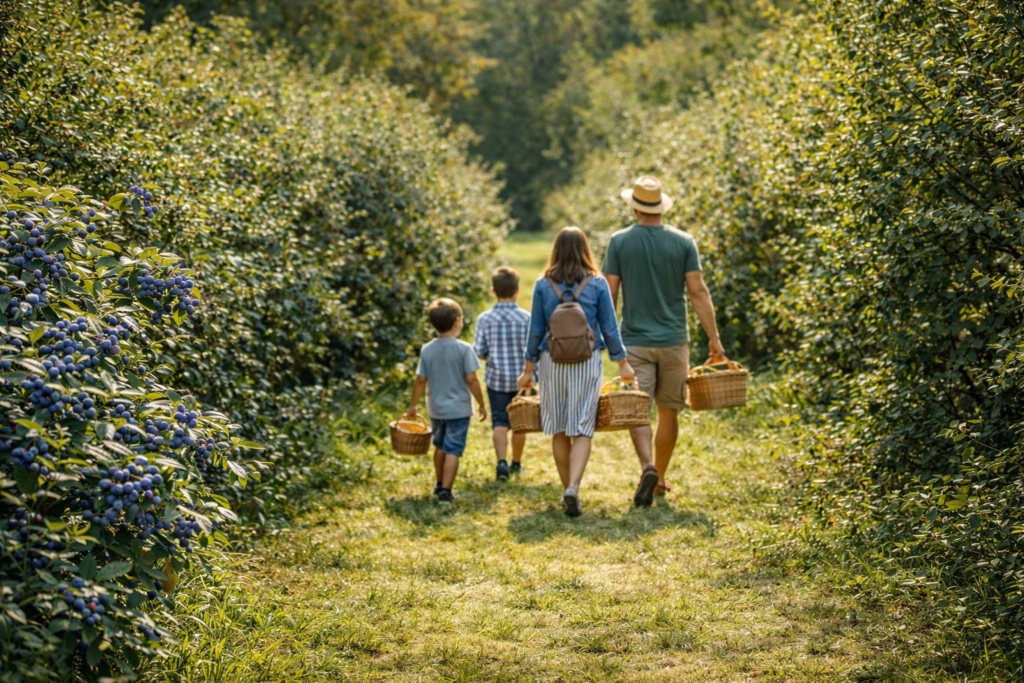
This farm isn’t designed to be understood from a distance. It’s meant to be walked, observed, and tasted—where people can see how food grows within a living system rather than a single row or season.
As the farm matures, visitors will encounter a landscape shaped by layers and timing: early fruiting shrubs alongside young trees, established plantings next to new growth, and seasonal changes that invite repeat visits. Discovery is part of the experience, whether it’s encountering an unfamiliar fruit, noticing how plantings shift through the year, or learning why certain crops thrive together.
Spending time on the farm offers a slower rhythm than most food systems allow. It’s a chance to reconnect with where food comes from, ask questions, and experience agriculture as something dynamic—rooted in place and shaped by time.
Looking Ahead
This farm is still growing into itself. Many of the trees and shrubs you see today are part of a longer story—one that unfolds over years, not seasons.
As the landscape matures, so will the opportunities to learn from it. The systems we’re building now are meant to support future harvests, deeper educational experiences, and meaningful connections between people, land, and food. Growth here is intentional, measured, and guided by what the land can sustain.
Looking ahead means staying responsive—observing what works, adapting when needed, and allowing the farm to evolve naturally over time. Our focus remains the same: stewarding this place carefully so it can continue to provide food, habitat, and inspiration well into the future.