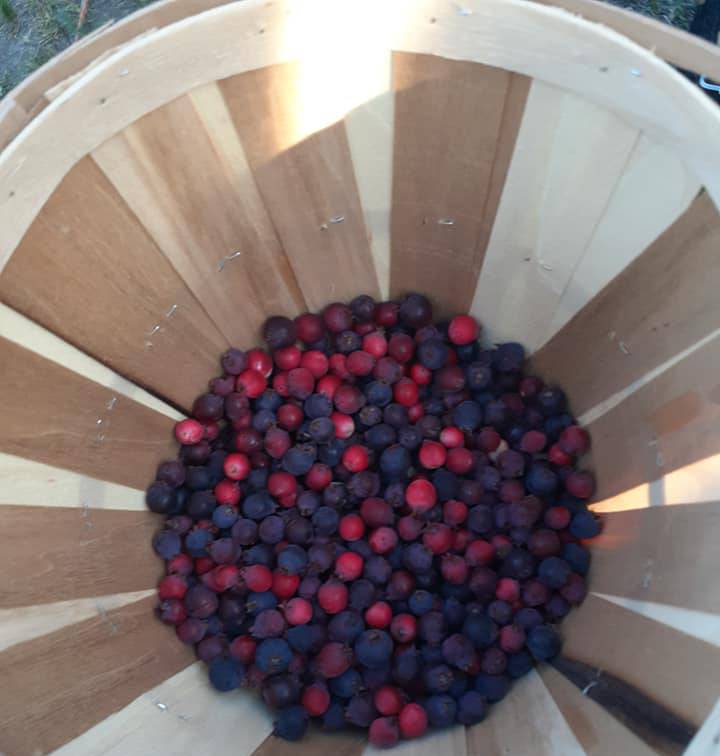
Early summer’s most fleeting fruit — sweet, elegant, and almost impossible to find — grown right here in Brodhead, Wisconsin as part of our perennial agroforestry orchard in Green County.
Juneberries — also known as serviceberries — are one of the first fruits of the season, ripening just as spring shifts into early summer. Their flavor is often described as a refined blend of blueberry and almond, with a gentle sweetness and soft, juicy texture that makes them ideal for fresh eating, baking, and preserving.
At Nuts About Dee’s Berries, our juneberries are grown intentionally as part of a diverse agroforestry system designed for long-term soil health, pollinator support, and exceptional flavor. Because juneberries are delicate and have a very short harvest window, they’re rarely available in grocery stores. That’s exactly why experiencing them through U-pick is so special.
Whether you’re visiting from Southern Wisconsin, the Greater Milwaukee area, or making the drive from Chicago, juneberries are a seasonal highlight worth planning around.
Juneberries, also known as serviceberries, are one of the earliest tree fruits to ripen in the Upper Midwest. They mature just as spring gives way to early summer, offering a short but memorable harvest window that makes them especially prized when eaten fresh.
Although they’re often compared to blueberries, juneberries have a more nuanced flavor. Their taste blends gentle sweetness with subtle almond-like notes, and their soft, juicy texture makes them versatile in both sweet and savory uses. Because the fruit is delicate and ripens quickly, juneberries are rarely grown at scale for grocery stores, which is why many people in Southern Wisconsin have never had the chance to try them.
At Nuts About Dee’s Berries, juneberries are grown intentionally as part of our perennial agroforestry orchard in Brodhead, Wisconsin, where soil health, plant diversity, and pollinator support all contribute to flavor development. Rather than being harvested all at once, the berries are picked at peak ripeness through U-pick, allowing visitors to experience them exactly as they’re meant to be enjoyed.
Juneberries are also deeply connected to regional landscapes, thriving in climates like Green County and across the Upper Midwest. Their early bloom supports pollinators, while their fruit signals the beginning of the fresh fruit season on the farm.
Why Juneberries Are Special Here
Juneberries thrive when they’re given time, space, and healthy soil — and that’s exactly how they’re grown here. Rather than being treated as a single-season crop, our juneberries are part of a long-term perennial orchard system designed to support flavor development, plant resilience, and ecological balance.
They’re grown within a diverse planting that prioritizes soil health and plant diversity, allowing the trees to mature naturally and produce fruit with depth and character. This approach also supports pollinators early in the season, which plays an important role in fruit set and overall orchard health.
Because juneberries ripen quickly and unevenly, they’re best experienced when picked at peak ripeness. Instead of harvesting everything at once, we rely on U-pick, which allows visitors to choose fruit at its ideal stage — something that simply isn’t possible in commercial supply chains.
The result is a fruit that’s softer, more nuanced, and far more expressive than what most people expect. It’s also why juneberries are one of the earliest moments in the year when the orchard truly comes alive.
Juneberry Varieties We Grow
At Nuts About Dee’s Berries, our juneberry plantings include a carefully selected mix of proven varieties known for flavor, productivity, and reliability in Midwest growing conditions. Each variety brings slightly different characteristics to the orchard, helping extend the harvest window and offer a more dynamic U-pick experience.
Martin
Known for large berries and a rich, balanced flavor, Martin is one of the most widely planted juneberry varieties. It produces consistently heavy crops and ripens early, making it a cornerstone of the juneberry season.
Northline
Northline is valued for its cold hardiness and dependable yields. The fruit is slightly smaller than Martin but notably sweet, with a soft texture that makes it especially good for fresh eating.
Honeywood
As the name suggests, Honeywood is prized for its sweetness. This variety ripens mid-season and produces uniform clusters that are easy to pick, making it a favorite during U-pick.
Smoky
One of the classic juneberry varieties, Smoky offers a traditional flavor profile with excellent aroma. It’s known for vigorous growth and strong production, contributing depth and character to the orchard mix.
Thiesen
Thiesen stands out for its large fruit size and firm texture. It ripens slightly later than some early varieties, helping extend the juneberry harvest window.
Isaac
A newer variety with strong performance in northern climates, Isaac produces flavorful berries with good size and consistency. It adds resilience and diversity to our plantings.
Flavor Profile & How to Use Juneberries
Juneberries are often compared to blueberries, but their flavor is more layered and expressive. When fully ripe, they offer gentle sweetness balanced by subtle almond-like notes, along with a soft, juicy texture that works beautifully across a range of uses.
Because juneberries ripen early and are best enjoyed fresh, many people experience them for the first time through U-pick — where flavor and texture can be appreciated at their peak rather than after long storage or transport.
Flavor Profile
Use a simple subheading or paragraph break — no bullets required if you prefer clean flow.
Juneberries are naturally sweet without being sugary, with a mild richness that sets them apart from more acidic berries. Their flavor deepens as they fully ripen, becoming rounder and slightly nutty, while their tender skin and soft flesh make them especially pleasant to eat fresh.
Culinary Uses
Juneberries are versatile in both fresh and cooked applications, making them easy to incorporate into everyday cooking and baking.
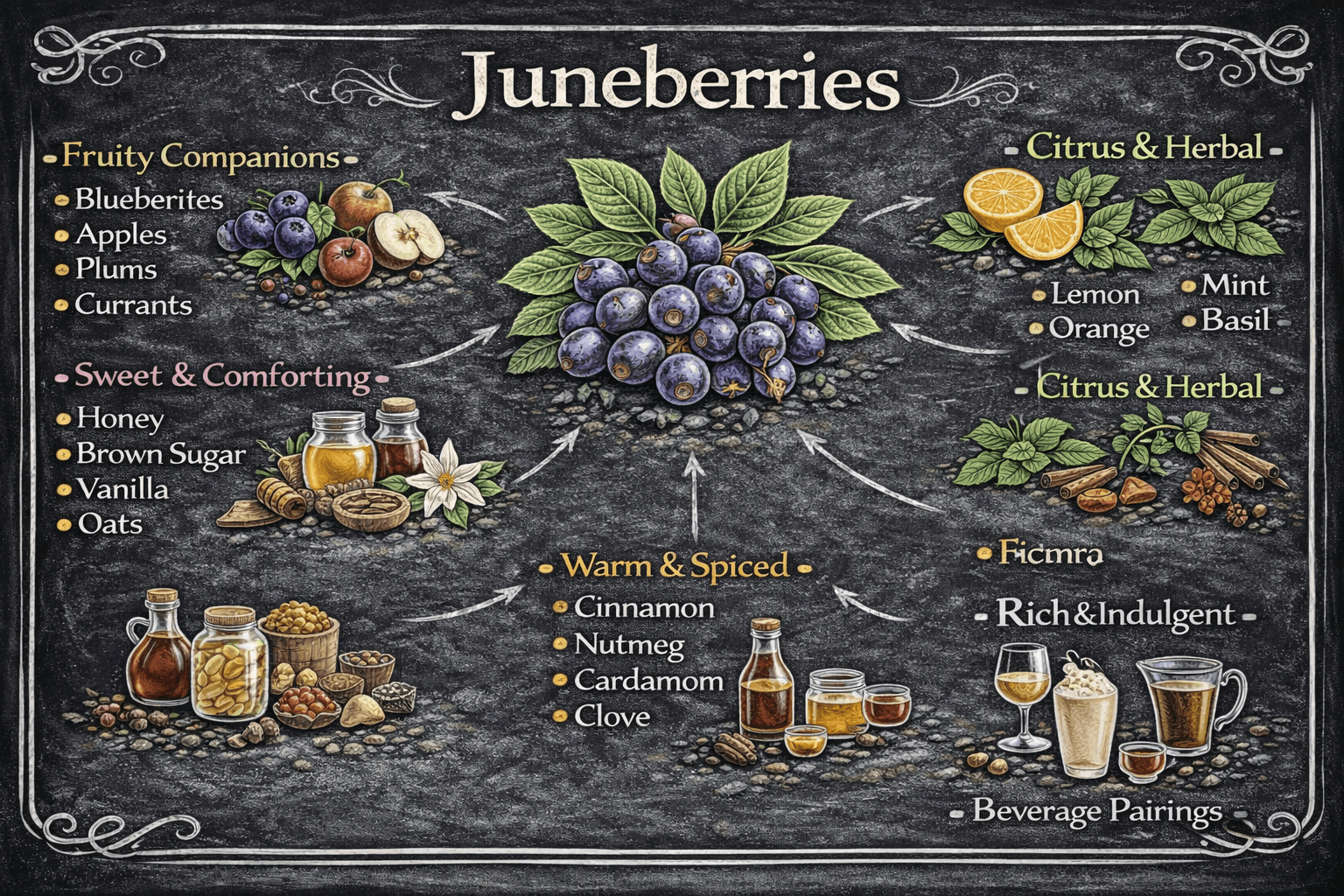
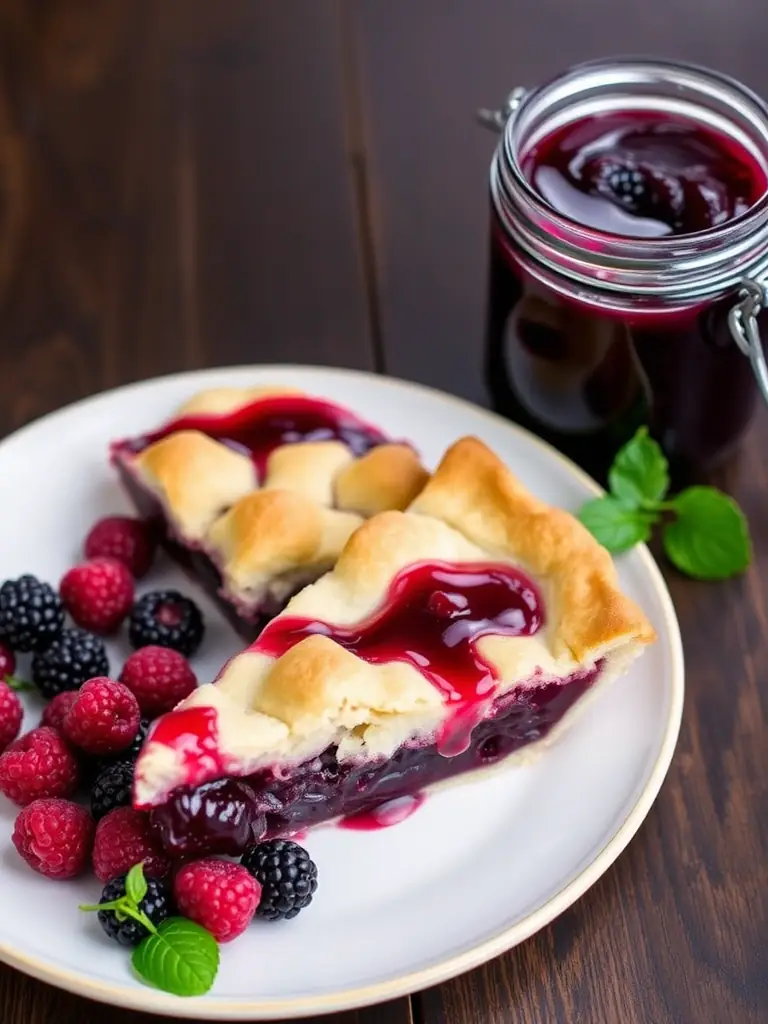
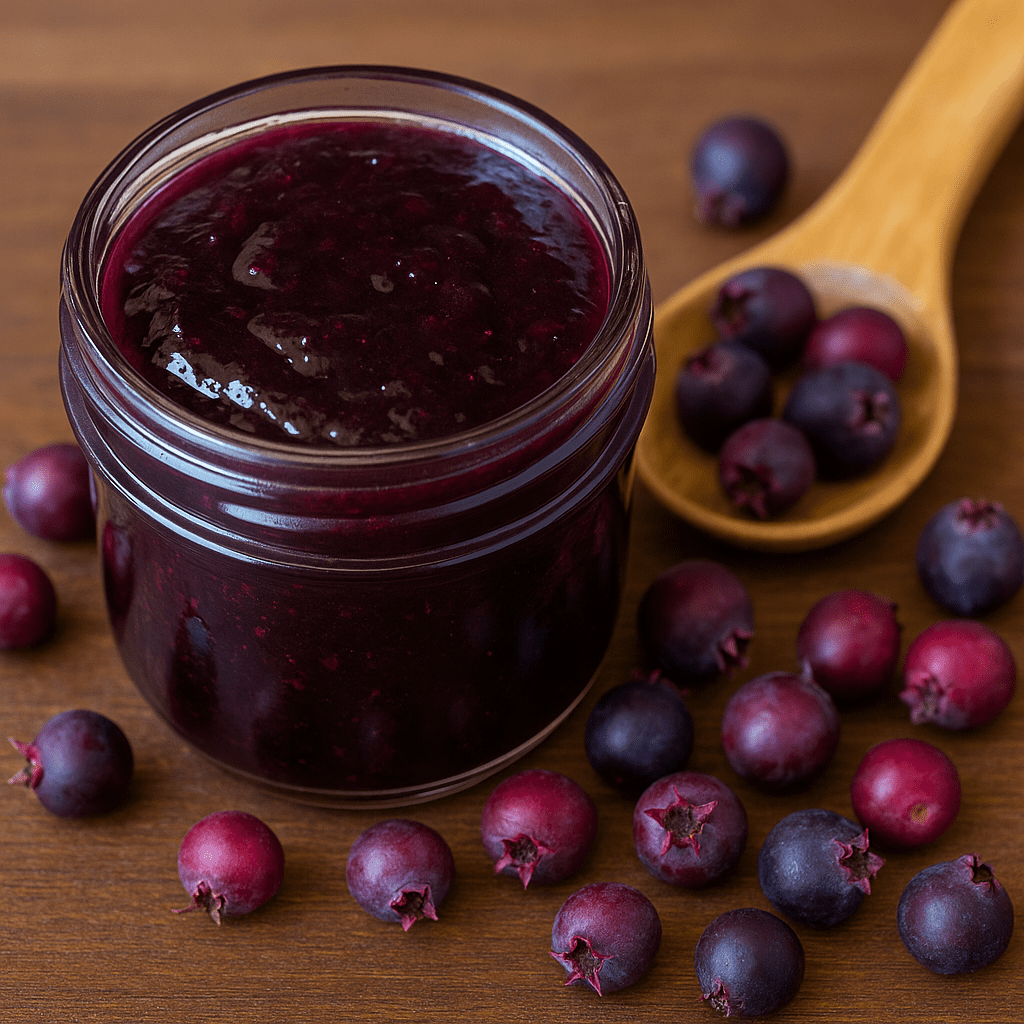
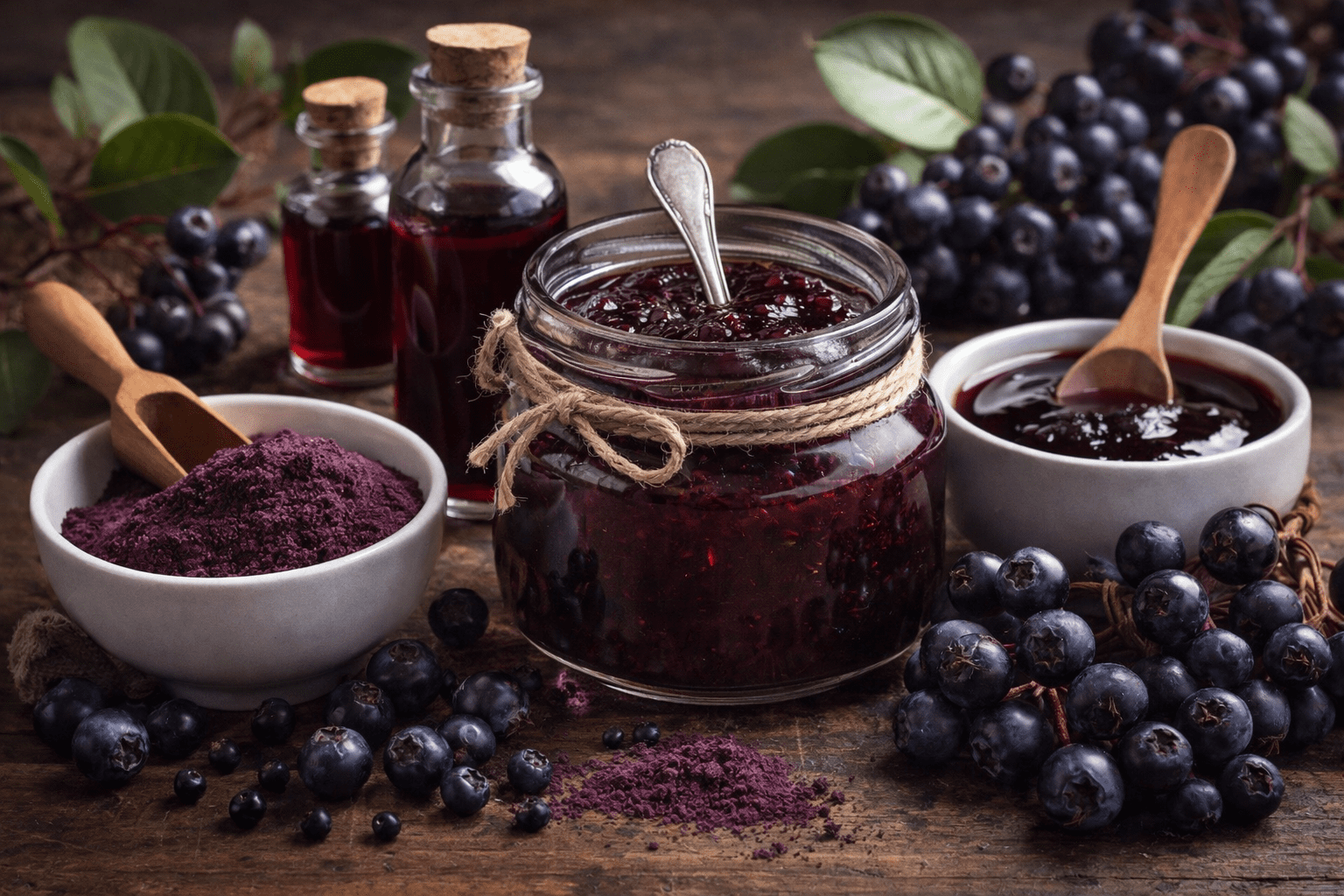
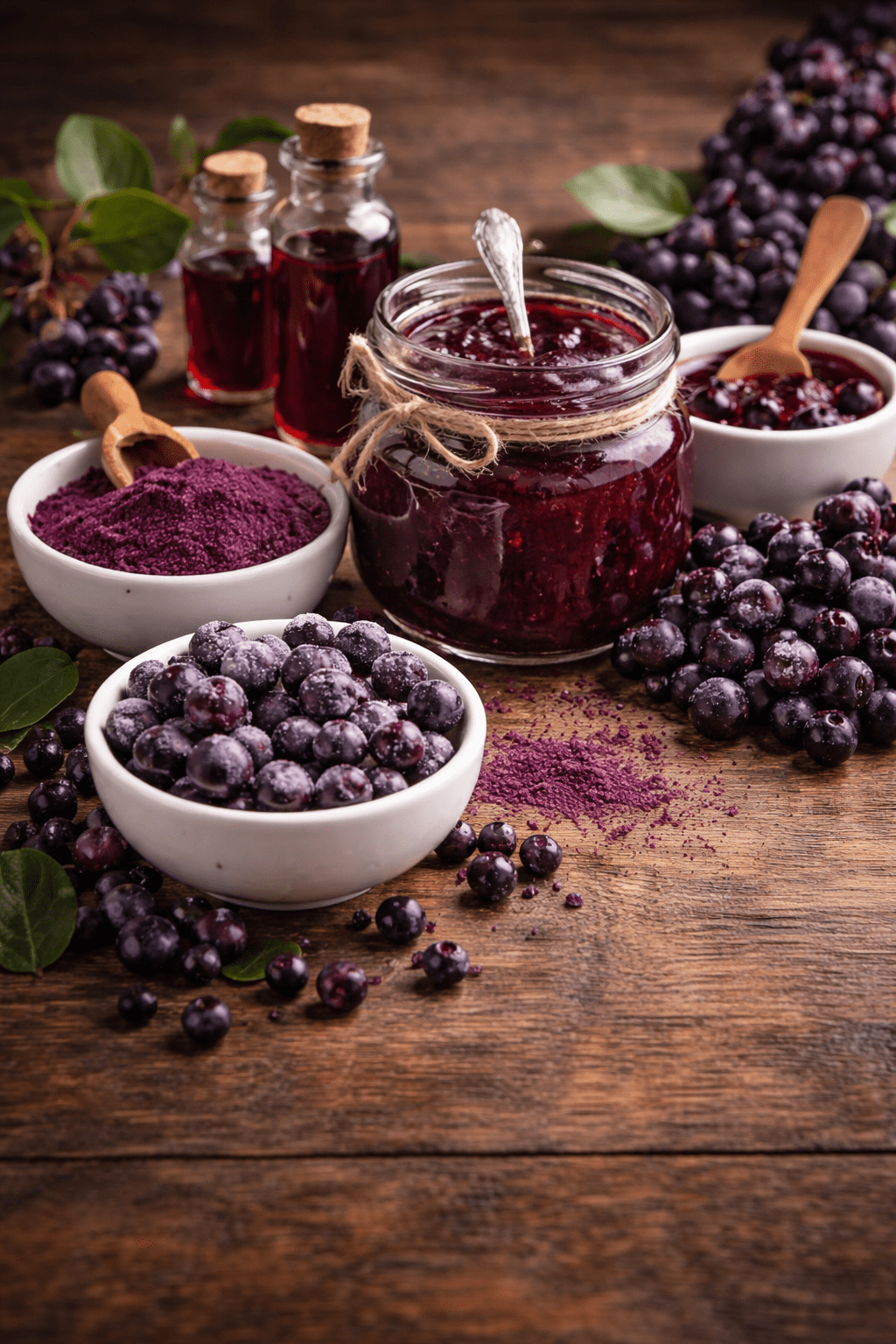
They’re excellent eaten straight from the tree, but also work well in muffins, quick breads, pies, and crisps. Their balanced sweetness pairs naturally with simple preparations, where the fruit itself can take center stage. Juneberries can also be used in jams, sauces, and syrups, especially when combined with other early-season fruits.
For longer enjoyment, juneberries freeze well and can be preserved for use later in the year, making them a practical choice for both fresh eating and pantry storage.
Juneberry Harvest Season & U-Pick Experience
Juneberries are one of the very first fruits to ripen each year, often signaling the true beginning of the fresh fruit season at the farm. In Southern Wisconsin, they typically come into season in mid to late June, depending on spring temperatures and weather patterns.
Unlike many fruits that ripen all at once, juneberries mature gradually. This staggered ripening creates a short but magical harvest window where flavor, texture, and sweetness peak over just a few weeks. Because of this, juneberries are rarely harvested mechanically or shipped long distances — they’re best enjoyed right where they’re grown.
At Nuts About Dee’s Berries, juneberries are harvested through U-pick, allowing visitors to choose fruit at its ideal stage of ripeness. Some berries will be firm and mildly sweet, while others deepen in flavor as they darken — making each visit slightly different.
This early-season timing also means juneberries are often the first opportunity of the year to walk the orchard, experience the agroforestry layout, and reconnect with the land after spring.
Common Ways to Use Juneberries
Juneberries are incredibly versatile, which is part of what makes them so special during their short season. Their naturally balanced sweetness, soft texture, and subtle almond-like finish allow them to shine in both fresh and cooked applications without requiring heavy sugar or processing.
Fresh Use
Juneberries are excellent eaten fresh, right off the tree. When fully ripe, they’re soft, juicy, and gently sweet, making them an easy snack during U-pick. Because they ripen unevenly, hand-picking allows you to choose fruit at its ideal stage — something that simply isn’t possible in commercial supply chains.
Baking & Desserts
Juneberries work beautifully in baked goods where their flavor can concentrate without becoming overpowering. They’re commonly used in:
Muffins and quick breads
Pies and galettes
Crisps and cobblers
Pancakes and scones
Their tender skin and small size mean they don’t require peeling or special preparation.
Juneberries are one of the earliest fruits of the season, ripening just as spring shifts into early summer. In Southern Wisconsin, the harvest window is brief — often just a couple of weeks — which makes timing everything.
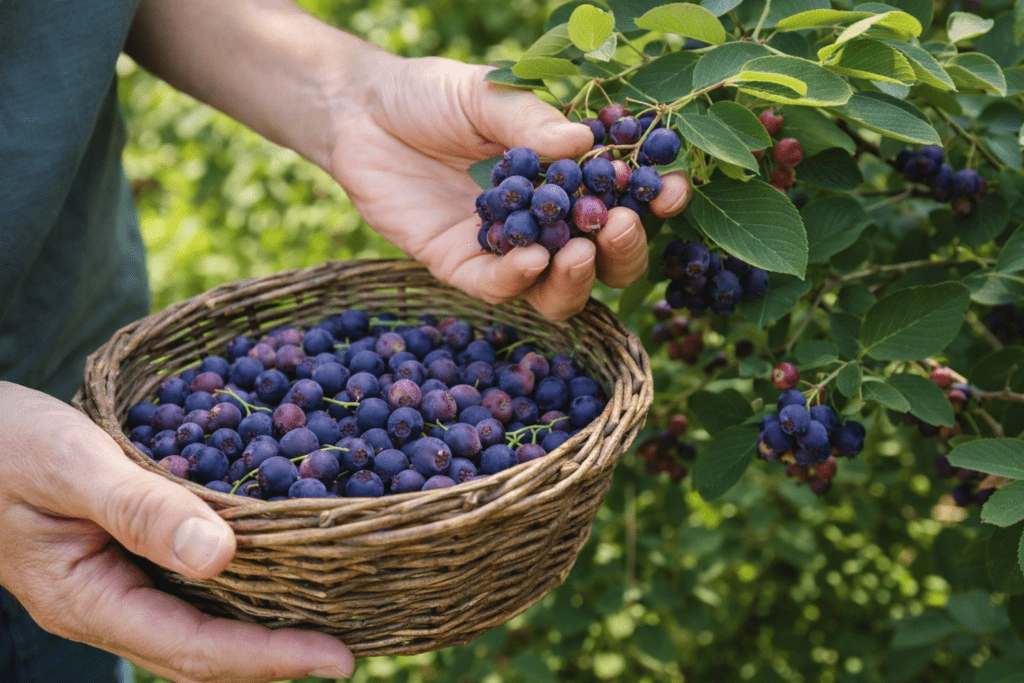
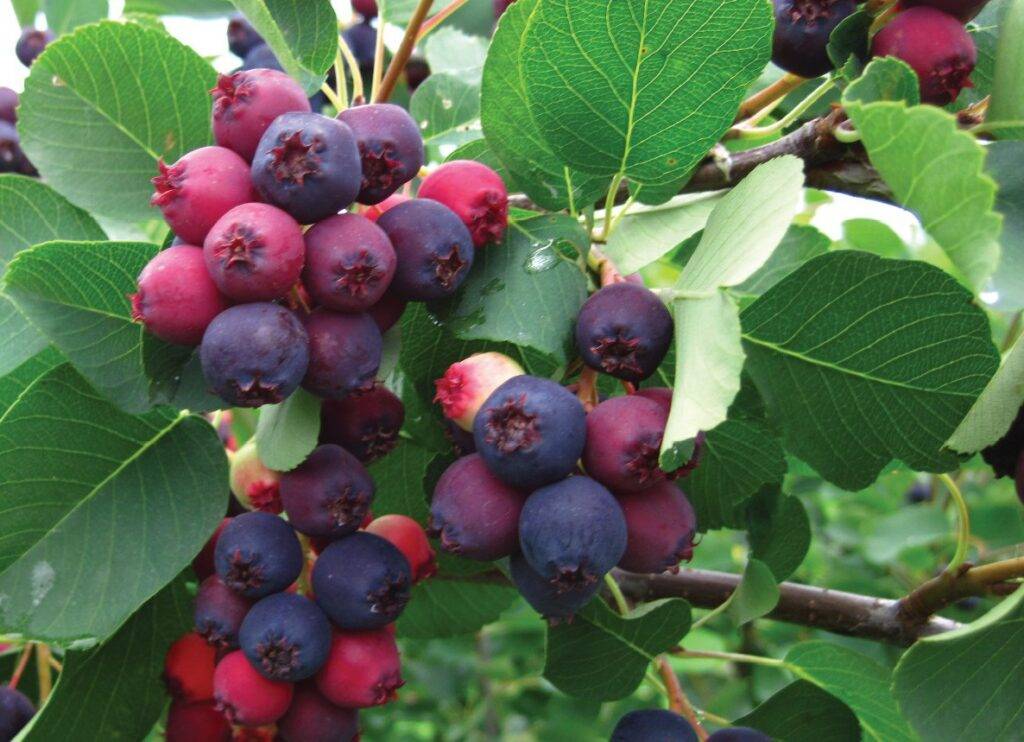
Unlike fruits that ripen all at once, juneberries mature gradually across the tree. It’s common to see berries at several stages of ripeness on the same branch, which is why hand-picking is essential. Fully ripe juneberries deepen to a rich purple-blue, soften slightly to the touch, and develop their signature balanced sweetness with subtle almond-like notes.
At Nuts About Dee’s Berries, juneberries are harvested exclusively through U-pick. This allows visitors to choose fruit at peak ripeness rather than relying on early-picked berries designed for transport. Picking by hand also protects the delicate skin of the fruit and preserves the nuanced flavor that juneberries are known for.
Because the season moves quickly, availability can change from week to week. We recommend checking our Harvest Calendar before visiting and planning ahead during early summer to catch juneberries at their best.
For many visitors, juneberries are the first fresh fruit of the year — and the moment the orchard truly comes alive.
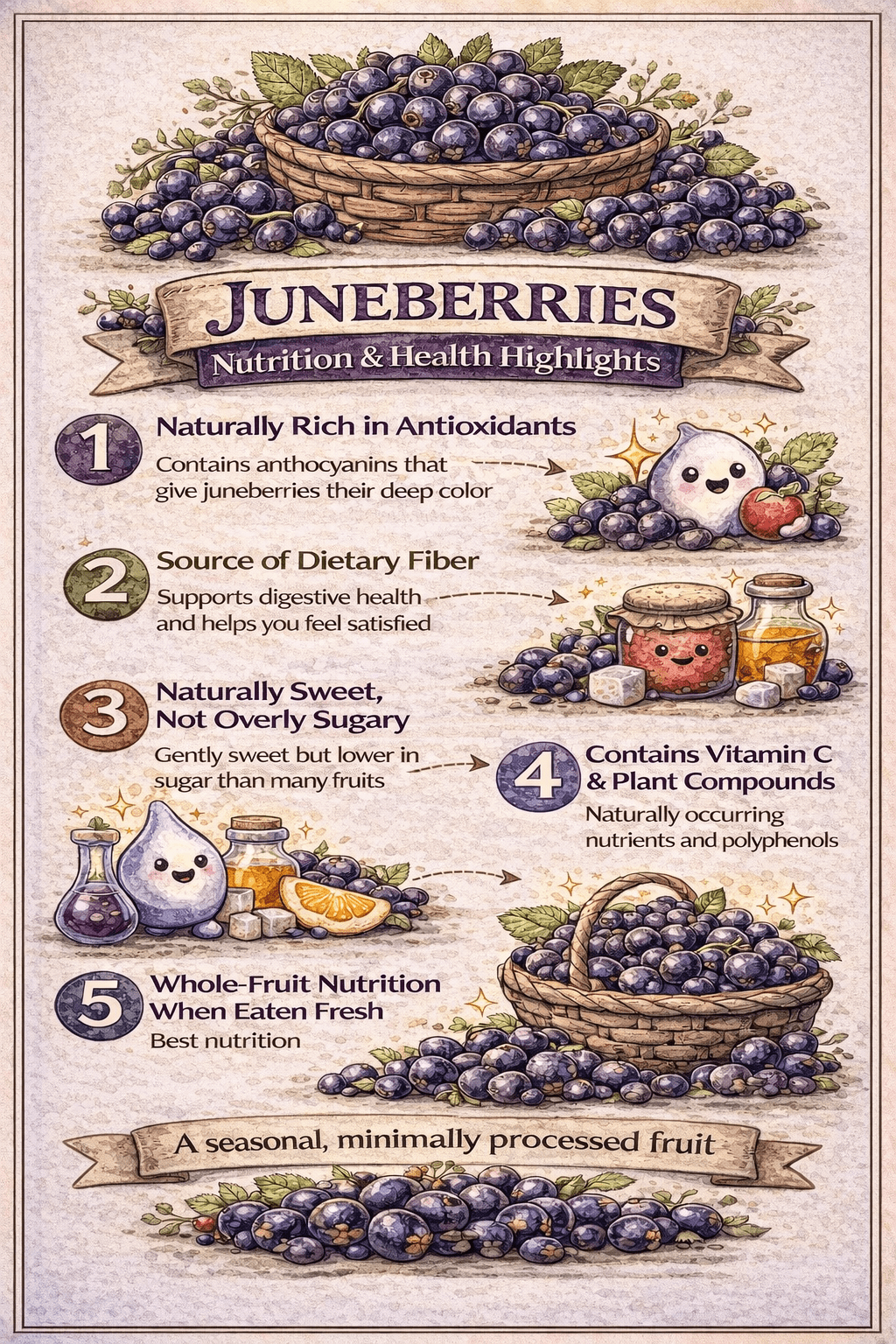
Juneberries may be small, but they’re nutritionally dense. Like many dark-colored berries, they contain naturally occurring antioxidants that contribute to their deep color and support overall wellness when enjoyed as part of a balanced diet.
They’re also a source of dietary fiber, which supports digestion and helps make juneberries satisfying whether eaten fresh or used in meals. Because they’re naturally sweet without being overly sugary, juneberries fit well into everyday eating without requiring heavy processing.
Juneberries have traditionally been valued as a whole food rather than a supplement-style ingredient. Their appeal lies in their simplicity — fresh fruit, grown in season, eaten close to where it’s harvested.
This makes juneberries an easy, approachable way to add variety to early-summer eating, especially for those looking to explore fruits beyond what’s typically available in stores.
Plan Your Visit
Juneberries are one of the first opportunities each year to experience the orchard in harvest mode. Because their season is short and weather-dependent, planning ahead helps ensure the best experience.
Before visiting, we recommend checking the Harvest Calendar for current ripeness and availability. This allows you to plan your trip around peak picking and get the most from your visit.
Our orchard is designed for walking and hand-harvesting, making it easy to spend time exploring, picking, and enjoying the early-season landscape. Juneberry season is often quieter and more relaxed than peak summer harvests, which many visitors find especially enjoyable.
Whether you’re visiting for the fruit, the experience, or simply to reconnect with the land, juneberry season offers a calm and memorable introduction to the year’s harvest.
This helps ensure you’re visiting during peak picking.
Yes. Juneberries work well in baked goods, jams, sauces, and syrups, and they also freeze well for later use.
No. Juneberries ripen gradually, which is why hand-picking is important and why U-pick works so well for this fruit.
Yes. Juneberries and serviceberries are two common names for the same fruit, part of the Amelanchier family.
Absolutely. Honeyberries are easy to harvest, and their early-season timing makes them a popular choice for families looking for a relaxed U-pick experience.
Beginning in 2028, we anticipate starting limited honeyberry production suitable for small-batch testing and seasonal use. As our shrubs continue to mature, we expect to gradually expand availability and accommodate larger commercial requests over time.
Producers interested in future availability are encouraged to reach out early to discuss timing and potential options.
Juneberry season is short, but it’s one of the most rewarding times to visit the orchard. Whether you’re curious to try juneberries for the first time or returning for a seasonal favorite, we invite you to experience them at peak ripeness.
Check what’s currently in season, plan your visit, and enjoy the start of the harvest year with us.
At Nuts about Dee’s Berries, we pride ourselves on offering a diverse selection of delicious and nutritious crops. In addition to our featured crop, we also grow a variety of other fruits and nuts that are perfect for U-pick adventures. Explore our other offerings and discover your new favorite treat. We are sure that you will find something that you like, and that fits your needs.
Our Red Currants ripen in early summer, delivering a bright, tart flavor that’s ideal for jellies, sauces, and fresh snacking. Their vibrant red color reflects the rich antioxidants packed into every berry.
We grow organic fruits and nuts while fighting climate change by capturing carbon. Join us for family UPick experiences and special events. We’re committed to community and eco-friendly initiatives like supporting ocean pastures. Let’s make a greener, healthier world together!