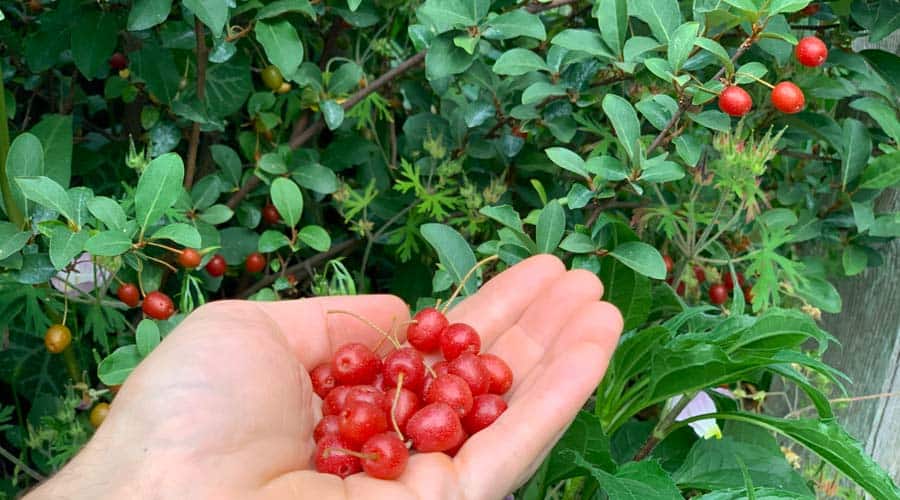
Goumi Berries
A tangy, functional berry grown for resilience, preservation, and orchard health.
Goumi berries are a lesser-known fruit with big potential. Their bright, tart flavor makes them especially well suited for jams, jellies, syrups, sauces, and blended products. While not as common as other berries, goumi has long been appreciated for its versatility, deep color, and ability to shine in value-added and preserved forms.
At our farm, goumi is grown with both curious U-pick visitors and commercial buyers in mind — offering a unique ingredient for small-batch producers, chefs, and anyone looking to work with distinctive, functional fruit.
Jump to:
Why We Grow Goumi
We grow goumi as part of a broader commitment to resilient, regenerative farming. Goumi is a nitrogen-fixing shrub, meaning it helps improve soil fertility naturally while growing alongside other perennial crops. In an agroforestry system, plants like goumi support long-term orchard health rather than relying solely on external inputs.
Goumi also offers flexibility. It tolerates a range of conditions, requires relatively low maintenance once established, and provides both ecological and culinary value.
For U-pick visitors + small-batch buyers
Flavor & Uses
Goumi berries are bright and tangy, often compared to tart cherry or cranberry, with mild sweetness underneath. They are naturally astringent when eaten fresh and tend to shine when cooked, lightly sweetened, or blended with other fruits.
Best Uses
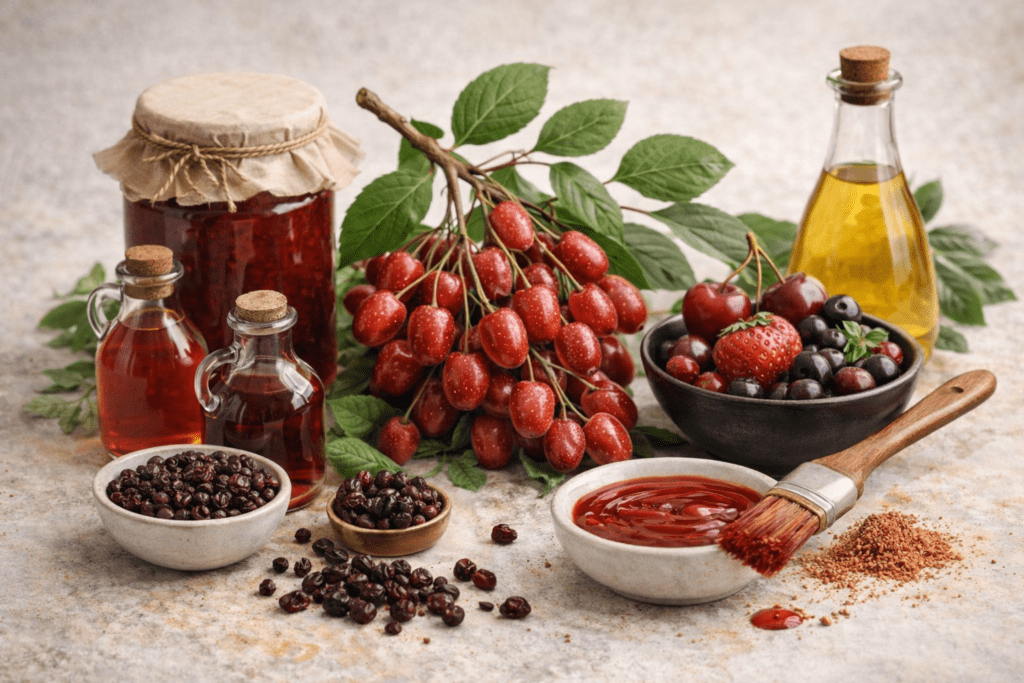
Goumi is valued more for versatility than for fresh snacking. Common uses include:
- Jams, jellies, and syrups
- Shrubs, infusions, and vinegar-based preserves
- Sauces and glazes for savory dishes
- Blended preserves with strawberry, cherry, or honeyberry
- Drying and powdering for long-term storage
Goumi is less commonly eaten plain, but it excels in recipes where acidity and depth of flavor are an advantage.
We grow multiple goumi varieties to support resilience, flavor range, and orchard function.
Sweet Scarlet
Balance of sweetness and acidity. Well suited for preserves and blended products.
Red Gem
A traditional goumi variety with bold, tangy flavor. Often favored for syrups, drying, and functional uses.
Tillamook
Known for vigor and adaptability. Valued for its role in supporting the orchard ecosystem as much as for its fruit.
Harvest Experience
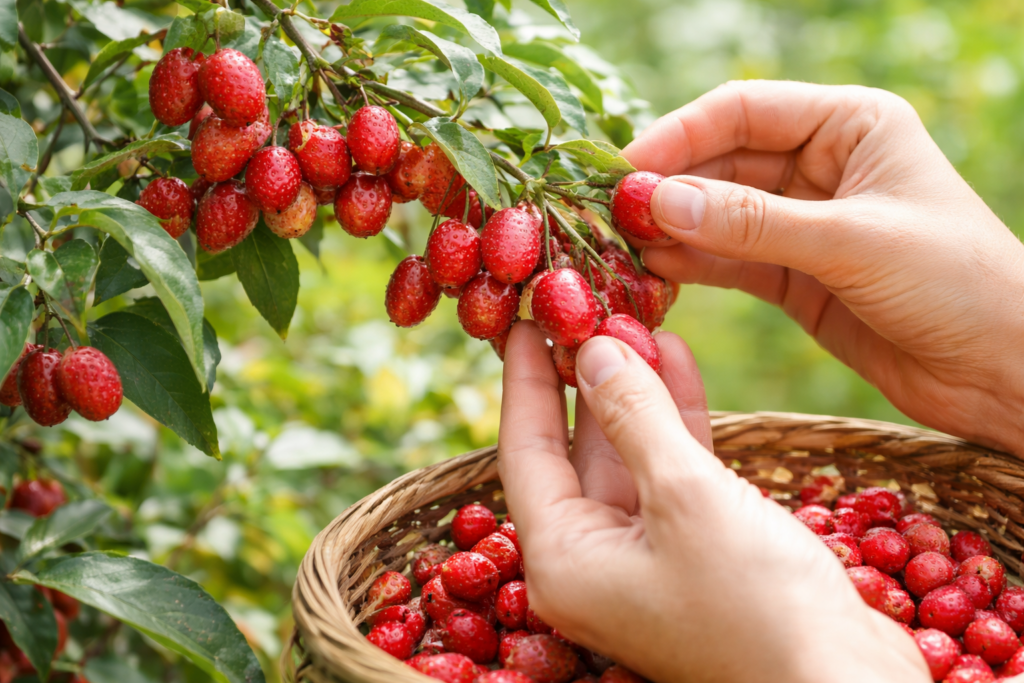
Goumi is typically harvested when fully colored and soft, with harvest timing varying slightly by weather and variety. Because the fruit is most often used for preservation and processing, harvest focuses on gathering ripe berries efficiently rather than encouraging fresh snacking.
Harvesting goumi is a hands-on process that fits well into diversified orchard systems, especially alongside other early- to mid-season berries.
Why People Choose Goumi
Goumi berries are naturally rich in antioxidants and polyphenols and are often grouped with other functional berries rather than traditional dessert fruits. Instead of being prized for sweetness alone, goumi has long been valued for its broader uses — especially when preserved or incorporated into syrups, infusions, and shelf-stable products.
Because of this, goumi fits well alongside other functional crops grown at the farm that emphasize resilience, storage, and versatility rather than fresh snacking alone. Customers interested in preservation, herbal preparations, or value-added foods often gravitate toward berries like goumi for exactly these reasons. In this way, goumi fits alongside other functional crops grown at the farm that emphasize resilience, storage, and long-term use within resilient perennial systems, a growing focus of organizations like the Savanna Institute.
Related Functional Crops at the Farm
Goumi is part of a broader group of crops grown at the farm for function, resilience, and long-term versatility rather than sweetness alone. Similarly, many of these crops are valued not just for fresh eating, but for preservation, storage, and a wide range of culinary and practical uses.
As a result, customers drawn to goumi often find the same appeal in other functional crops grown here, including seaberry, aronia, honeyberry, currants, jujube, and hazelnut. Together, these crops reflect a shared focus on usefulness, adaptability, and value beyond a single season.
FAQs About Goumi Berries
Goumi berries are naturally tart with a mild sweetness underneath. Most people enjoy them best when lightly sweetened, cooked, or blended with other fruits rather than eaten plain.
Goumi berries are most commonly used in jams, jellies, syrups, shrubs, sauces, and infusions. They also dry well for long-term storage or later use in powders and blends.
Harvest typically occurs in the early to mid-season once berries are fully colored and soft. Exact timing varies slightly depending on weather and variety.
Yes. Their natural acidity, rich color, and flavor make them especially well suited for preservation and value-added products.
Goumi berries are less commonly eaten fresh compared to dessert berries. They shine most when preserved, cooked, or combined with other fruits.
Explore the Farm & Seasonal Harvests
Goumi is just one of several resilient, functional crops grown at the farm for preservation, storage, and long-term use. Discover what’s in season, how our harvests flow throughout the year, and what makes each crop unique.