🌱 🔬 Elderberry and Chestnut Planting Preparation 🦋 🍒
Elderberry and Chestnut Planting Preparation is officially underway as trays of cuttings and seedlings begin filling our nursery space. What once lived on orchard maps and spreadsheets is now rooted in soil, growing, and preparing for its permanent home in the field. This stage marks a major shift — we’re no longer planning the orchard. We’re building it.
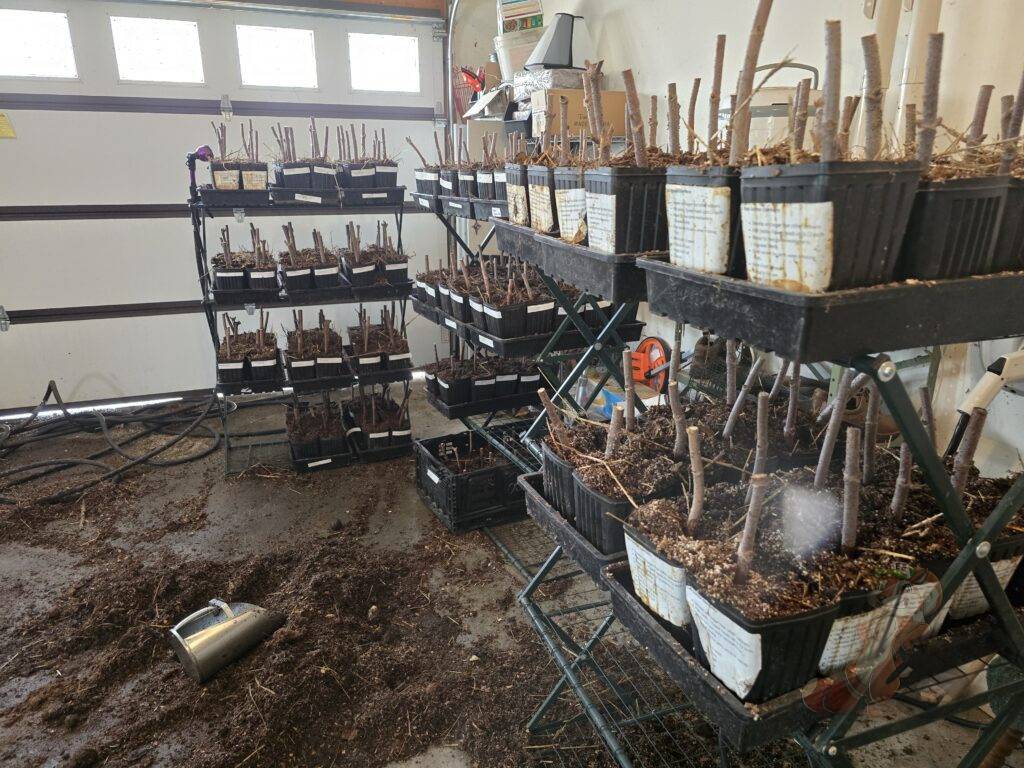
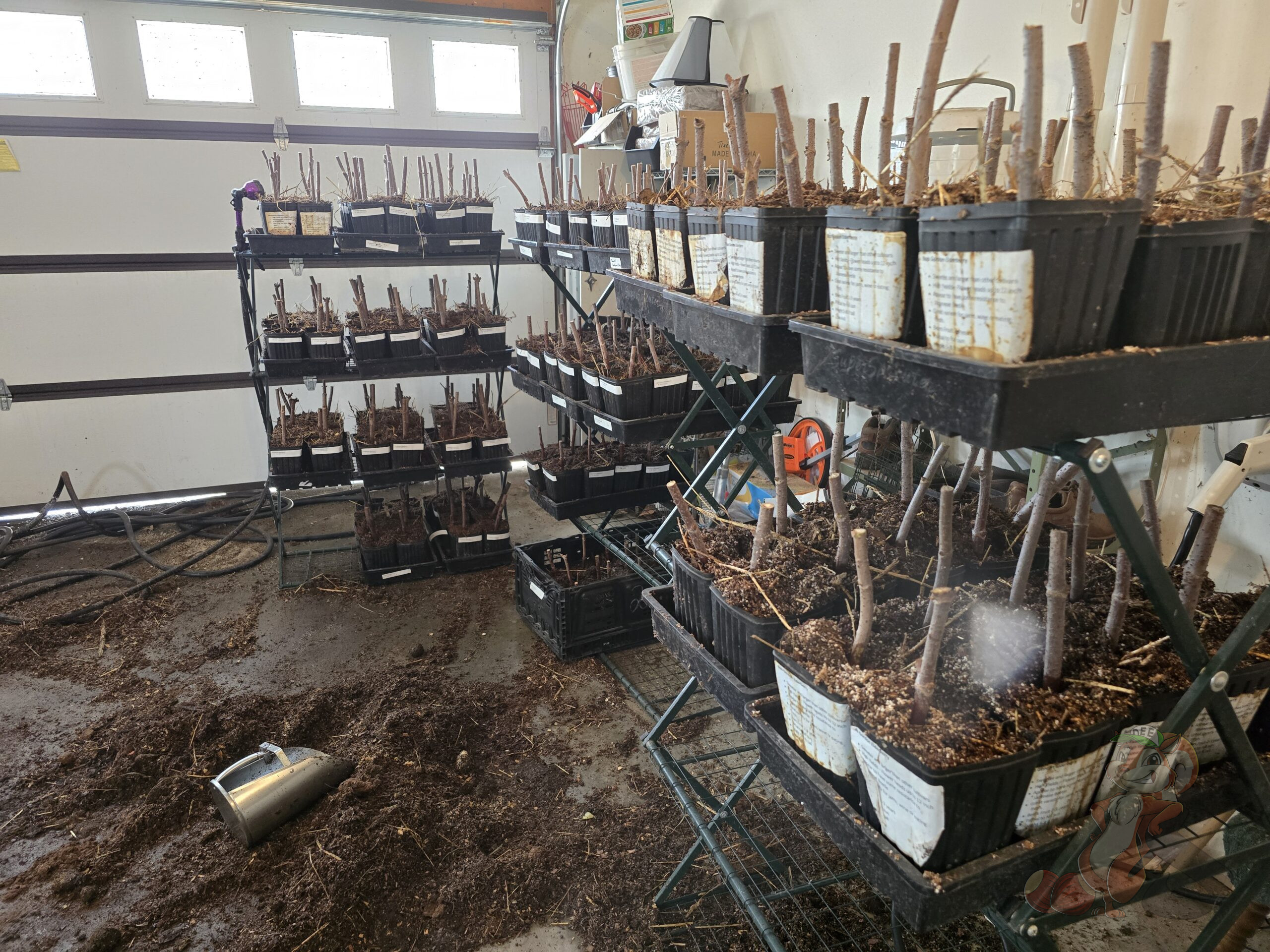
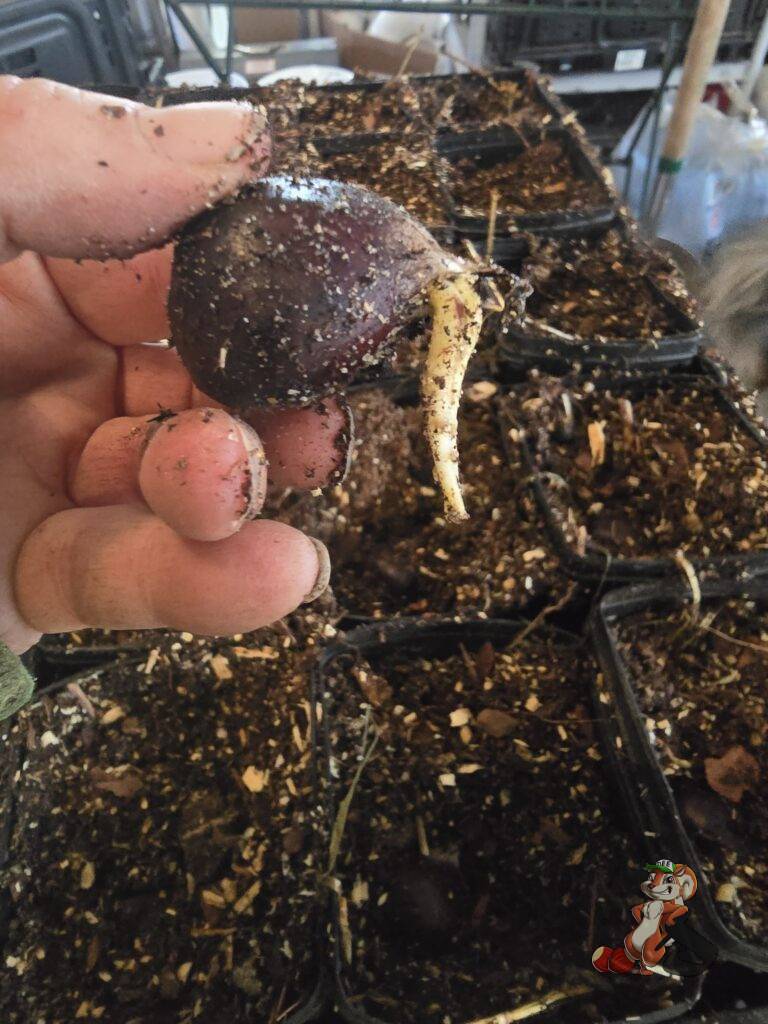
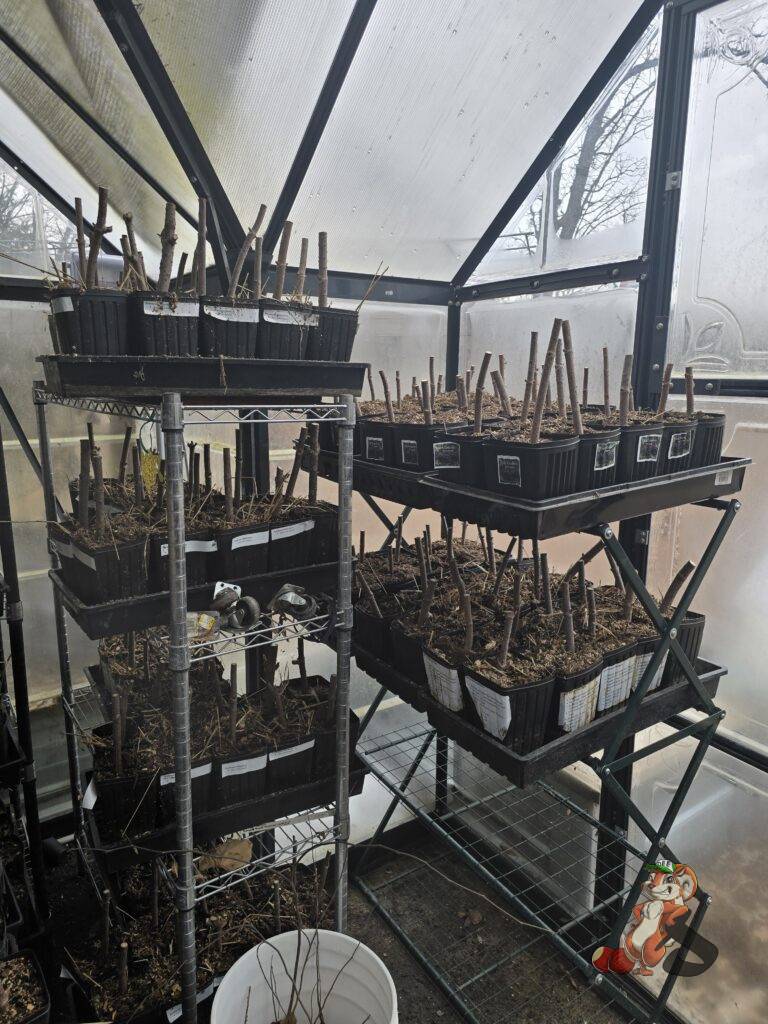
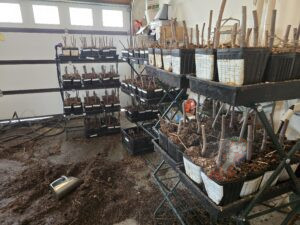
Rows of elderberry cuttings are potted and labeled by variety. Chestnut seeds are organized and being started. Every tray represents future harvests, future U-pick rows, and future fall chestnut drops beneath mature trees.
Preparing elderberry cuttings during our Elderberry and Chestnut Planting Preparation as we build the orchard for spring installation.
🌱 What Elderberry and Chestnut Planting Preparation Looks Like on the Farm
Right now, our garage has transformed into a working nursery. Trays of rooted cuttings and chestnut seedlings fill the shelves as we prepare them for field planting.
This stage of Elderberry and Chestnut Planting Preparation is where the orchard begins taking physical shape — long before rows are visible from the road.
🌿 Building Future Elderberry U-Pick Rows
Across our nursery space, 900 elderberry plants are growing out in preparation for spring planting.
These include:
Bob Gordon — 150
York — 150
East Grove — 150
Pocahontas — 150
Wyldewood — 250
Marge — 50
Of those 900 plants, 772 will be planted into permanent field rows.
These shrubs will become some of the earliest producing crops on the farm, shaping the seasonal flow shown in our Harvest Calendar. Varieties like Bob Gordon and Wyldewood provide consistent production, while Marge extends harvest later into the season.
When mature, these rows will anchor part of our U-Pick Experience, giving visitors full stretches of elderberries to harvest at peak ripeness.
This isn’t a handful of backyard bushes. It’s production scale designed for families walking rows.
🌰 Planting for Flavor: Building Our Chestnut Harvest
Chestnuts are one of the most anticipated crops on our farm — not just because they’re unique, but because of their incredible flavor.
Unlike grocery-store imports that are often dry or bland, fresh chestnuts harvested at peak ripeness are naturally sweet, creamy, and almost buttery when roasted. Some lean subtly nutty, others slightly sweet like baked sweet potato. That flavor difference starts right here, during Elderberry and Chestnut Planting Preparation.
🌰 Chestnut Seedling Varieties
Our orchard will include a diverse mix of northern-adapted seedlings selected for sweetness, texture, and reliable fall production:
ROYALMARK
Gellatly Sweet
Turtle Party
HR18 Layeroka
HR4T8 Layeroka
RR Ace
RR Red Szego
RR Sleeping Giant
Tree of the North
Badger Qing
Badgersett Boundless
Empire Elite Mix
Iowa Invincible
Large Badger
Luvall’s Monster
Michigan Magnificent
Mossbarger
Ohio Outstanding
PQXF1s
Qing
QingSu
Resilient
Very American
Total Chestnut Trees to Be Planted: 812
These 812 chestnut trees will form the upper canopy of the orchard, supporting the layered system outlined in our Agroforestry & Sustainability approach.
While elderberries will produce earlier, chestnuts represent the long-term structure of the farm. Over time, these rows will create shaded lanes, fall harvest events, and seasonal gathering spaces that become part of our U-Pick Experience.
This phase of Elderberry and Chestnut Planting Preparation is where that canopy begins.
What Happens After Elderberry and Chestnut Planting Preparation
This phase of Elderberry and Chestnut Planting Preparation is only the beginning.
Over the coming weeks, plants will continue strengthening their root systems before being hardened off for outdoor conditions. Field rows are being finalized. Irrigation infrastructure is being installed. Windbreaks are establishing around the perimeter.
Soon, these trays will move from containers into permanent orchard rows.
Elderberries will begin producing in the earlier years, shaping the seasonal rhythm shown in our Harvest Calendar. Chestnuts will take longer — but once established, they’ll define the fall experience for decades.
As planting progresses, we’ll continue sharing updates so visitors can follow the orchard’s development before planning their trip using our Know Before You Go page.
This isn’t just a planting season. It’s the foundation for future harvest days.
One Thing Worth Knowing
Chestnuts are not like other nuts.
Unlike almonds or walnuts, chestnuts are naturally high in complex carbohydrates and low in fat. When roasted, they become creamy and slightly sweet — more like a cross between a sweet potato and a nut than anything you’d find in a snack aisle.
That’s why planting 812 chestnut trees during this phase of Elderberry and Chestnut Planting Preparation isn’t just about quantity. It’s about building a fall harvest experience centered around flavor, warmth, and something most people have never tasted fresh.
Fun Fact!
Both chestnuts and elderberries are native to North America — and both were once staples long before modern grocery stores existed.
American chestnut trees once dominated eastern forests, feeding wildlife and entire communities each fall. Elderberries, meanwhile, grew wild along riverbanks and field edges, valued for generations for both flavor and traditional uses.
Planting them side by side today isn’t just about variety. It’s about bringing native food crops back into the landscape where they belong.
https://nutsaboutdeesberries.com N3591 Highway 104, Brodhead, Wisconsin Follow us on Facebook & Instagram for real-time orchard progress!
Facebook
Twitter
LinkedIn
About Us
We grow organic fruits and nuts while fighting climate change by capturing carbon. Join us for family UPick experiences and special events. We’re committed to community and eco-friendly initiatives like supporting ocean pastures. Let’s make a greener, healthier world together!