
American Elderberries
Native to North America. Bold, medicinal, intensely pigmented berries harvested for a short window in late summer.
Late August–September • Must be cooked before use • Grown in Southern Wisconsin
What Makes American Elderberries Unique?
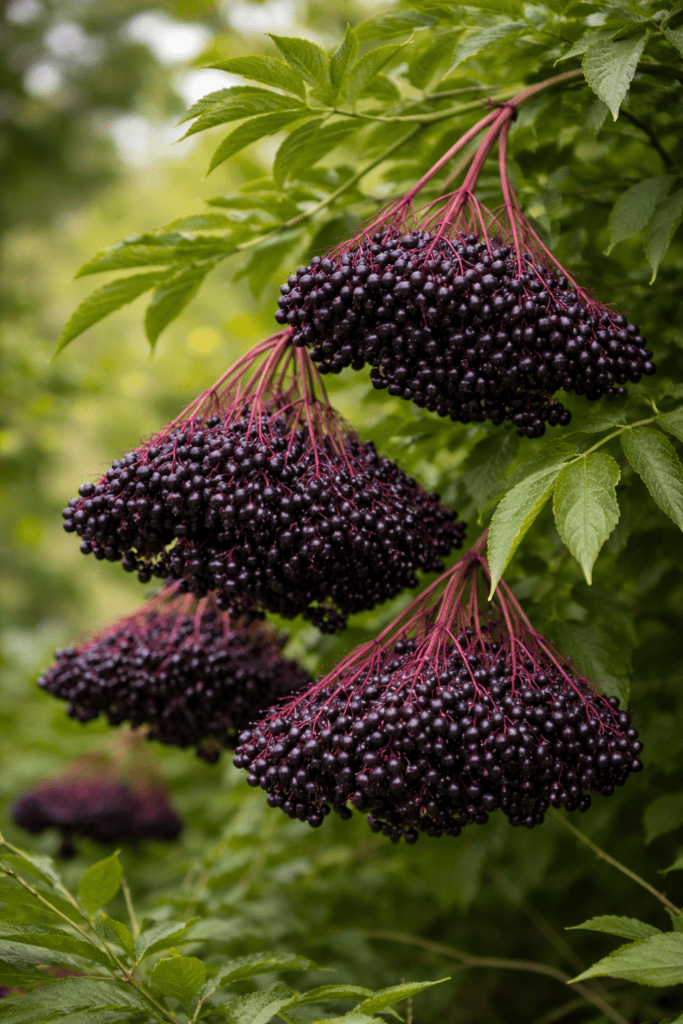
American elderberries (Sambucus canadensis) are native to North America and thrive naturally across the Midwest. Unlike their European cousin (Sambucus nigra), American elderberries evolved in our climate here is Southern Wisconsin, our soils, and alongside native wildlife — which is a major reason we chose to plant them as part of our farm’s long-term perennial system.
Because elderberries are also native shrubs, they fit beautifully into regenerative orchard layouts and diversified perennial plantings like those used throughout our agroforestry design. They’re hardy, adaptable, and built for North American conditions.
However, here’s the part many people don’t realize: American elderberries are not meant to be eaten raw. Their natural compounds require cooking before they’re safe and enjoyable. That’s why elderberries have long been valued for syrups, preserves, and traditional preparations rather than fresh snacking — similar to other bold, high-pigment fruits like Aronia and Black Currants, which also shine in processed uses rather than fresh eating.
Even more interesting, elderberries have deep roots in North American history. Indigenous communities recognized their usefulness generations ago, using the berries, flowers, and plant parts in food and traditional wellness practices — a legacy shared by several native fruits we grow, including Juneberries.
Today, American elderberries remain one of the most powerful native fruits grown in specialty agriculture — bold in flavor, rich in color, and unmatched in purpose at our Green County farm.
Flavor Profile & Culinary Identity
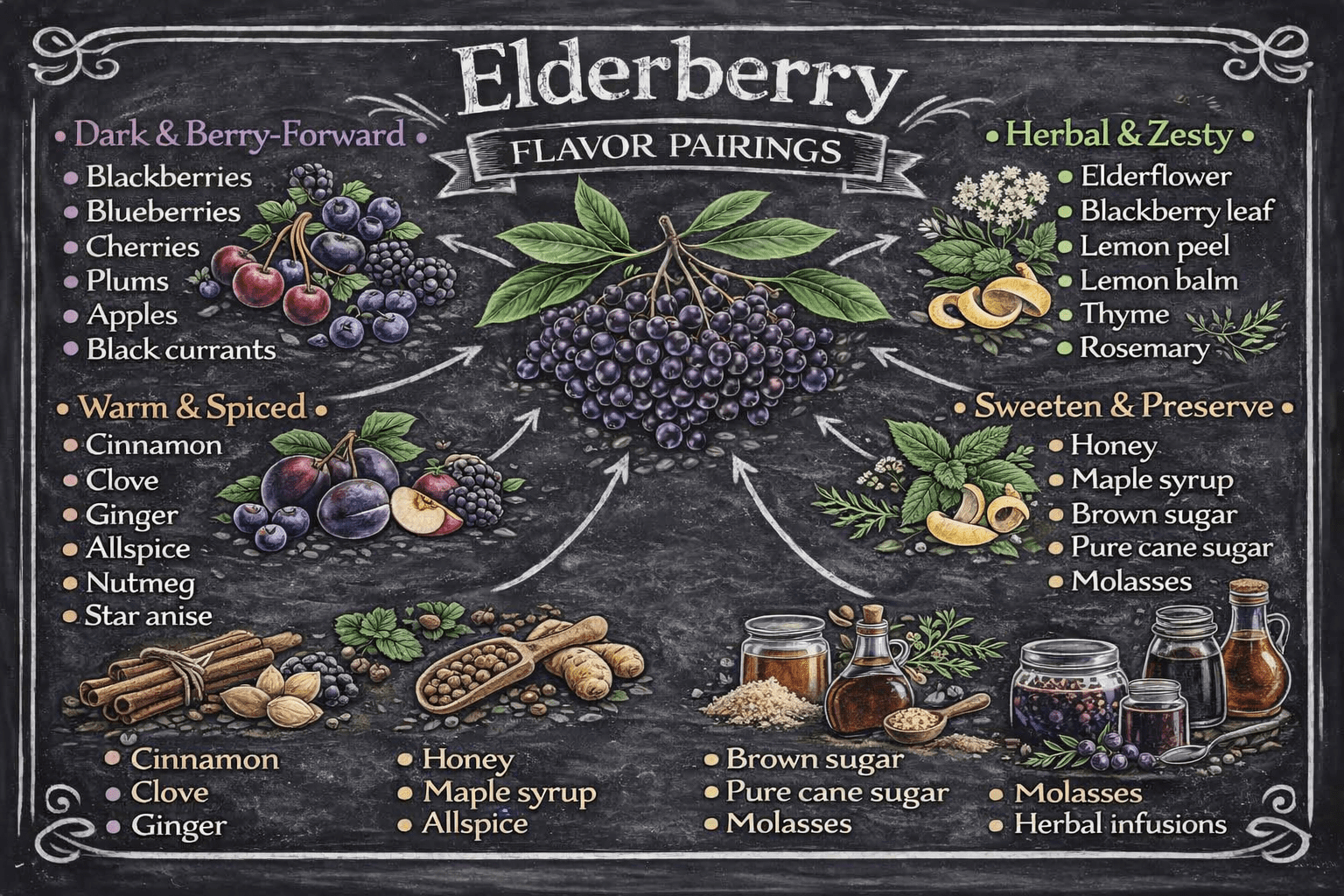
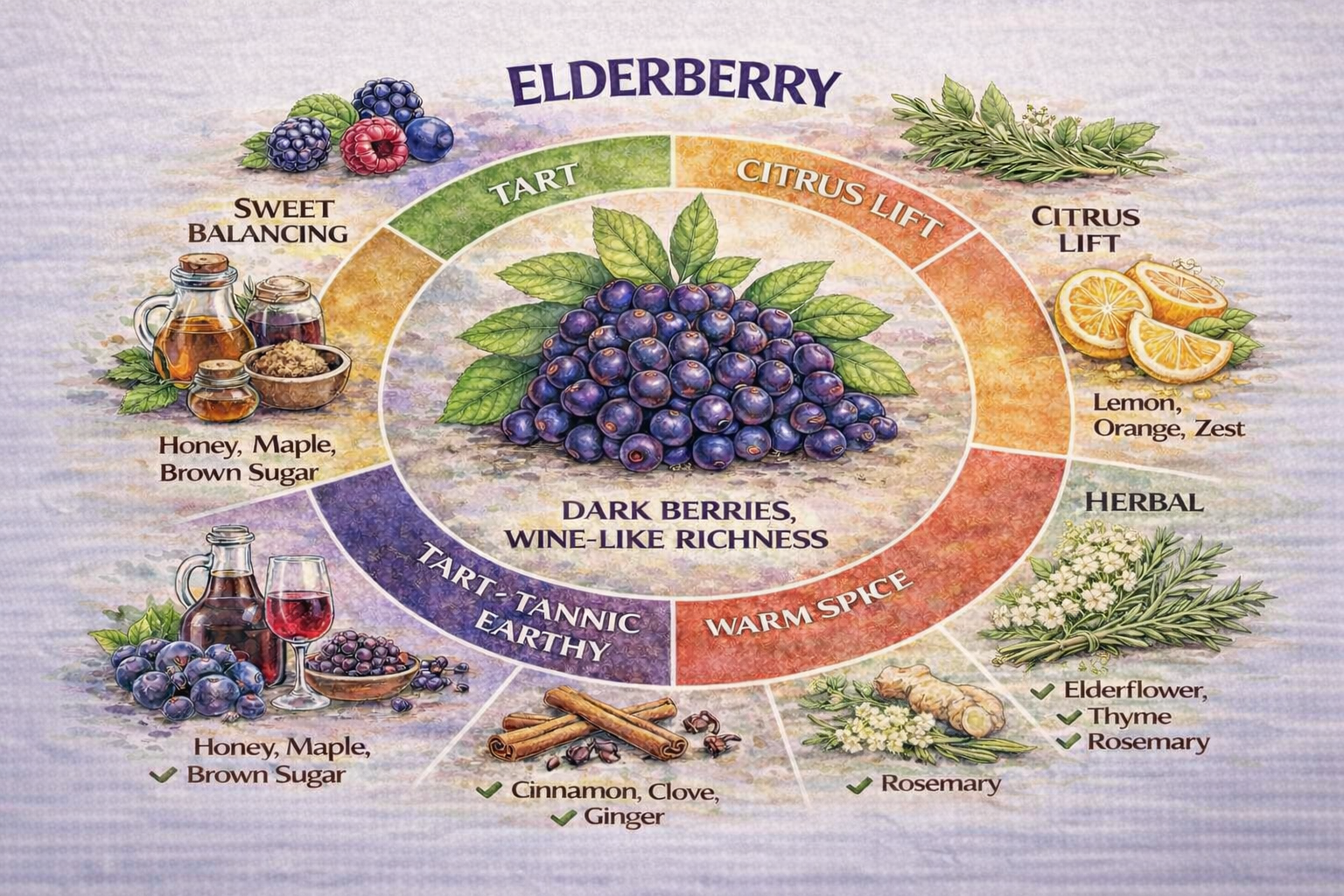
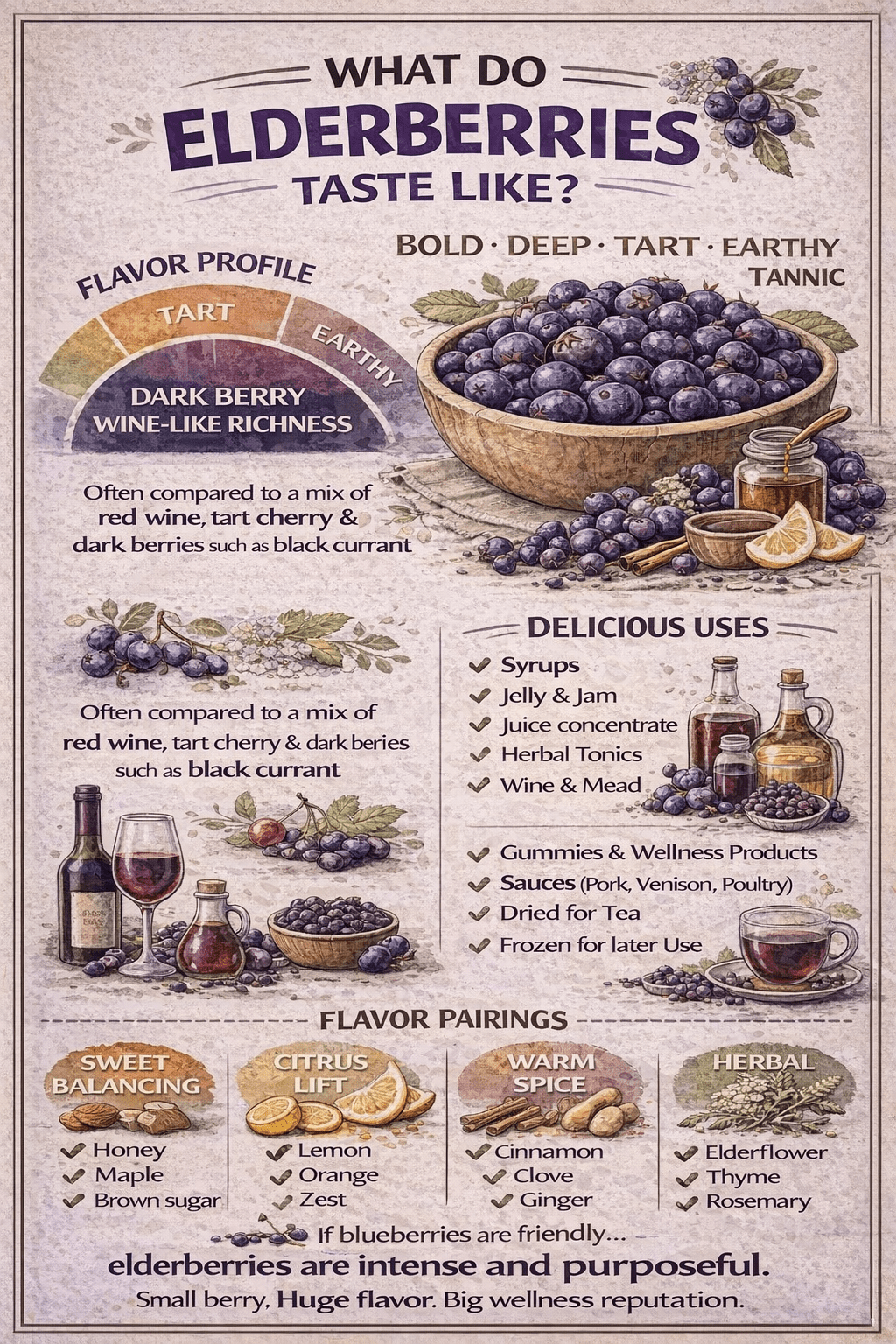
American elderberries are bold and intensely flavored. Unlike sweet fresh-eating berries, elderberries grown here in Southern Wisconsin deliver a deep tartness with earthy, wine-like character. Their natural intensity is exactly why they’ve been prized for generations in syrups, juices, jams, and fermented creations rather than eaten straight from the shrub.
Raw elderberries are extremely astringent and unpleasant. Once cooked, however, they transform into something rich, dark, and complex — similar in strength to other high-pigment fruits like Aronia and Black Currants, both also grown at our Green County farm.
Visitors who come to our U-pick farm in Brodhead, Wisconsin are typically harvesting elderberries with a purpose in mind: making homemade syrup, preserves, or traditional preparations rather than fresh snacking.
Natural flavor characteristics include:
- Dark plum
- Tart cherry skin
- Earthy blackberry
- Mild tannins
American elderberries are best suited for:
Syrups and cordials
Jelly and preserves
Wine and shrub blends
Herbal preparations
They aren’t meant for snacking — they’re a purpose berry valued for what they become after cooking.
Nutrition & Antioxidant Power of American Elderberries
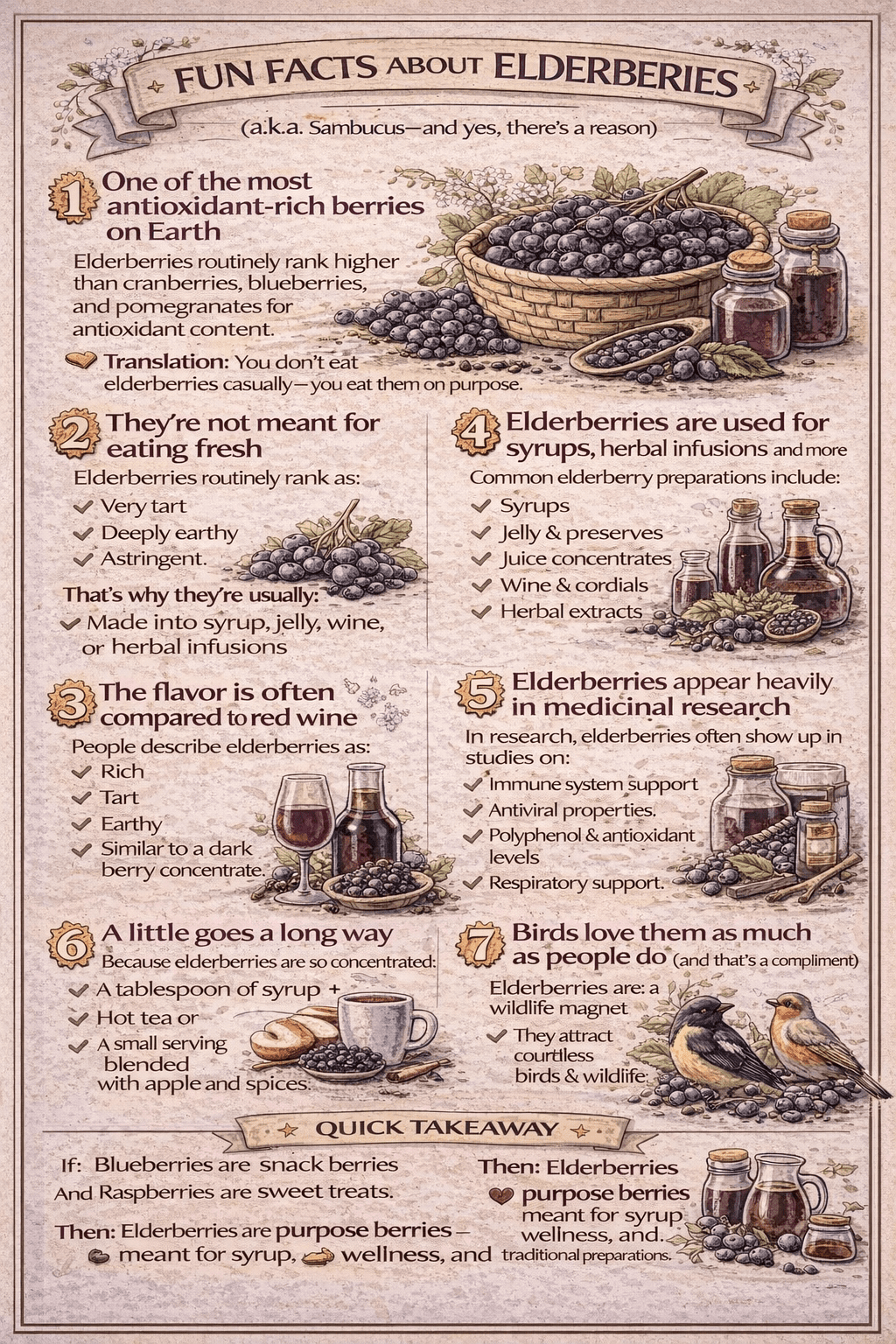
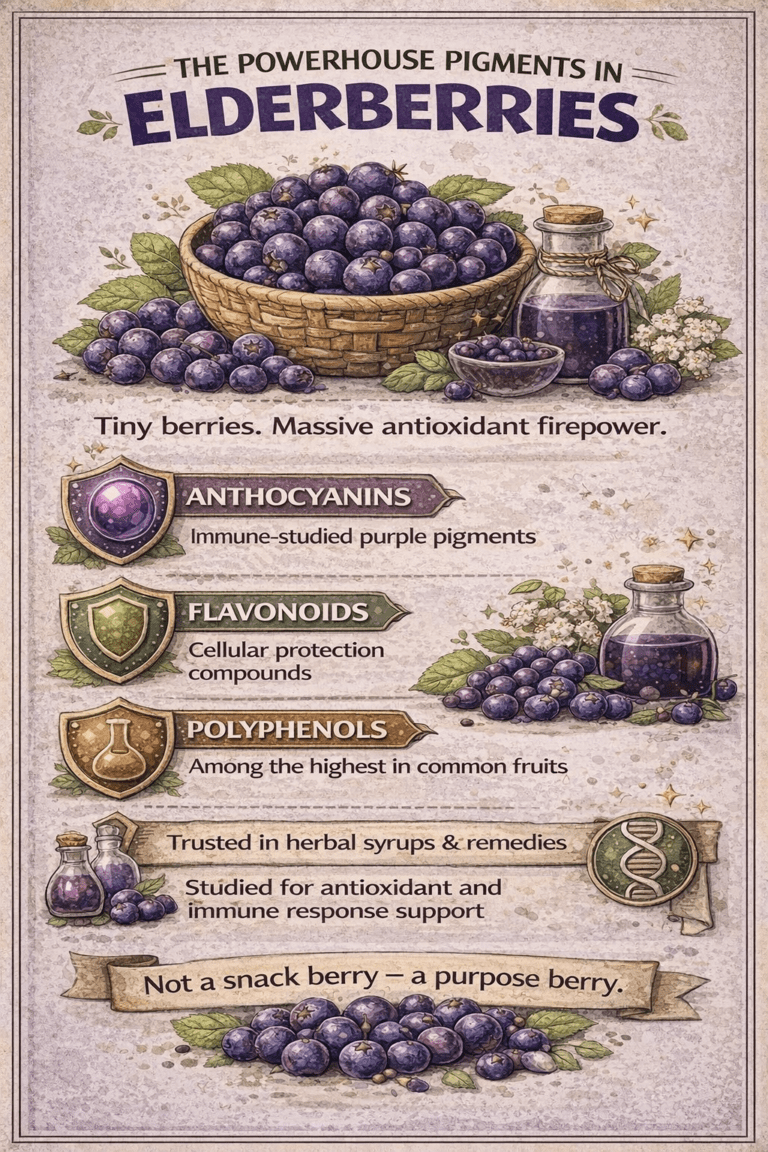
American elderberries are among the most studied native fruits in North America due to their exceptionally high concentration of protective plant compounds. Their deep purple color is a visible signal of dense anthocyanins and polyphenols that have drawn attention in both nutritional and agricultural research.
Key Nutritional Highlights
Extremely high in anthocyanins (deep purple pigments)
Rich in polyphenols & flavonoids
Known for strong antioxidant capacity
Traditionally used to support seasonal wellness
Studied for immune and anti-inflammatory properties
American elderberries are widely researched across universities and USDA-backed studies for their phytochemical density compared to common fruits.
Health Benefits & Traditional Uses of American Elderberries
American elderberries (Sambucus canadensis) have been valued for centuries not as a fresh-eating fruit, but as a powerful wellness berry used in syrups, tonics, and traditional preparations. Their deep purple color isn’t just pretty — it signals extremely high concentrations of plant compounds studied for immune and cellular support.
Elderberries are widely used to support:
- Seasonal immune defense
- Respiratory health
- Antioxidant protection
- against oxidative stress
- Inflammation balance
- Circulatory support
Unlike common fruits grown for snacking, elderberries shine after processing. That’s why they’re most often transformed into herbal syrups and wellness blends rather than eaten straight from the shrub — similar to how we utilize bold fruits like Aronia, Black Currants, and even incorporate them alongside native crops like Juneberries in value-added recipes.
Historically, Native American communities used elderberries, flowers, and bark in traditional wellness practices long before modern research confirmed what they already knew: elder is a medicinal powerhouse plant from root to fruit.
Today, elderberries remain one of the most studied native fruits in North America for their role in immune and antioxidant support — which is exactly why they’re a core crop at our U-pick farm in Brodhead, Wisconsin.
From Berry to Bottle: How We Turn Elderberries Into Farm Favorites
American elderberries are not a fresh snacking berry — their real value shows up after harvest. At our U-pick farm in Brodhead, Wisconsin, visitors gather elderberries with a purpose and turn them into rich, deeply flavored creations at home.
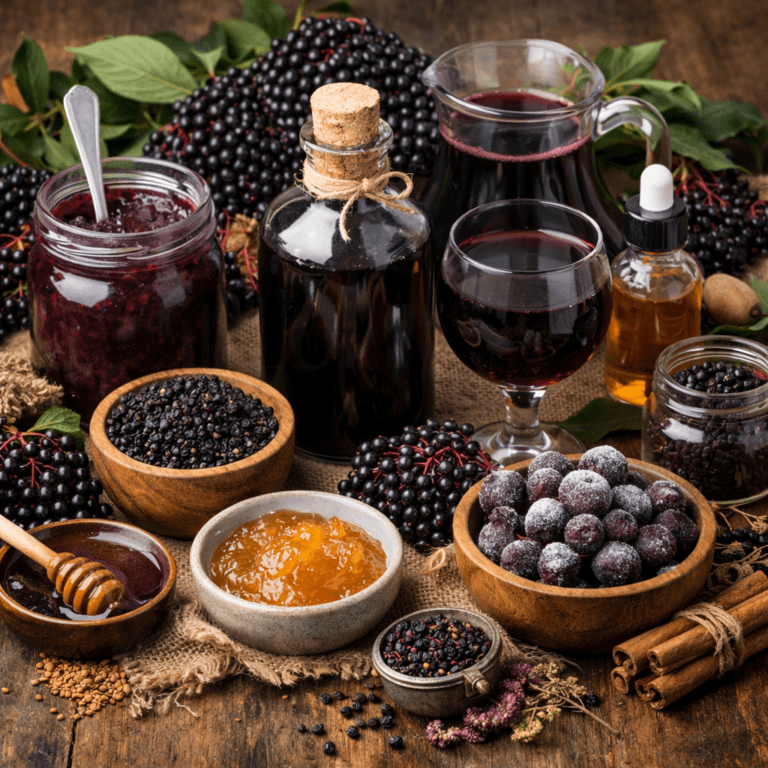
Elderberries from our Green County farm are commonly used for:
- Homemade elderberry syrup
- Jelly and jam blends
- Juice and concentrate
- Wine and mead
- Herbal tonics
- Dried berries for teas
- Frozen berries
- Sauces and reductions
Their bold flavor and deep color intensify beautifully when sweetened or blended, which is why elderberries have been treasured for generations in kitchens and herbal traditions across North America.
Even a small harvest yields a surprising amount once processed, making elderberries one of the most rewarding specialty crops visitors can pick at Nuts about Dee’s Berries.
Looking to dive deeper into elderberries? Visit our blog for articles on elderberry health benefits, preservation tips, recipe inspiration, and seasonal harvest updates.
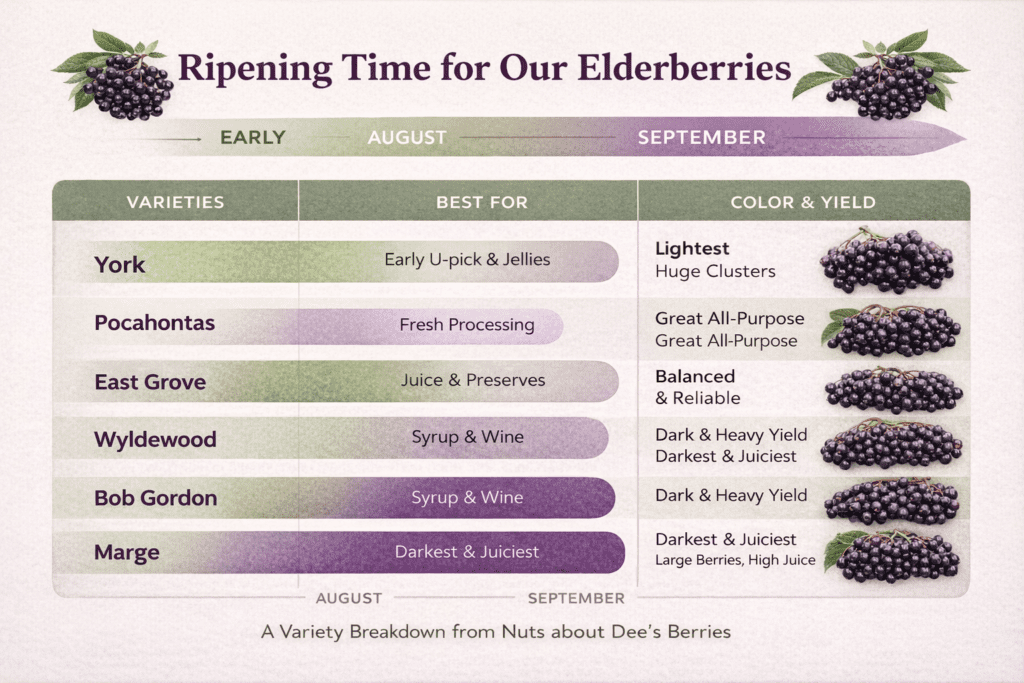
We grow several American elderberry cultivars to improve harvest reliability and extend the picking window at our U-pick farm in Brodhead, Wisconsin. Each variety differs slightly in ripening time, cluster size, berry size, and juice yield — which matters for visitors harvesting by the cluster for syrups, preserves, and wine.
You can always check peak timing on our Harvest Calendar before visiting.
Elderberry varieties planted at Nuts about Dee’s Berries include:
- Bob Gordon – Late season. Extremely heavy yields with drooping clusters that hang downward. Excellent for syrup and wine due to strong juice production.
- East Grove – Mid season. Reliable ripening and consistent clusters. A great all-purpose berry for juice, jelly, and preserves.
- Marge – Very late season. European-type elder grown for extended harvest timing. Larger berries, strong juice yield, and ideal for wine and concentrates.
- Pocahontas – Early to mid season. Uniform clusters and dependable fruit set. Easy to harvest for fresh processing and preserves.
- Wyldewood – Mid to late season. Vigorous plants with reliable production. Popular for syrup makers because of high berry yield per cluster.
- York – Early season. Very large berries and some of the biggest clusters among American elders. A favorite for U-pick visitors wanting fast bucket fill and excellent jelly color.
For visitors, this means more chances to hit peak ripeness during our late-summer season — and more berries in fewer passes when you’re harvesting by the cluster.
(American Elderberry U-Pick | Brodhead, Wisconsin – Green County)
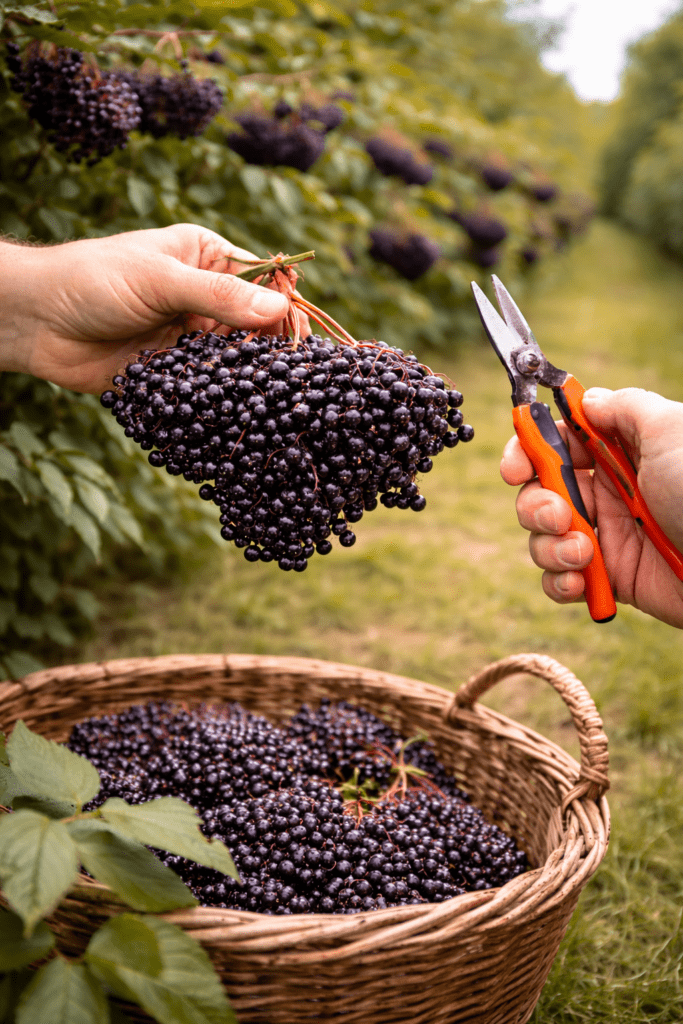
Elderberry season at Nuts about Dee’s Berries is unlike any other U-pick experience in Southern Wisconsin. Instead of plucking single berries, visitors harvest entire heavy clusters of deep purple American elderberries straight from the shrub. It’s fast, satisfying, and wildly productive — perfect for anyone making homemade syrups, jellies, wine, herbal blends, or wellness recipes.
Our elderberries typically ripen from late August through September in Brodhead, Wisconsin, giving you a generous window to visit and pick at peak color and flavor.
How Elderberry U-Pick Works
• Berries grow in large hanging clusters
• Each cluster is snipped at the stem (we provide clippers)
• Clusters drop easily into your bucket or basket
• No bending or crawling — shrubs are chest to shoulder height
• Picking is quick compared to traditional berries
You’ll be amazed how fast your container fills.
Perfect For Visitors Who Want To Make:
• Elderberry syrup & wellness blends
• Jelly and preserves
• Elderberry wine or shrub drinks
• Herbal tinctures & teas
• Freeze-drying or long-term storage
This is not a casual snacking berry — people come to elderberry season with purpose, recipes, and excitement.
We Recommend Bringing:
• Buckets or shallow picking containers
• Kitchen scissors (optional backup)
• Coolers for transport
• Gloves (berries can stain)
• A plan for processing within 24 hours
We provide harvest guidance so first-time pickers feel confident.
Plan Your Elderberry Visit
Elderberry U-pick is one of the fastest and most satisfying harvests on the farm — you snip whole clusters, fill a bucket quickly, and head home with berries ready for syrup, jelly, wine, and freezer storage.
Best time to visit: late August through September (weather + ripeness decide the exact peak). For real-time updates, check our Harvest Calendar (link: Harvest Calendar).
If you’re planning a full fruit day, pair elderberries with nearby seasonal picks like Aronia, Black Currants, or Juneberries depending on what’s in season.
Quick Visit Details
Season: Late August–September (varies by year)
Harvest style: Snip whole clusters
Bring: buckets + cooler + gloves
Best for: syrup, jelly, freezer packs, wine bases
Tip: plan to process within 24 hours
Why Elderberries Are One of the Easiest Fruits to Harvest
Harvest by the cluster, not individual berries
Fast picking = full buckets quickly
Minimal bending (shrubs at chest height)
Perfect for families & kids helping
Heavy yields even for beginners
Unique experience you can’t get at grocery stores
Explain that elderberries are harvested as whole hanging clusters using snips, making them dramatically faster and easier than blueberries or raspberries. Visitors leave with large quantities in a short time, ideal for syrup, wine, jelly, and preservation.
Come experience elderberry harvest season at Nuts about Dee’s Berries in Brodhead, Wisconsin.
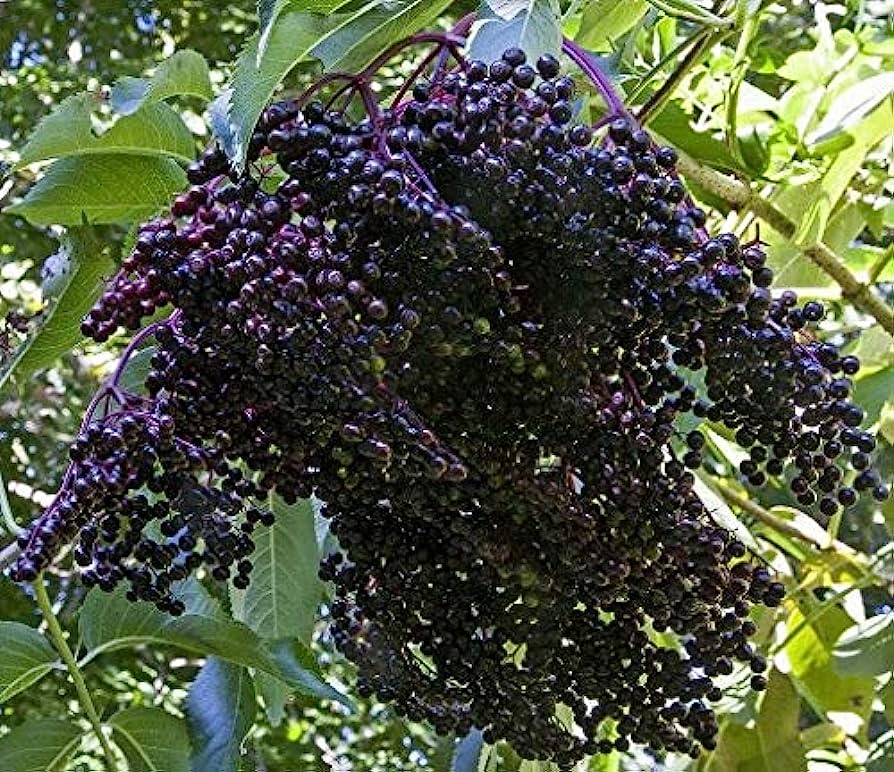
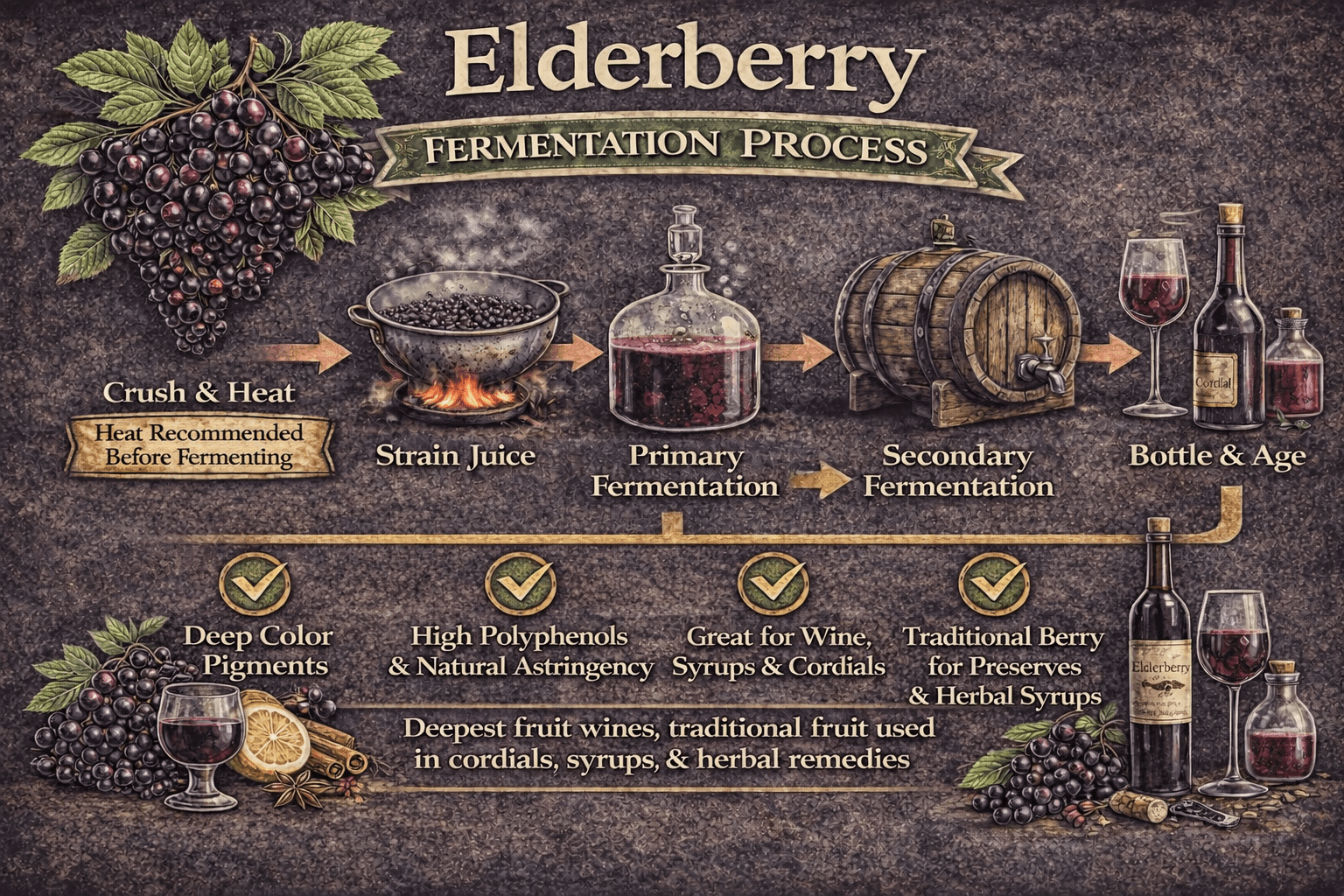
Elderberries aren’t just another berry — they’re legendary in the world of homemade wines, cordials, and rich fermented creations. Their deep color, bold tannins, and naturally intense flavor make them one of the best fruits for crafting complex beverages with body and depth.
Unlike lighter fruits, elderberries hold their flavor beautifully through fermentation, blending well with honey, spices, apples, and other berries. This is exactly why they’ve been used for centuries in traditional European and American winemaking.
At Nuts about Dee’s Berries, many visitors harvest elderberries specifically for:
- Elderberry wine
- Homemade shrubs
- Syrups for cocktails
- Cordials & extracts
- Herbal tonics
These berries aren’t subtle — they create bold, deeply colored drinks packed with character.
American elderberries have a short but incredibly productive harvest window in Southern Wisconsin, typically peaking from mid-August through September at Nuts about Dee’s Berries in Brodhead, Green County.
Unlike fruits that ripen slowly over months, elderberries move fast. Clusters darken quickly, sugars rise, and the best picking happens in a concentrated stretch when berries are fully colored and heavy with juice.
Our planted varieties are intentionally staggered to extend the season slightly, giving visitors multiple weeks to harvest ripe clusters rather than just a single weekend rush.
What to expect during the season:
Early varieties begin ripening in August
Peak harvest runs late August into early September
Late-season varieties carry production through September
Clusters ripen in waves across rows
Best flavor comes at full deep purple color
Berries are harvested by the cluster, making volume picking quick
Because elderberries are used primarily for syrups, wine, jelly, and herbal preparations, most visitors plan their trip during peak ripeness to gather enough in one visit.
Elderberry season is brief, bold, and worth catching at the perfect moment.
Discover Our Wide Variety of Nuts and Berries
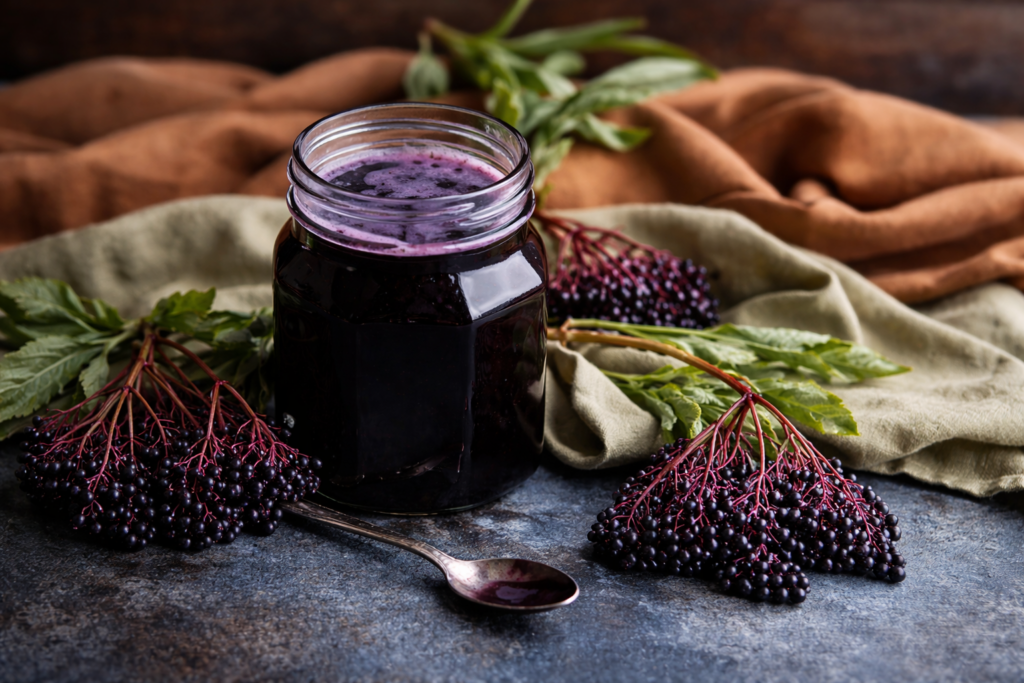
At At Nuts about Dee’s Berries, we grow elderberries as part of our diverse agroforestry farm in Southern Wisconsin. Known for their immune-supporting benefits and bold flavor, elderberries are used in syrups, jellies, and wines. This image showcases freshly picked elderberries with homemade syrup — a taste of the food forest that blends health, sustainability, and culinary tradition., we pride ourselves on offering a diverse selection of delicious and nutritious crops. In addition to our featured crop, we also grow a variety of other fruits and nuts that are perfect for U-pick adventures. Explore our other offerings and discover your new favorite treat. We are sure that you will find something that you like, and that fits your needs.