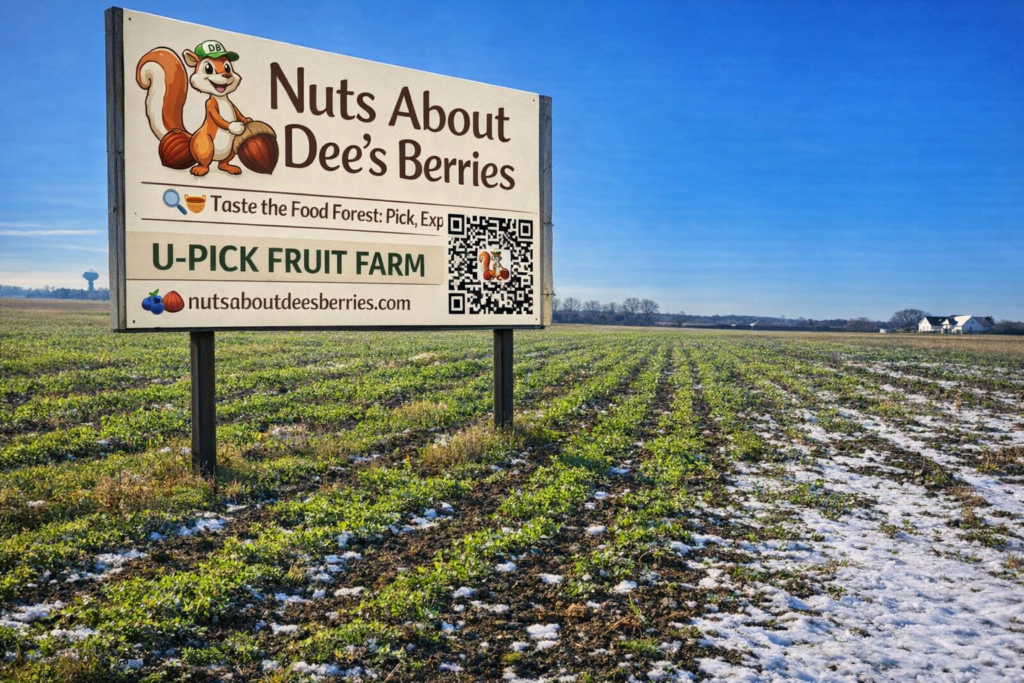
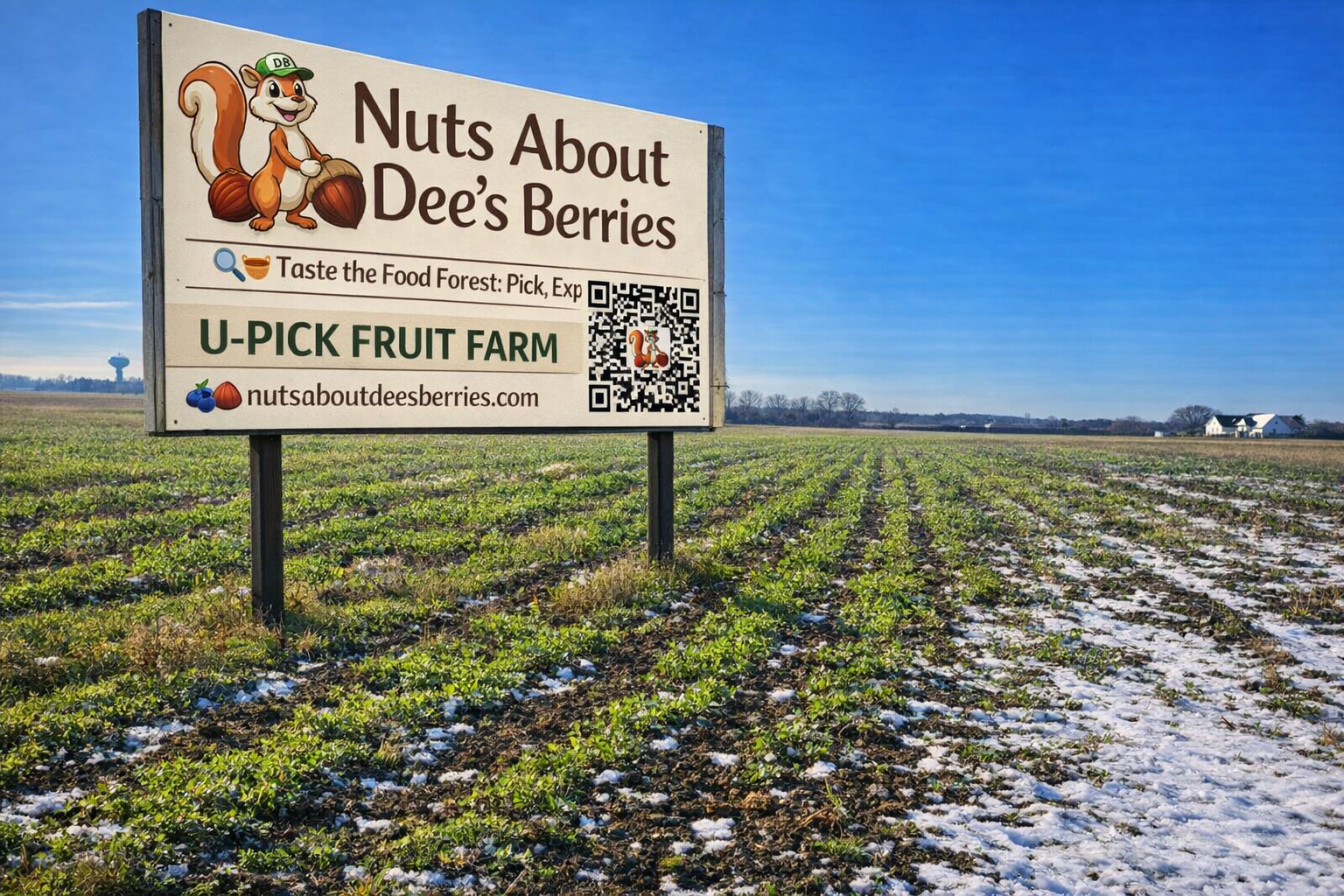
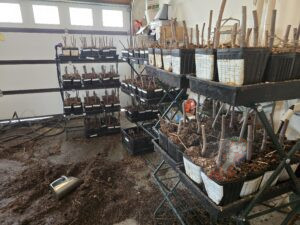
Early cover crops taking hold as we prepare the soil for long-term food forest plantings.
📰 Nuts About Dee’s Berries - Farm Update
This week on the farm was all about groundwork — literally. We focused on establishing cover crops across open areas to protect the soil, improve structure, and prepare for upcoming tree and shrub plantings. While nothing flashy appeared overnight, this behind-the-scenes work quietly supports everything that comes next. In many ways, this is where the real foundation of the food forest is built.
Farm Update: Fall Fieldwork & Cover Crops
🌱 Weekly Farm Highlight
Each week at Nuts About Dee’s Berries brings a new chapter in building our orchard and food forest. Here’s a quick snapshot of what moved forward and why it matters.
📌 What We Completed
Established cover crops in open field areas
Prepared soil zones ahead of future tree and shrub planting
Walked the fields to assess soil conditions and moisture
Checked seasonal timing before the next planting phase
🔍 Quick Notes
Weather supported good soil contact and early establishment
Field work focused on long-term soil protection rather than visible growth
Cover crops now act as a living placeholder while the farm continues to take shape
Cover Crops on Our Farm:
Building Healthy Soil Naturally
Planting cover crops is one of the most important steps we take to protect soil, improve fertility, and prepare our land for a thriving food forest. Instead of leaving bare ground exposed to wind, erosion, and moisture loss, we rely on living roots to work year-round for the soil. As a result, this approach supports everything we grow—from young shrubs to long-term tree crops.
On a perennial farm like ours, soil isn’t just dirt. Instead, it’s infrastructure.
Why We Use Cover Crops on a Perennial Farm
Cover crops play a different role on a food forest farm than they do in annual row cropping. Because our trees and shrubs are meant to remain in place for decades, soil health must be built before and between plantings rather than repaired later.
For that reason, by planting cover crops, we are:
Protecting soil from erosion and compaction
Feeding beneficial soil microbes through living roots
Improving water infiltration and moisture retention
Reducing weed pressure naturally
This philosophy is central to how we farm, which we share more about on our About Us page.
Our Cover Crop Strategy This Season
Our cover crop strategy is intentionally simple and flexible. Rather than chasing a single “perfect” mix, we focus on keeping the soil covered during transition periods while our food forest is being established.
Cover crops are used:
Before new trees and shrubs are planted
Between planting phases
In open areas awaiting future rows
Meanwhile, this approach allows us to build soil biology now while aligning with our broader planting timeline shown in our Harvest Calendar and Our Farm Harvest Chart.
What We’re Planting and Why
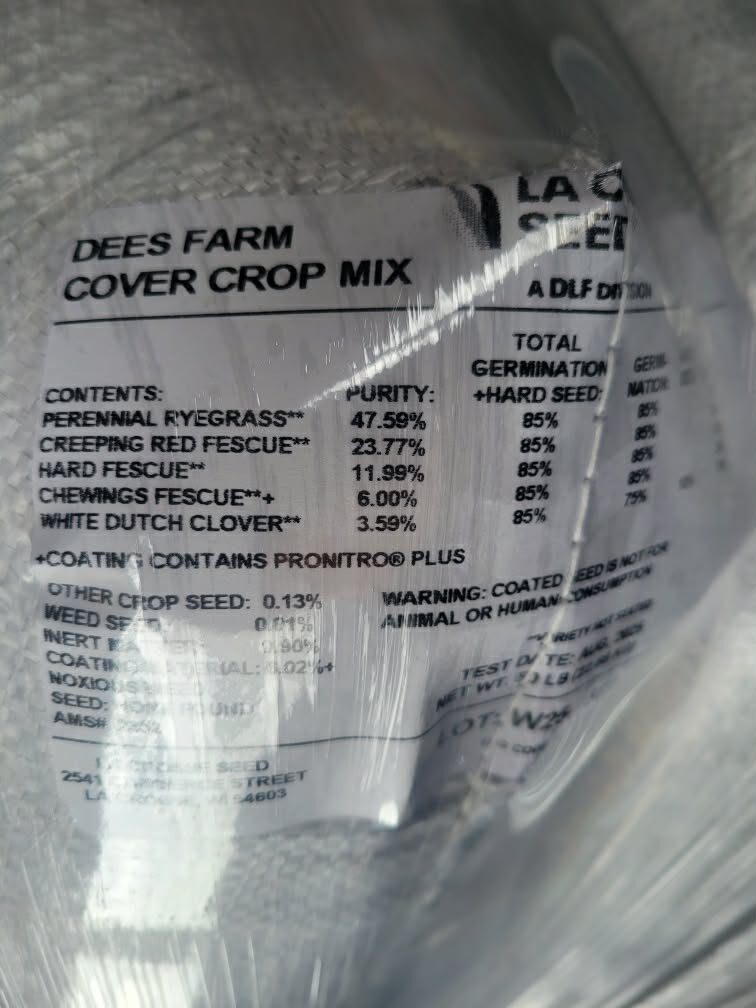
Rather than using a short-term annual mix, we chose a perennial-leaning cover crop blend that supports long-term soil health while staying compatible with a food forest system. This mix focuses on soil protection, living roots, and steady improvement rather than rapid top growth alone.
Here’s what we planted and the role each species plays:
Perennial ryegrass establishes quickly and provides early soil coverage, helping reduce erosion while improving soil structure. Its fibrous root system supports microbial activity and creates pathways for water infiltration.
Fine fescues—including creeping red fescue, hard fescue, and chewings fescue—form a dense, low-growing ground cover that protects soil without competing aggressively with trees and shrubs. These grasses are well suited for orchard and agroforestry settings because they tolerate partial shade, require fewer inputs, and help suppress weeds naturally.
White Dutch clover adds diversity to the mix while supporting nitrogen cycling in the soil. As a low-growing legume, it helps feed soil biology, supports pollinators when allowed to flower, and complements the grass species without overwhelming young plantings.
Together, this blend creates a living soil blanket—one that stabilizes the ground, supports beneficial organisms, and prepares the land for future crops like chestnuts, pawpaws, hazelnuts, and other perennial plantings planned for the farm.
How Cover Crops Support Future Harvests
Healthy soil today leads to healthier harvests tomorrow. Therefore, cover crops help create conditions where roots can explore deeper, water moves more efficiently, and nutrients cycle naturally instead of being forced.
This translates into:
Stronger establishment of shrubs and trees
Better resilience during dry periods
Reduced reliance on external inputs
Improved overall plant health
Ultimately, these benefits support the crops that will become part of our U-pick seasons and on-farm experiences.
Cover Crops Are a Long-Term Investment
Cover crops aren’t flashy. They don’t produce fruit, and they don’t generate immediate income. However, they quietly do the work that makes everything else possible.
By investing in cover crops now, we are investing in:
Cover crops are just one part of how we’re building a regenerative, perennial farm rooted in healthy soil and thoughtful planning. As the seasons change, we’ll continue sharing updates, lessons learned, and progress along the way.
As the season continues, our focus will shift from groundwork to infrastructure. We’ll be moving forward with well planning and site preparation, while also advancing the design and logistics for future farm buildings that will support planting, processing, and on-farm activities. At the same time, we’ll continue monitoring soil conditions and cover crop establishment as the land prepares for the next phase of planting.
Weather and timing will guide the pace, but each step builds on the last. As systems come together—from water access to permanent structures—we’ll share updates as milestones are reached and plans turn into progress.
More updates will be coming as soon as we hit the next milestone.
Closing Line
This is one of the reasons we chose these crops for our farm.
Fun Fact!
Jujube trees leaf out late in spring, so don’t panic — healthy soil helps them thrive once they wake up.
https://nutsaboutdeesberries.com N3591 Highway 104, Brodhead, Wisconsin Follow us on Facebook & Instagram for real-time orchard progress!
Facebook
Twitter
LinkedIn
About Us
We grow organic fruits and nuts while fighting climate change by capturing carbon. Join us for family UPick experiences and special events. We’re committed to community and eco-friendly initiatives like supporting ocean pastures. Let’s make a greener, healthier world together!