
Sour (Bush) Cherries
Cold-hardy cherry shrubs grown for baking, preserving, and U-pick harvesting
Bush cherries are compact cherry shrubs, bred for cold climates and reliable production.
Unlike traditional cherry trees, these plants stay low and approachable — making them easy to pick by hand and ideal for family-friendly U-pick experiences.
Their bright, tart flavor makes them a favorite for pies, preserves, sauces, and baking, while their consistent quality also serves bakeries and small-scale processors when available.
Compact shrubs · Tart flavor · Hand-harvested · Seasonal availability
Flavor Profile & Culinary Uses
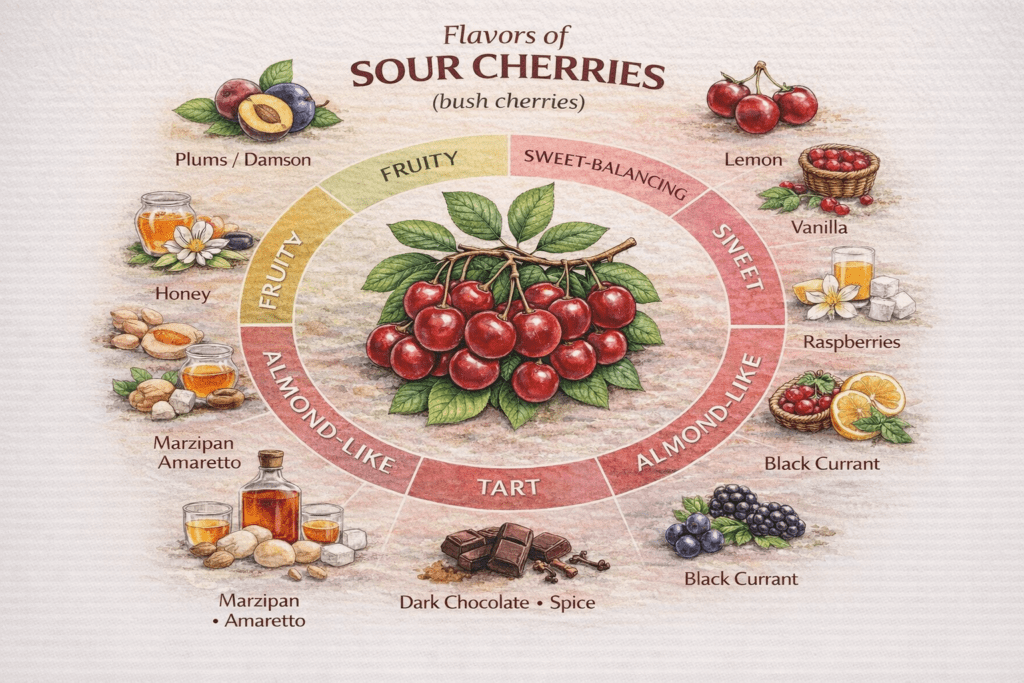
Sour bush cherries have a bright, tart flavor that’s classic and unmistakable. They’re grown for cooking, baking, and preserving — not for eating out of hand like sweet cherries.
Their balanced acidity and deep cherry character hold up well to heat and sugar, making them especially well suited for traditional sour cherry recipes.
- Pies and cobblers
- Preserves and jams
- Sauces and glazes
- Baking and cooked desserts
- Freezing for later use
These cherries shine when cooked or preserved, where their tartness becomes a feature rather than a drawback.
Why Bush Cherries Are Valued
Bush cherries were developed specifically for cold climates, where traditional cherry trees can struggle with winter injury and inconsistent production. As a result, these compact shrubs offer a more dependable option for northern growing regions, including southern Wisconsin.
Because of this targeted breeding, bush cherries are known for their reliable yields, deep fruit color, and balanced acidity. Those qualities matter not only in home kitchens, but also in baking and small-scale processing, where consistency and flavor intensity are essential. Many of the varieties grown today trace their origins to long-term university breeding programs focused on cold-hardy fruit development, including work commonly referred to as the Romance series from the University of Saskatchewan.
In addition, the shrub form itself adds practical value. Since bush cherries grow low and compact rather than on tall trees, they are easier to manage and harvest by hand, which supports a relaxed U-pick experience while still maintaining fruit quality. This same growth habit also makes them well suited for careful, small-batch handling when surplus fruit is available for local kitchens or processors.
For those interested in the broader research behind cold-hardy cherry production and regional suitability, university extension programs such as UW–Madison Extension provide additional context on why bush cherries continue to gain attention in northern orchards.
Nutrition & Phytonutrients
Sour bush cherries contain naturally occurring plant compounds that contribute to their deep color and tart flavor. In general, cherries include polyphenols, including anthocyanins, which are the pigments commonly associated with red and dark red fruits.
While nutrition can vary by variety and growing conditions, these compounds are widely studied as part of broader fruit and plant nutrition research. If you’d like to explore the science in more detail, the USDA Agricultural Research Service provides background on polyphenols and anthocyanins in foods.

How Bush Cherries Are Harvested
Bush cherries are harvested by hand, a method that helps protect fruit quality while keeping the picking experience approachable and relaxed. Because the shrubs stay compact and low to the ground, fruit can be reached easily without ladders or specialized equipment.
During harvest, cherries are gently picked from the shrubs and placed into shallow containers to reduce pressure and bruising. This approach supports both U-pick visitors and careful small-batch handling when fruit is destined for baking, preserving, or local kitchens.
Harvest timing varies with weather and ripeness, and we focus on picking cherries at their best for flavor, color, and kitchen use, rather than speed or volume. Availability can shift from season to season, so we share updates as harvest approaches.
👉 Get seasonal harvest updates straight from the farm → Newsletter sign-up link

From Bush to Kitchen
Once harvested, sour bush cherries move naturally from the field into the kitchen. Their bright acidity and deep color are part of what makes them so versatile — especially when cooked, baked, or preserved.
Unlike sweet cherries that are often eaten out of hand, sour cherries are valued for how they transform with heat and sugar, becoming rich, balanced, and complex. This is why they’ve long been used in traditional pies, sauces, preserves, and baked desserts across many food cultures.
Whether you’re freezing cherries for later use, simmering them into a sauce, or baking with them the same day they’re picked, sour cherries hold their structure and flavor exceptionally well. Their tartness doesn’t disappear — it rounds out, giving finished dishes depth rather than sweetness alone.
These are cherries chosen for what they become — not just how they taste fresh.
Sour Cherry Season at Our Farm
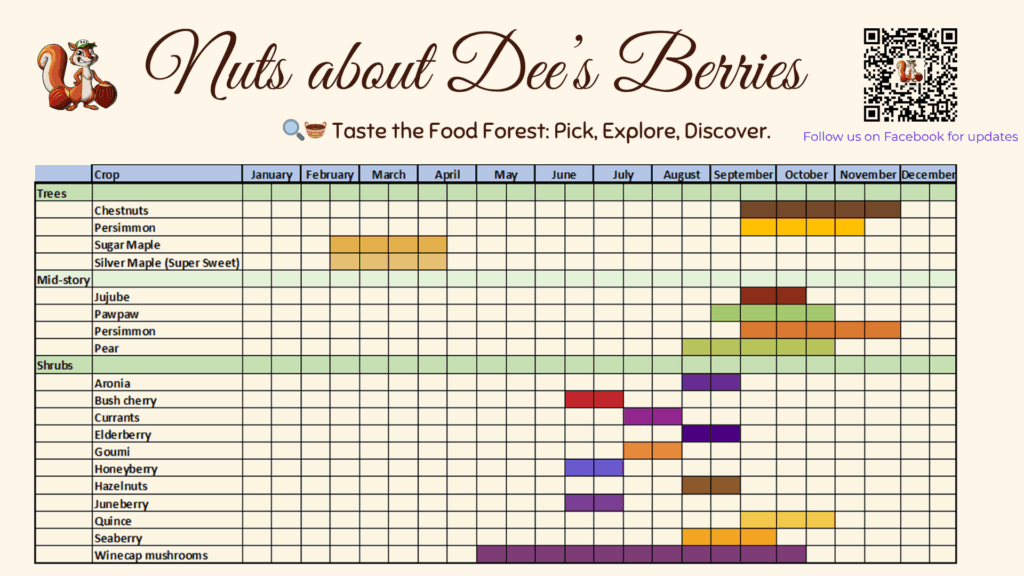
Because our farm grows in a northern climate, seasonal conditions like spring warmth and rainfall can shift ripening dates from year to year. In southern Wisconsin, sour bush cherries typically begin ripening in late June through early July, with harvest windows often lasting one to two weeks depending on the variety and the season.
At our farm, multiple bush cherry varieties may ripen in slightly staggered waves, rather than all at once. However, timing is influenced by many factors — including spring temperatures, rainfall, pollination, and overall growing conditions — so availability can shift from year to year.
Because sour cherry season is brief and weather-dependent, we share real-time harvest updates as the fruit approaches readiness. Before planning a visit, we strongly recommend watching our announcements to confirm when cherries are actively available.
👉 Follow our harvest updates on Facebook for the most accurate timing and U-pick notices
👉 Sign up for our newsletter to receive seasonal availability alerts straight from the farm
Sour cherries move fast — but when the timing is right, they’re absolutely worth the wait.
U-Pick at Nuts about Dee’s Berries
Our sour bush cherries are well suited for U-pick because the shrubs stay compact, approachable, and easy to harvest by hand. There’s no need for ladders or special equipment — just a relaxed pace and a good container.
Because the fruit is grown for cooking, baking, and preserving, visitors can take their time selecting cherries at peak ripeness while enjoying a hands-on connection to the farm.
What to Expect
U-pick sour cherries are a great fit for:
Home bakers and preservers
Families looking for a calm, hands-on farm experience
Visitors interested in small-batch, seasonal fruit
Availability is limited and weather-dependent, so each season is a little different. When cherries are ready, we open the rows for U-pick during short harvest windows and share updates as conditions change.
Tips to Make the Most of Your U-Pick Adventure
Look for bush cherries that are deep red and slightly soft to the touch — these are typically the ripest.
Gently pluck cherries from the stem to avoid damaging the shrub.
Check the undersides of branches, where some of the best cherries like to hide.
Taste a few cherries as you pick to find the balance of tartness that suits you.
Bring a container with a wide opening to make filling easier and reduce bruising.
Plan Your Visit & Stay in the Loop
Sour bush cherry season is short and highly weather-dependent, but when the timing is right, it’s one of the most rewarding harvests on the farm. To know exactly when U-pick rows are open and fruit is ready, we recommend staying connected.
Follow us on Facebook for real-time harvest updates, or sign up for our seasonal newsletter to receive availability alerts straight from the farm.

Discover Our Wide Variety of Nuts and Berries
At Nuts about Dee’s Berries, we pride ourselves on offering a diverse selection of delicious and nutritious crops. In addition to our featured crop, we also grow a variety of other fruits and nuts that are perfect for U-pick adventures. Explore our other offerings and discover your new favorite treat. We are sure that you will find something that you like, and that fits your needs.