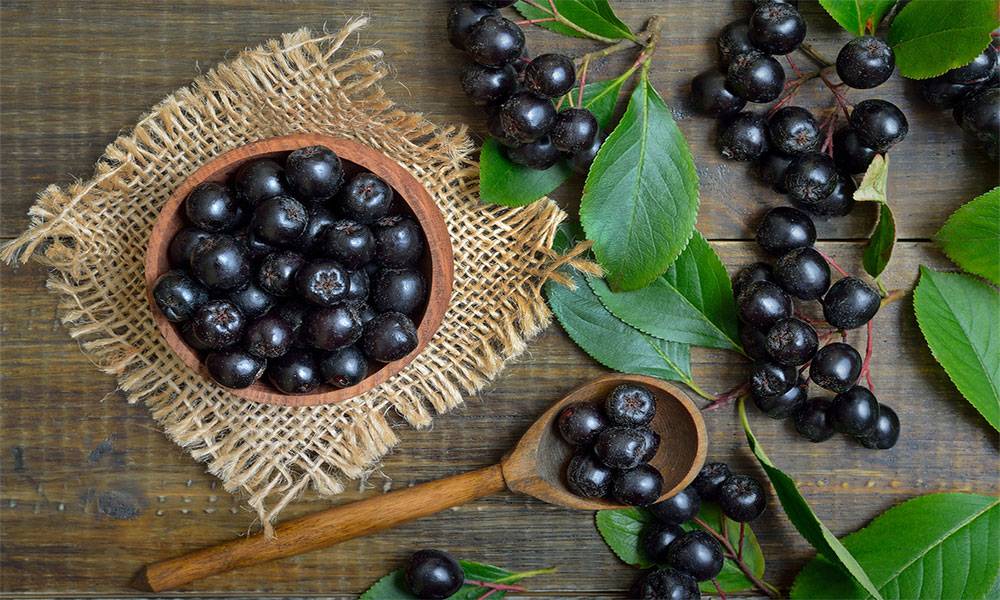
Fresh Use
Although aronia berries are edible fresh, they’re typically enjoyed blended or paired with sweeter fruits. When combined with apples, honeyberries, or honey, their sharpness softens and their complexity shines.
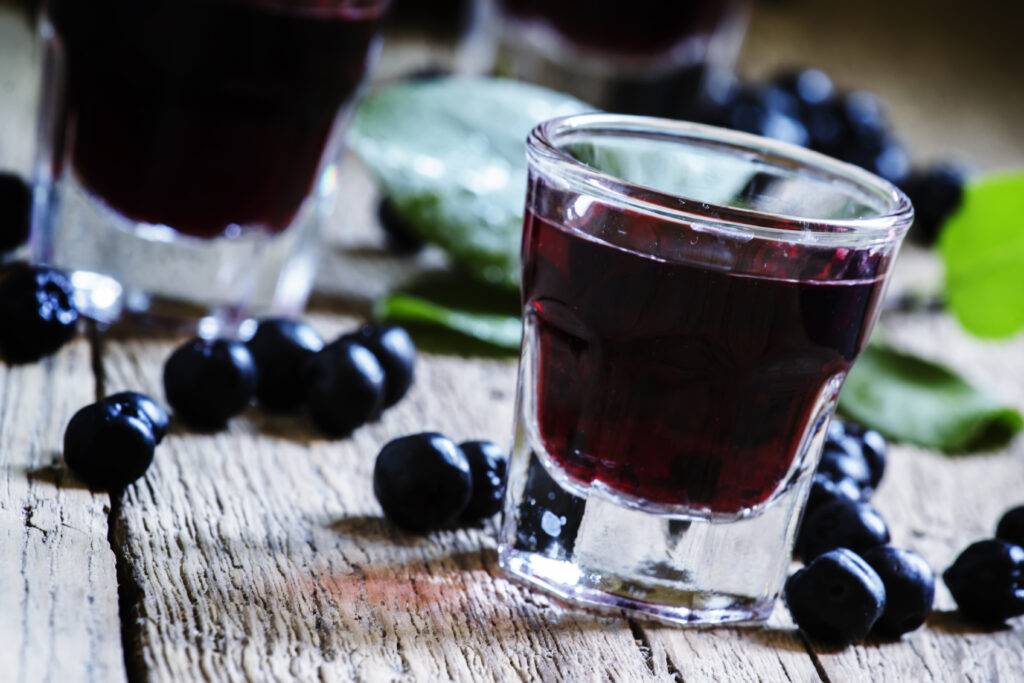
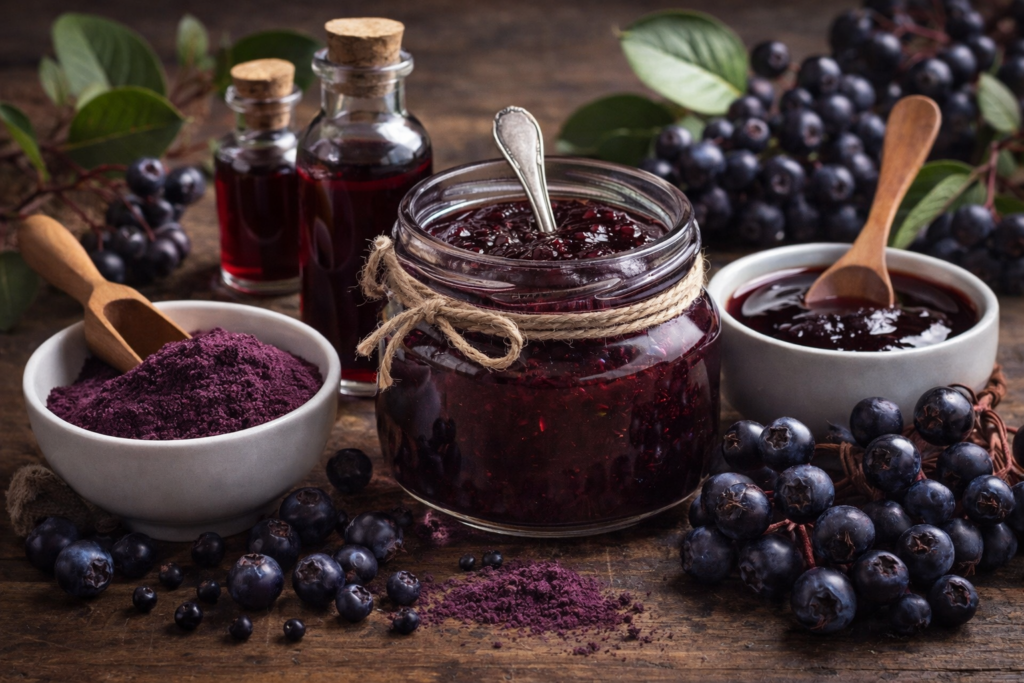

Aronia berries—sometimes called chokeberries—are small, deep-purple fruits native to North America. They grow on hardy, perennial shrubs and are prized for their intense color, bold flavor, and impressive nutritional profile.
While aronia berries are still unfamiliar to many people, they’ve quietly earned a following among growers, chefs, and food makers who appreciate fruits with character. Their naturally tart, wine-like taste and versatility make them especially well suited for preserves, juice, fermentation, and baking—offering something far more distinctive than typical grocery-store berries.
Although aronia berries may be unfamiliar at first glance, people who discover them often seek them out intentionally. Unlike many common fruits, aronia offers a compelling combination of bold flavor, culinary versatility, and nutritional density. As a result, they appeal to curious eaters, home preservers, and thoughtful food makers alike.
Here’s why aronia continues to gain attention:
🟣 Exceptionally rich in antioxidants
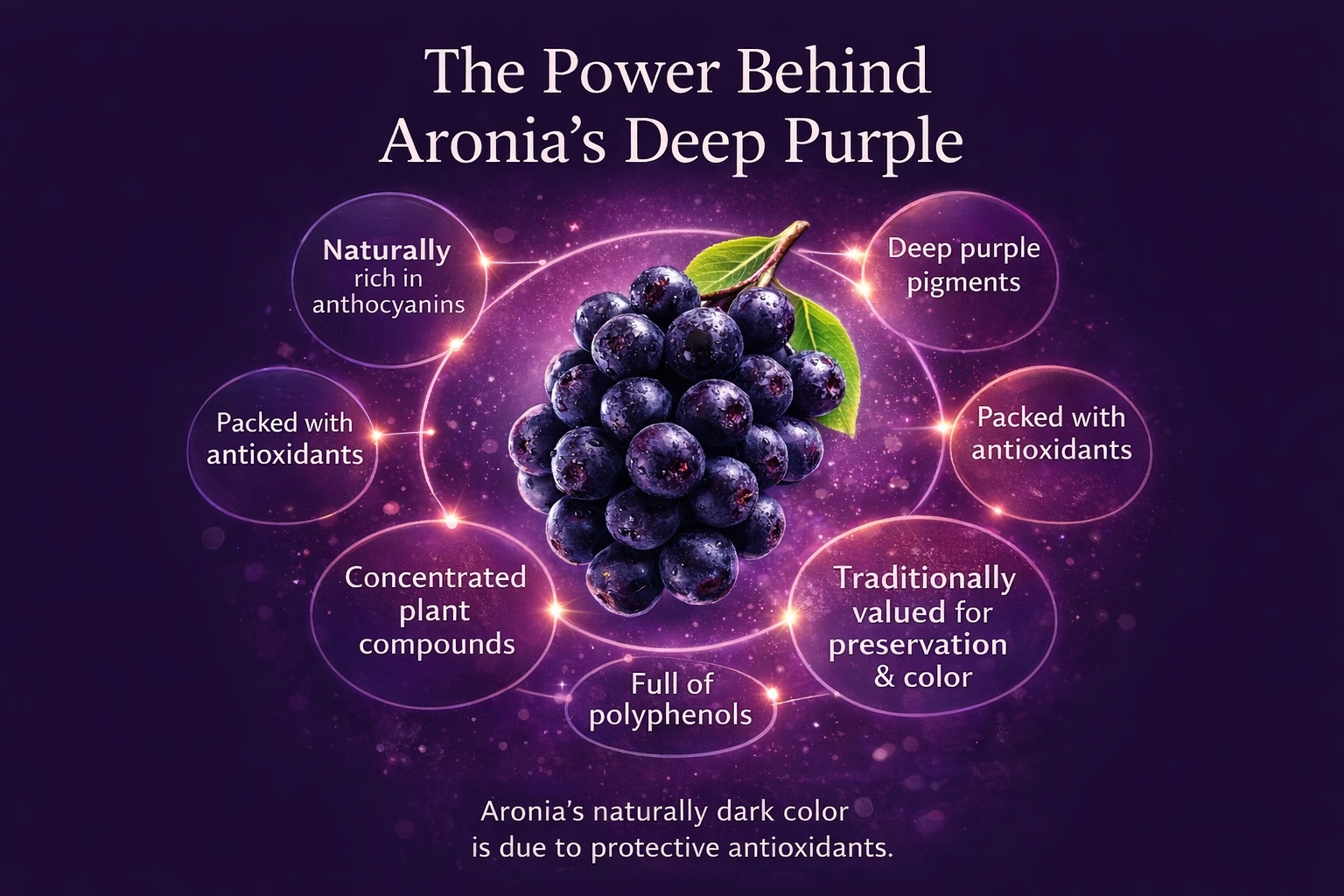
Most notably, aronia berries are high in anthocyanins—the naturally occurring compounds responsible for their deep purple color. Because of this, they’re frequently highlighted in nutrition research and discussed in culinary and wellness circles focused on whole, nutrient-dense foods.
🍇 Bold, distinctive flavor
Rather than being simply sweet, aronia berries are naturally tart, dry, and complex. Consequently, they shine in recipes where balance matters, such as jams, juices, syrups, shrubs, and fermented beverages.
🍯 Highly versatile in the kitchen
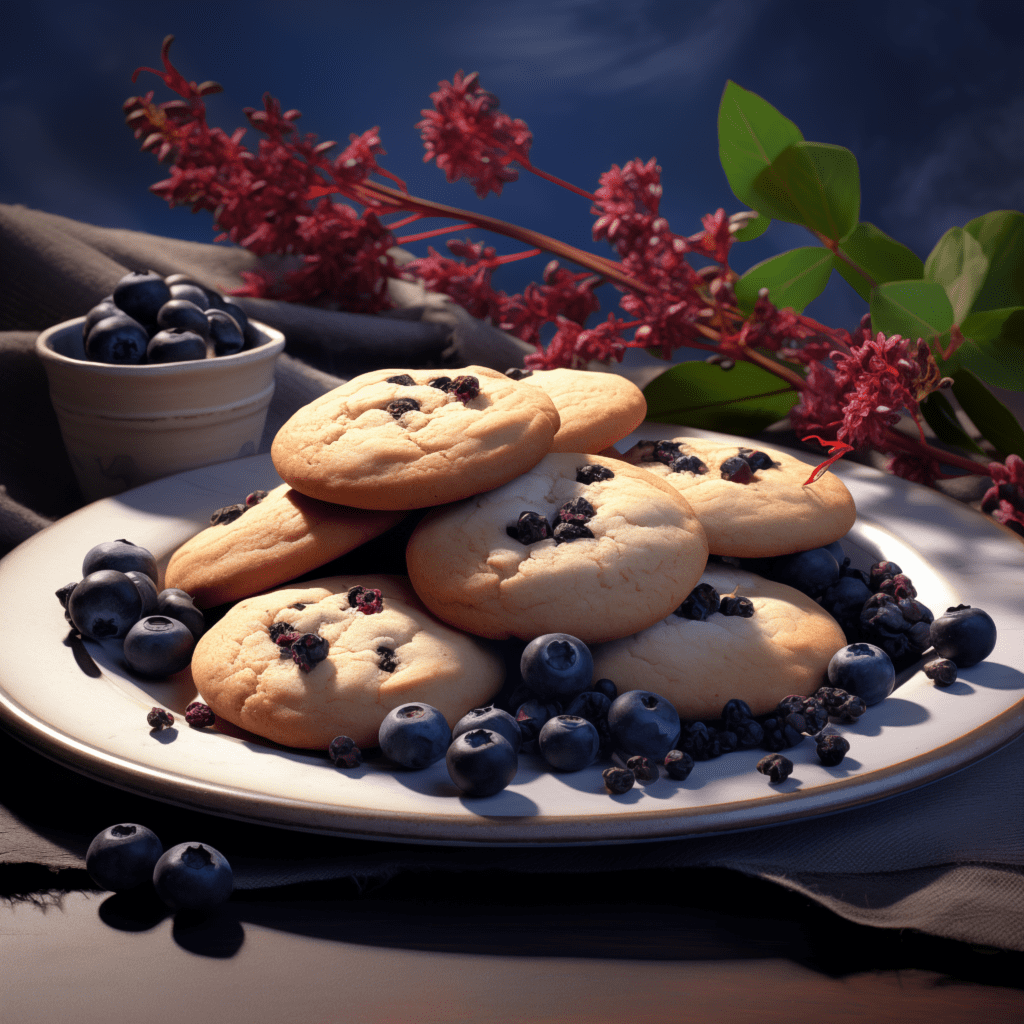
Because of their intensity, aronia berries pair especially well with other fruits, honey, spices, and grains. As a result, they’re commonly used in both sweet and savory applications, ranging from baked goods to beverages.
🌎 A native North American fruit
In contrast to many imported or highly bred crops, aronia is native to North America and well adapted to local growing conditions. For many visitors, this adds to its appeal as a resilient, regionally rooted fruit with a strong ecological story.
🫙 Popular with preservers and fermenters
Thanks to their color, acidity, and structure, aronia berries are particularly valued by people who enjoy preserving, fermenting, or experimenting with unique seasonal ingredients at home.
Together, these qualities make aronia berries an appealing choice for anyone interested in exploring flavors beyond the ordinary—especially those who enjoy turning seasonal harvests into something lasting.
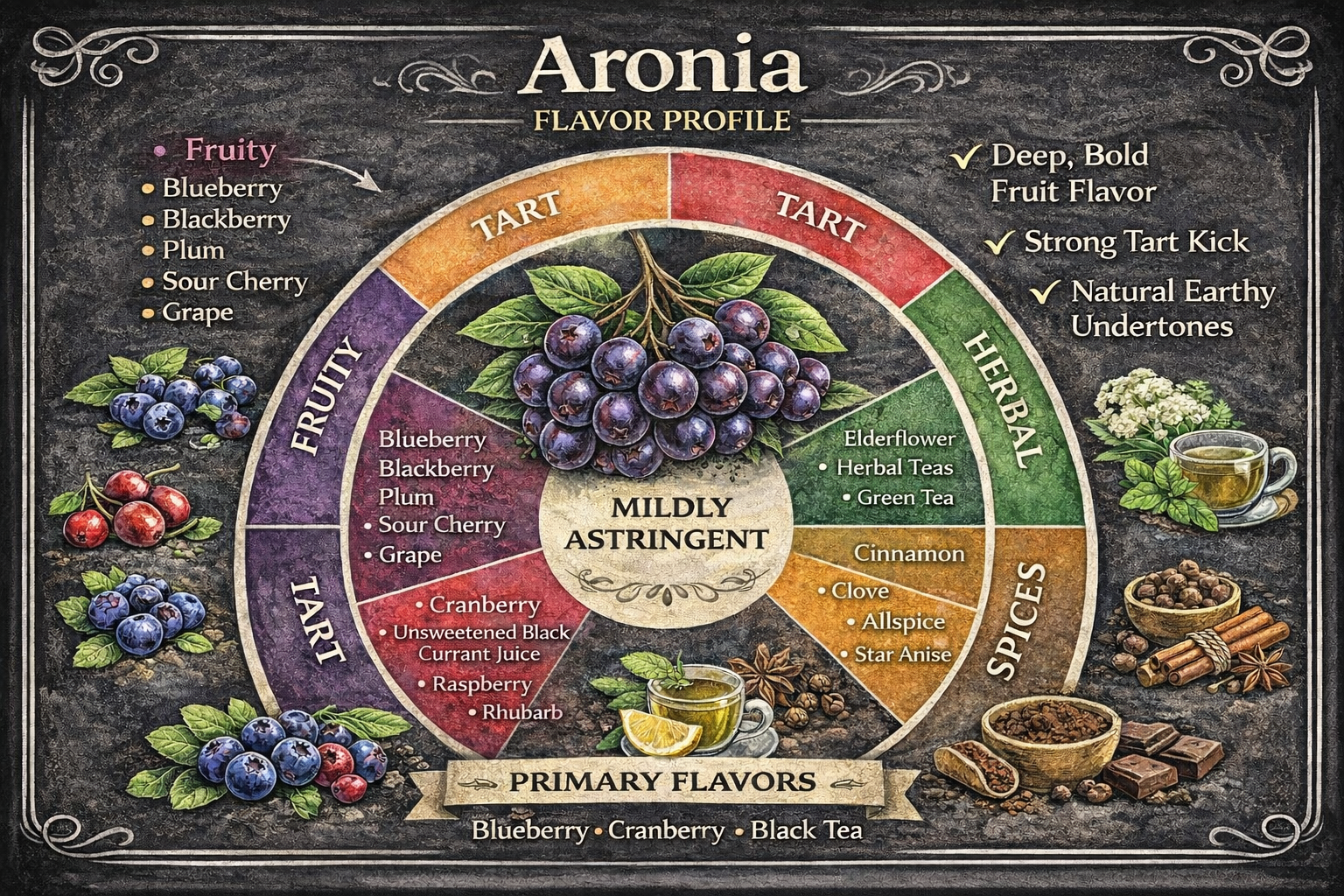
Bold, tart, and slightly dry, aronia berries deliver a deep berry flavor often compared to unsweetened dark cherry, red wine, or cranberry—with more structure and intensity.
Because of this, aronia shines when paired with sweetness, fat, or fermentation rather than eaten straight from the bush. When used thoughtfully, its flavor becomes rich, complex, and surprisingly versatile.
Aronia berries are known for their bold, complex, and unapologetically tart flavor.
Rather than being a sweet, snackable berry, aronia offers a deep, wine-like intensity that rewards balance and intention. Understanding its flavor profile helps visitors know what to expect—and how to best enjoy this distinctive fruit.
Aronia berries are known for their bold, complex flavor and their versatility in the kitchen. Rather than being a sweet, snackable berry, aronia shines when used with intention—paired with other fruits, transformed through cooking, or incorporated into beverages and preserves. Understanding how aronia tastes and how it’s commonly used helps visitors get the most out of this distinctive, nutrient-dense fruit.
Aronia berries have earned attention not just for their bold flavor, but for their exceptional nutrient density. Long valued in traditional food systems, aronia stands out among berries for its naturally high concentration of protective plant compounds. These qualities make it a fruit people seek intentionally—whether for wellness-focused foods, long-term storage, or deeply colored, antioxidant-rich preparations.
Rather than being a trend-driven superfood, aronia’s appeal comes from its balance of flavor, function, and resilience—both in the landscape and on the plate.
Aronia berries are widely recognized for their exceptional nutrient density, particularly their naturally high concentration of anthocyanins—the compounds responsible for their deep purple color. These antioxidants are valued for their role in protecting plant tissues and are one reason aronia has long been used in traditional food systems.
Rather than being prized for sweetness alone, aronia stands out for its functional nutrition. Its intense color, acidity, and structure make it especially suitable for nutrient-focused foods, long-term storage, and deeply pigmented preparations such as juices, preserves, and dried products.
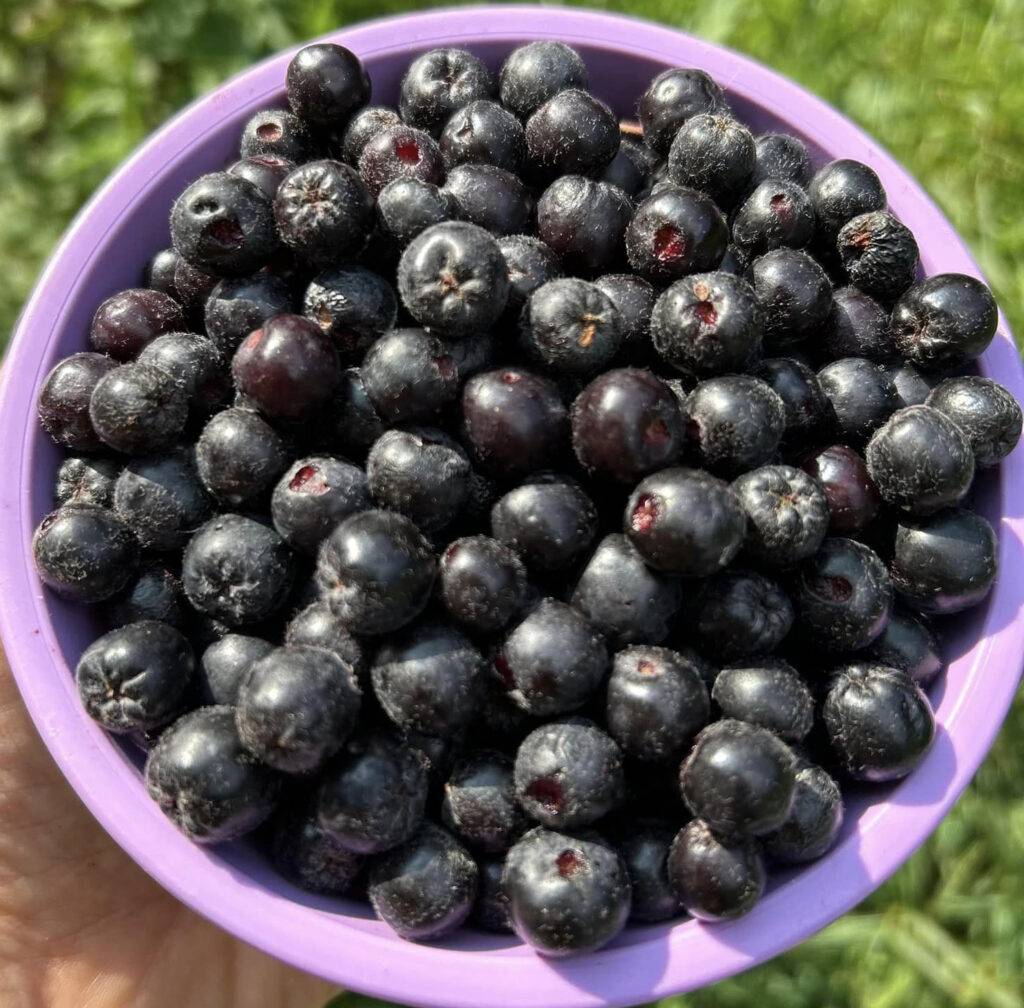
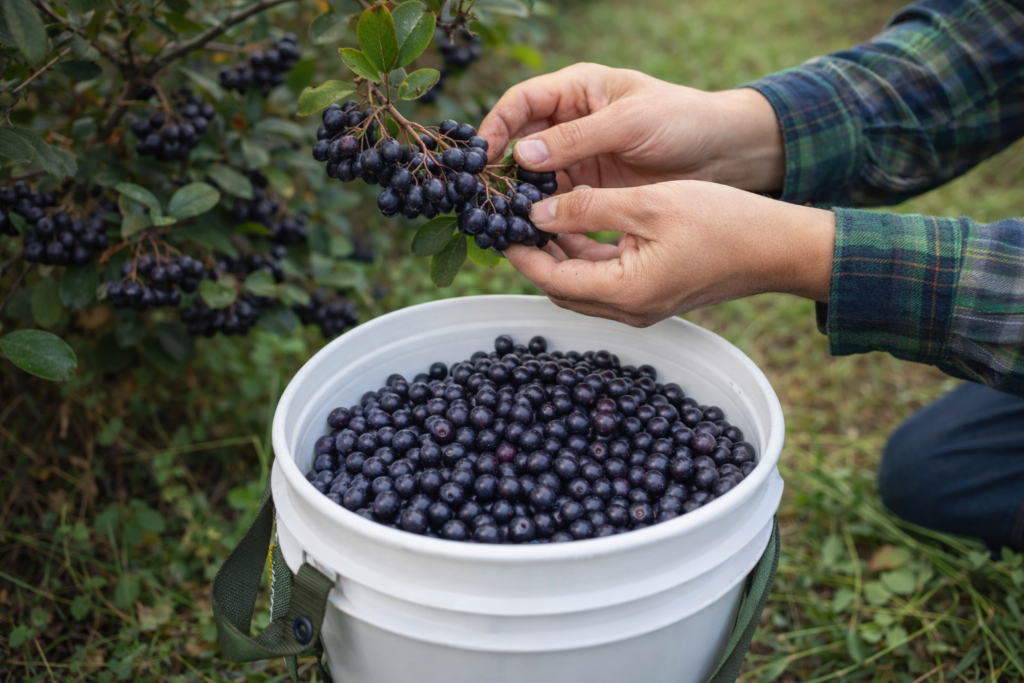
Aronia berries are typically harvested by hand once fully ripe, when their deep purple color and firm texture signal peak quality. Because the berries grow in clusters and have a naturally sturdy skin, hand harvesting allows pickers to collect fruit efficiently while minimizing damage.
Buckets or harvest lugs are commonly used to gather aronia in the field, keeping berries intact and clean before processing. This careful approach helps preserve both flavor and nutritional value—especially important for berries destined for juices, preserves, dried products, or antioxidant-rich preparations.
While mechanical harvesting is possible in large-scale operations, many growers continue to favor hand harvesting for its precision and flexibility. The result is a fruit that maintains its structure, color, and integrity from the field to the kitchen.
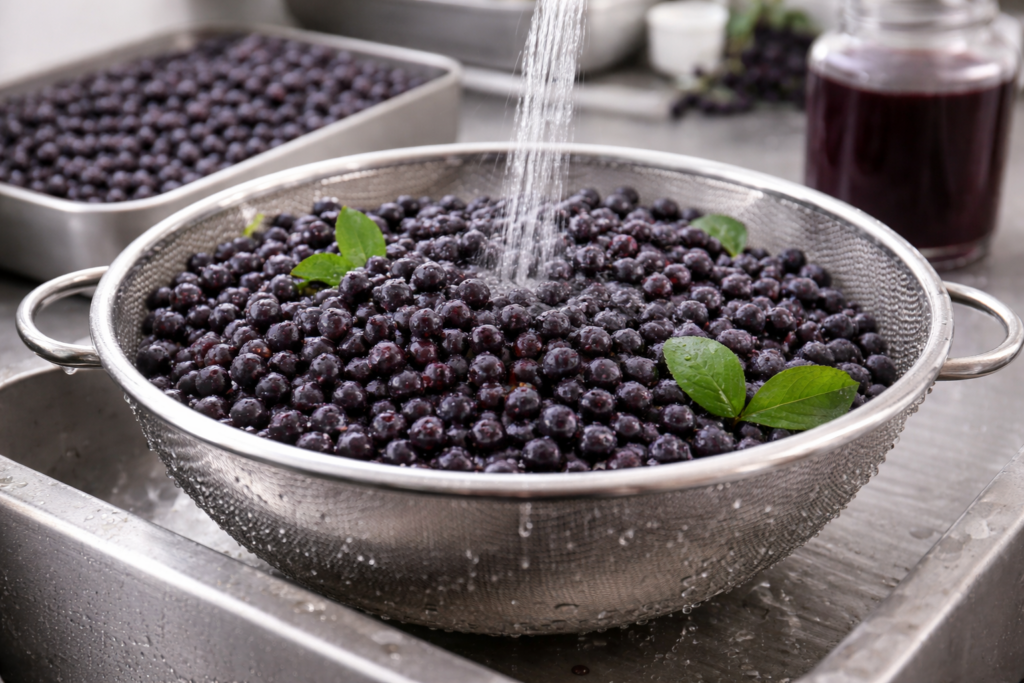
Once harvested, aronia berries are quickly cooled and prepared for their next stage—whether that’s juicing, drying, freezing, or preserving. Because of their dense structure and high pigment content, careful handling helps retain both flavor and nutritional integrity.
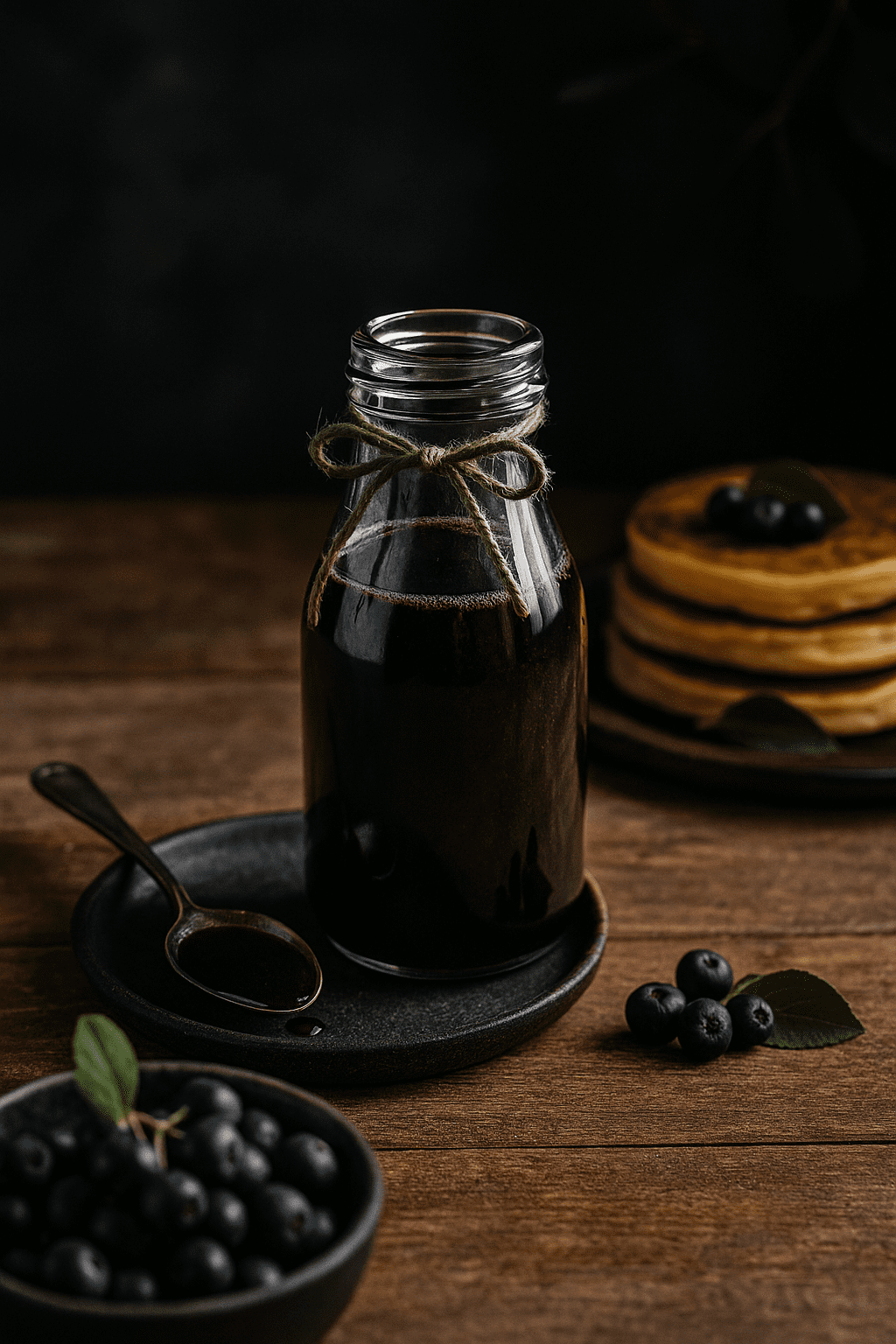
Many aronia products are processed shortly after harvest to lock in color and antioxidants. Freezing preserves freshness, drying concentrates flavor and shelf life, and juicing captures aronia’s signature deep purple intensity. Each method highlights a different strength of the fruit while ensuring it remains usable year-round.
This versatility is one reason aronia has long been valued in traditional food systems and modern functional foods alike.
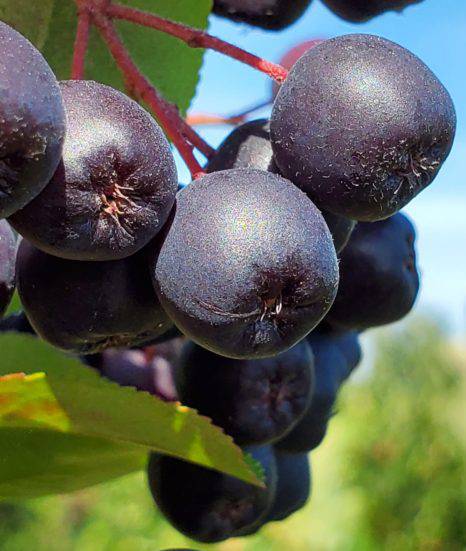
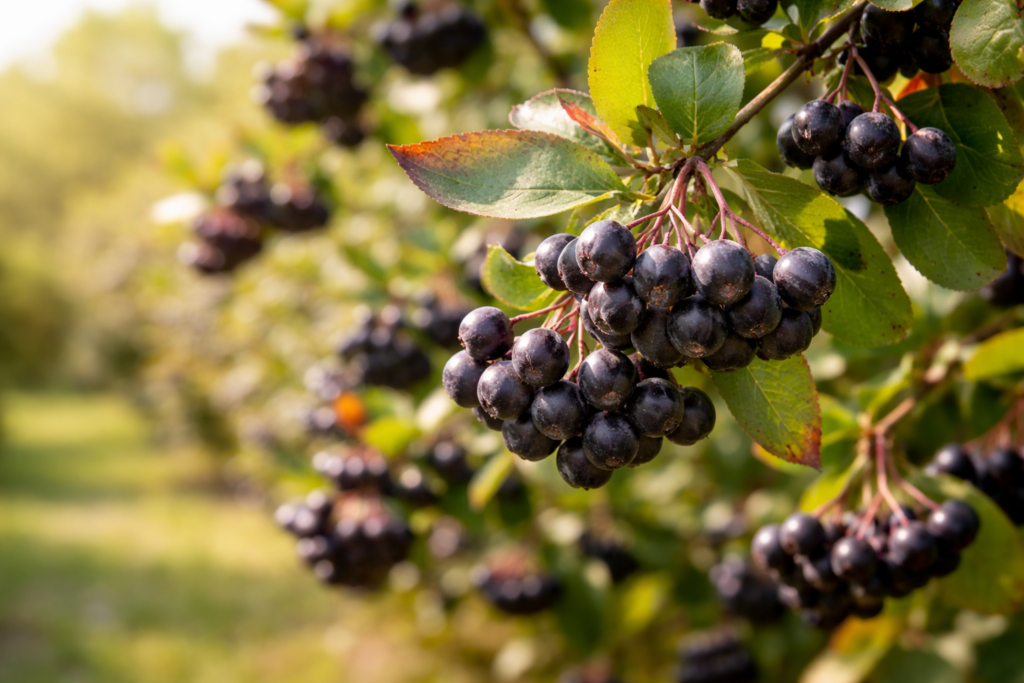
Aronia berries grow in dense clusters on hardy shrubs, gradually developing their signature deep purple color as they reach peak ripeness. This stage signals not just sweetness and flavor maturity, but the moment when the berries’ natural pigments and protective compounds are most concentrated.
Because aronia is naturally resilient and well adapted to its environment, the fruit develops slowly and evenly, resulting in firm berries with excellent structure. This makes them well suited for harvesting, handling, and a wide range of uses—from fresh processing to long-term preservation.
Understanding how aronia grows and ripens helps explain why it performs so well in juices, dried products, and antioxidant-rich preparations—and why timing matters when capturing its full potential.
At Nuts about Dee’s Berries, we pride ourselves on offering a diverse selection of delicious and nutritious crops. In addition to our featured crop, we also grow a variety of other fruits and nuts that are perfect for U-pick adventures. Explore our other offerings and discover your new favorite treat. We are sure that you will find something that you like, and that fits your needs.
With their impressive nutritional profile and potential health benefits, Aronia berries are a versatile and delicious addition to any diet. Whether enjoyed on their own or incorporated into your favorite recipes, these mighty berries offer a flavorful way to nourish your body and support your well-being.
We grow organic fruits and nuts while fighting climate change by capturing carbon. Join us for family UPick experiences and special events. We’re committed to community and eco-friendly initiatives like supporting ocean pastures. Let’s make a greener, healthier world together!
N3591 Highway 104, Brodhead, WI 53520
🗓️ Visits by reservation only
🌱 Limited openings during our early seasons
🚜 Opening phases begin 2027
10 AM - 6 PM Open daily